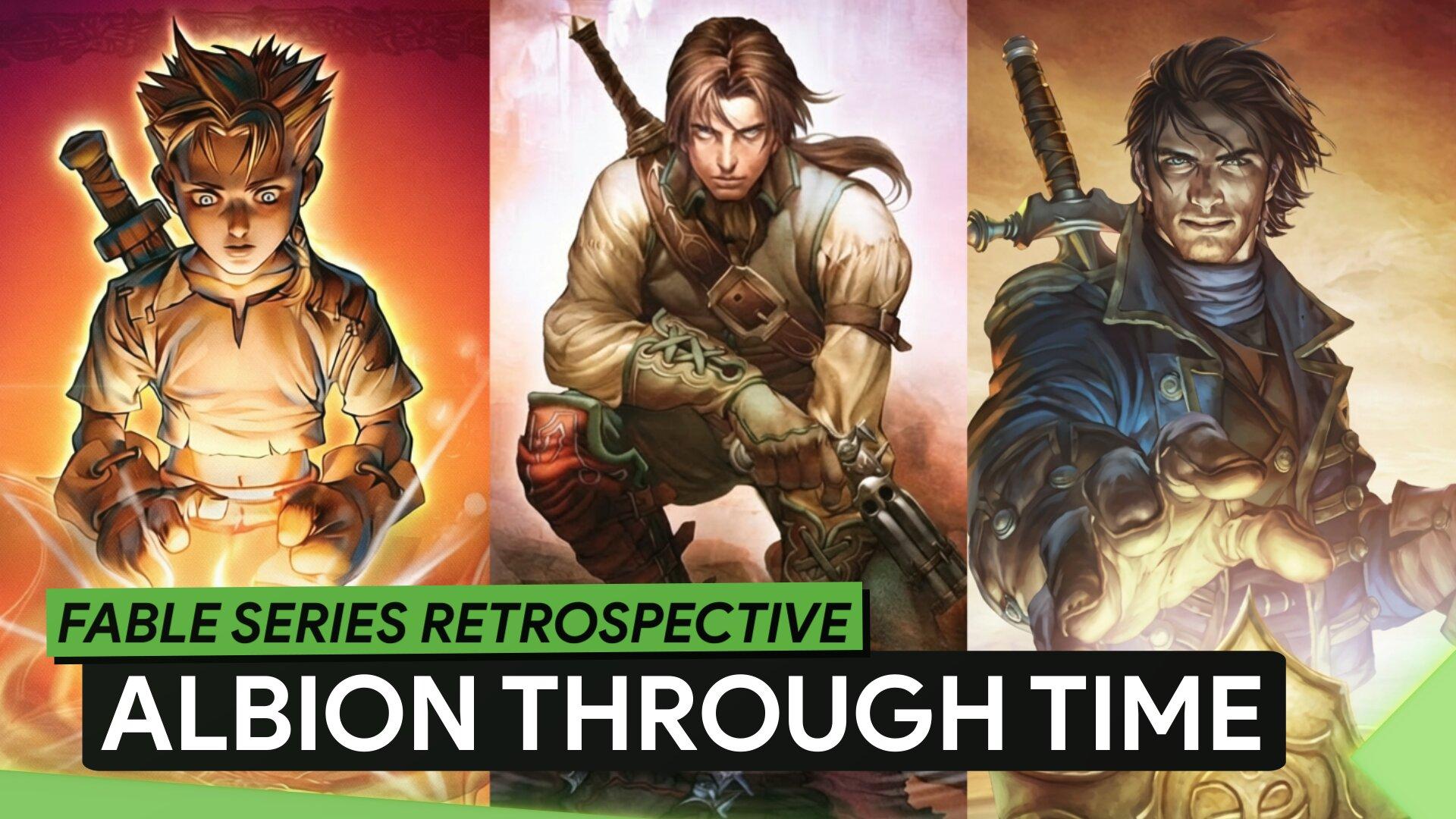
As you all know, there’s a new Fable game coming out in 2026, and for many people who have been around since the Xbox 360 era, this new Fable is a long awaited follow up of the original series. But this Fable might be different from all the Fables that came before because it's developed by Playground Games, a different developer from the original. On that note, we're gonna dive into the 3 main line Fable games to see what Fable is all about, and look back on why so many of us love the original Fables.
If you played the game when it first released, you probably remember walking through towns, messing with villagers, and watching entire crowds react when you did something stupid. You probably also remember marrying half the village and then upsetting your spouses.
And if you never played it, this series is one of the rare open-world games that actually took the word ‘role-playing’ seriously, where NPCs and the social mechanics around them mattered, not just how you fight or how you explore.
Background
Fable started in the early 2000s as this insanely ambitious RPG project led by Peter Molyneux. From the very beginning, the vision was massive. At its core, all three Fable games are built around the same identity. Social systems, morality systems, and consequence-driven design. Fable introduced the idea that your presence is something that can actually impact the game’s world. NPCs react to your choices, your reputation, and even how you carry yourself. Loved, feared, respected, hated, or tolerated, all of it is shaped by how you play. Good or evil is not just a narrative choice, it is a mechanical system that affects how the world responds to you. Across Fable 1, 2, and 3, that core fantasy stays the same. And the fact that you can kick chickens too? Mwah.
Here is where things get messy. From the very beginning, Fable was built on promises that technology and development reality could not fully support. During Fable 1’s development, Peter Molyneux openly talked about systems that sounded revolutionary at the time. But a lot of that either got cut, simplified, or scaled back. The final game was still good, but it was not the revolution that people were sold. That gap between hype and reality became one of the earliest major gaming controversies, and Molyneux earned a reputation for overselling ideas faster than tech and deadlines could handle.
By Fable 2, the game refined the formula instead of reinventing it, and it worked, really well if I do say so myself. But the ending felt abrupt, almost unfinished, leading many players to suspect cut content or a rushed final act. Fable 2 was an Xbox 360 exclusive, and even until now, it remains one of the most beloved exclusives in the entirety of the Xbox catalogue, ...umm ever. And this is where an uncomfortable question shows up. Why is Fable 2 still locked to Xbox? At this point, that does not feel accidental. So is Xbox protecting it? My wild take is that, and take this with a grain of salt, the moment Fable 2 leaves the platform, it might take away its legend status. Maybe by keeping it exclusive, it preserves the reputation. And whether intentional or not, locking Fable 2 to Xbox has only made its legacy stronger over time.
Then Fable 3 went in a different direction. Systems were dumbed down, and core mechanics were redesigned so that it was smoother to experience, and the RPG depth that many fans loved started to disappear. The second half of the game, which we’ll get into in a bit, felt rushed and underdeveloped. And on PC, the damage was worse, with Fable 3’s core features tied to Microsoft Games for Windows Live ageing terribly once the service shut down, meaning you couldn’t play it on PC without some cough [insert piracy meme]. Nah, I’m kidding, you just need to do a little bit of patch workaround for it. But this ultimately showed that Microsoft had a bigger influence on Lionhead during the development of Fable 3. By this point, the tension between creative ambition and corporate direction was impossible to ignore. And in hindsight, Fable 3 was not just controversial, it was the moment the series slightly started losing its identity. And maybe that’s why the game never released the fourth one.
Outside all the drama and expectation that came with it, I still remember when Fable first came out, and HOLY, it genuinely felt like nothing else at the time. Western RPGs were still trying to find their footing in the early 2000s, and Fable stood out by pushing experimental systems that focused on social mechanics. Not to mention, Albion felt so alive as a fantasy world. It changed how a lot of players thought about immersion in RPGs, and raised the standard of what other open worlds should be. With all that though, it’s sad that even until their third game, the series’ world still felt narrow, and overall just disconnected.
But still, every time a new Fable was released, it felt like an event. The four-year gap leading up to Fable II was both exciting and nerve-wracking, but you might be asking, how was the reception around them?. The first two games were generally well-received, and I know I definitely enjoyed both games. Maybe because the first 2 games introduced a lot of different features. Fable III, however, had a more mixed response with criticism aimed at dumbed mechanics in some areas, and of course, the MGFWL issues I mentioned earlier.
After that, the franchise struggled to find its footing. They released spin-offs like the beat em up Fable Heroes and the Kinect Fable, called Fable The journey, but they were… let’s just say unsuccessful. Then the biggest attempt to move forward was Fable Legends, a multiplayer focused reboot. It marked a major change in direction, but it was never released, aka was cancelled. Soon after, Lionhead shut down in 2016, which meant the end of the Fable series From that point on, Fable became something people mostly looked back on rather than forward to, since the main series stopped at 2010.
Now that you have all this context. The ambition, the shifting vision, and the expectations around the series. Instead of treating these games as ideas on paper, let’s talk about how they actually feel when you sit down and play them today.
Let’s start at the beginning.
Fable 1
Where it all started. The first Fable is definitely like that first love that you don’t quite ever forget. Fable 1 felt fresh but small, and that’s both its biggest strength and its biggest weakness. The map is compact, which makes you feel like the world is focused. In reality? Well, we’ll get to that in a bit. Because areas are gated by story progression, side content and upgrades feel paced. You’re always moving forward, and the world never feels empty.
The downside is how everything just felt disconnected from one another. Everytime you had to go to another region? Loading screens, and there were more than 10. So you can imagine how many loading screens you have to get through. Most regions felt like short corridors, the bigger ones aren’t much better either. I mean, at the time, I guess it was enough, but compared to the later Fables, it definitely shows its age. So exploration is very controlled. Side quests often have interesting backstories, which we’ll see actually build the personality of the later Fables, but other activities outside of that feel like they were just slapped on for extra content. Like buying houses, it’s a single click teasing you with the idea of being able to do anything with the house. And then there’s the skill system in the game, which introduces the 3 weapon system that remained throughout the series, but it honestly felt like you could just pick anything in any order, cause you can max it out early, giving less of a meaning to what skill you decide to pick.
Socially, this first entry was impressive at the time but rough now. you have a decent number of expressions through a pop up list menu or shortcuts, you can gift NPCs, and you can even get married. The idea was there, and for little old me, that was enough. There’s no real relationship bar though, and progress was temporary. This was the part that made me almost smash the controller. Whoever thought that making NPCs forget your relationship progress with them needs to get fired. Wait, I guess that kind of already happened.. Anyway, The little heart icon is basically your only feedback of how much you’ve rizzed them up. A lot of it feels janky. Getting someone to follow you can mean spamming the same input over and over. It works, but again, it definitely shows its age.
Fable 2
Coming up to the 2nd entry, Fable 2 definitely felt like the more polished noblewoman. . NPCs feel more polished across the board. Their reactions are clearer, and settlements are much larger. The world feels busier, even though it’s all still split up into multiple different regions, cementing that sadly infamous Fable world structure we saw in Fable 1.. Areas are bigger here and less chopped up compared to Fable 1, but hints of that guided corridor nature remain.
Things that you can do take a big step forward in Fable 2. A lot of it builds on what already existed in the first Fable, and oh boy was it satisfying to see. More quests have multiple outcomes, which actually makes you curious about what you can do.. Like what do you mean you can become Mr. steal your girl just like that? Jobs show up for the first time here, and while they are simple rhythm based inputs, they are harder than they look and set you up early for the stuff you can buy, or spoiler alert can manage. You might even start mashing that one button on your controller a little too hard. It’s all worth it though, because for the first time, property ownership becomes the core loop. Buying, renting, and decorating houses actually matters now, and the economy kicks in fast. And if you’re easily hooked like me, owning the whole world definitely becomes your whole purpose. But be careful, because how you treat people financially starts to affect how the world views you, which gives that cause and effect feeling to Albion. You can definitely tell that the devs really put in A LOT of effort into making everything feel like they have more impact on your playthrough, and that is what made Fable 2 so damn fun.
Now, social mechanics are where Fable 2 really shines, and it definitely introduced a lot of new mechanics into the series. The introduction of the new expression wheel makes interactions smoother, and the part that we all wanted actually got implemented, thereare way more expressions to play with this time. Like the new expressions where you have to hold the button, and if you fail, it actually might disgust the NPCs. So, you can’t just be mashing the same expressions and expect the same relationship boost this time. There’s even a side quest built entirely around holding an expression long enough, to get your statue made, if you’re into that kind of thing. But the big upgrade is definitely the relationship system. Progress sticks through Fable 2’s 3 social bars. NPCs remember you this time, and you can see whether someone loves you, fears you, finds you funny, or is just simply uncomfortable around you. This changes everything. Marriage expands into having kids, divorce becomes possible, and neglect has consequences. Like even death consequences. Even giving your family money affects their happiness. It feels messy and human in a way few games attempt, and that is exactly why Fable 2 is so well loved by the gaming population.
Fable 3
Moving on to the latest and final entry of the trilogy, Fable 3 feels like an attempt to smooth everything out from Fable 2, whether it worked is the question though. Here, Jobs get slightly more depth with more complex rhythm and flow. You have more to worry about than just mashing 1 button at the same time now. It didn’t stop me from grinding the jobs any less, though. And the universally loved property management system improves in terms of interface. Buying properties directly from the map is genuinely convenient, even if the underlying systems stay mostly the same. What I wished they just didn’t do at all were the new collectibles that they added, like the rare books and flowers, Which were practically just empty items you collect.
It’s a good thing that the economy is still strong in Fable 3, but sadly, money does feel easier to earn. So it loses that early game grind that Fable 2 had. The game balances this by (spoler alert) pushing big moral decisions that affect the world, which keeps things interesting even when you’re already loaded with gold. It’s just sad that the side content feels like it was missing the love Fable 2 had, or at least that’s what it felt like. Side quests felt less impactful without the multiple choices they had in Fable 2 and less varied as well. And not to mention the skill system that was simplified through the road to rule mechanic, easily being maxed out by the end. It’s almost like they got rid of what made the game feel like an RPG
I do have to give credit where it’s due though, because the world map areas are larger than before, which let you roam and explore a lot more than the previous Fables did, but yeah, bigger doesn’t always mean better, because what’s the meaning of size if we don’t feel like there’s enough NPCs when we actually wander in it. I’d personallyprefer asmaller world with more purpose and life than the alternative, which is sadly the majority of games right now.
Now we get into the nitty gritty. Social mechanics mostly carry over from Fable 2, but with some… questionable changes. As you mightve seen a glimpse of, expressions are now unlocked through the Road to Rule, which ties social growth to progression more directly. The new feature that I actually loved was that Interactions became more personal since you can now focus on one NPC at a time instead of addressing a whole crowd. So it feels like you finally get an invisible room to rizz up that pretty dame near Bowerstone castle. You even get side quests to level up your relationship with the NPC, which usually includes holding their hand, eventually leading to marriage and having kids. That part works well, especially when it feels like the relationship system is more detailed. What didn’t make it to Fable 3 is the Fable 2’s more detailed social system. The multiple social bars that were in Fable 2 sadly got collapsed into one, and that removes a lot of nuance. It feels cleaner, but also flatter. For reasons unknown, this dev decision is what disappointed me and many fans of the series.
How does it all add up?
Now, it’s time to look at all 3 of them side by side, the interesting part is how the game’s focus shifted over time.
If it’s not obvious already by now. The world in all 3 Fables are made in a way that feels like multiple different maps rather than 1 big map. It’s something that the devs didn’t improve over the trilogy, which is sad, because they seemed to get 1 part right.. As the series moves forward, the maps got bigger and bigger, but that sadly came with tradeoffs. Fable 3 has the largest areas, but the bigger map meant bigger shoes to fill, and they were lacking NPCs to fill those shoes, leaving the outer areas feeling empty. I guess the devs put their focus elsewhere, and that actually worked well. The amount of things you can do across the series improved drastically, and you can really see it. Fable 1 sets the foundation for the sequels, while Fable 2 and 3 each introduce new things that weirdly worked in their favor. Speaking of weird, it’s weird that the stuff that you can customize actually stays consistent throughout the series, except for the chicken suit in Fable 3, that was the highlight of my play. In all seriousness, though, Fable 2 does take the slight lead with its more well-thought-out skill mechanics. But what I can say about the whole trilogy, is that they were all fun as HELL to play, in their own respective ways. Overall, each game has its own strengths and weaknesses, with Fable 1 sitting a little bit behind the other two.
Let’s talk about what makes the Fable series, Fable. The social mechanics, it definitely improved over the trilogy, and oh boy, was it a thrill to experience. We started with Fable 1, which only had simple expressions and pretty much barebone social mechanics, but that set the foundation of what came next, because whenFable 2 came, it added a more fluid interface to house the countless new expressions in the game. And let’s also not forget about the complex social bars. It made NPC relationships more complicated, but in a good way. Sadly though, that didn’t carry over to Fable 3. I mean, the expressions did, but for the most part, Fable 3 decided to take the complex social bars away andallowed you to interact with 1 NPC at a time, which made things more personal, at least for me. It’s clear here that Fable 1 falls way behind Fable 2 and 3. But I still can’t quite decide on which works better. Deeper social bars or more intimate interactions. Which one hits more for you? Share your thoughts in the comments below.
Closing
When I look back at Fable now, its legacy feels quieter than it deserves. Not because it failed, but because not many games really picked up what it was doing socially. And that is what I feel like is missing from today’s modern open world games. Don’t get me wrong you do see pieces of it here and there. Things like NPC reactions, relationship systems, and light roleplay touches. But very few games made social interaction feel like it’s the star of the show, or at least a big chunk of the game, especially with itsplayful, and personal twists.
That is the part that still feels kind of sad to me. A series that made a blend of social mechanics with open world RPG genuinely fun just went silent for years, with no real follow-ups and no clear evolution of the features that made them so popular to begin with. It feels like a demon door that teases you with the idea of a game, without actually being able to go inside it, at least anymore. The best we can do is just replay what was left to us before. And just to remind you of how old you are, Fable III was first out almost 16 years ago.
So on that note, I am cautiously excited about the new Fable that was supposed to come out last year, but was delayed to this year. Mostly hopeful that it actually comes out, and hope to god that it remembers what made this series feel different in the first place. Not just the fantasy setting, but the way the world lets you either charm a noblewoman or disgust her to death, and how it reacts when you play the game the way you want to. So please, Phil Spencer, don’t you dare lay your hands on Playground Games.