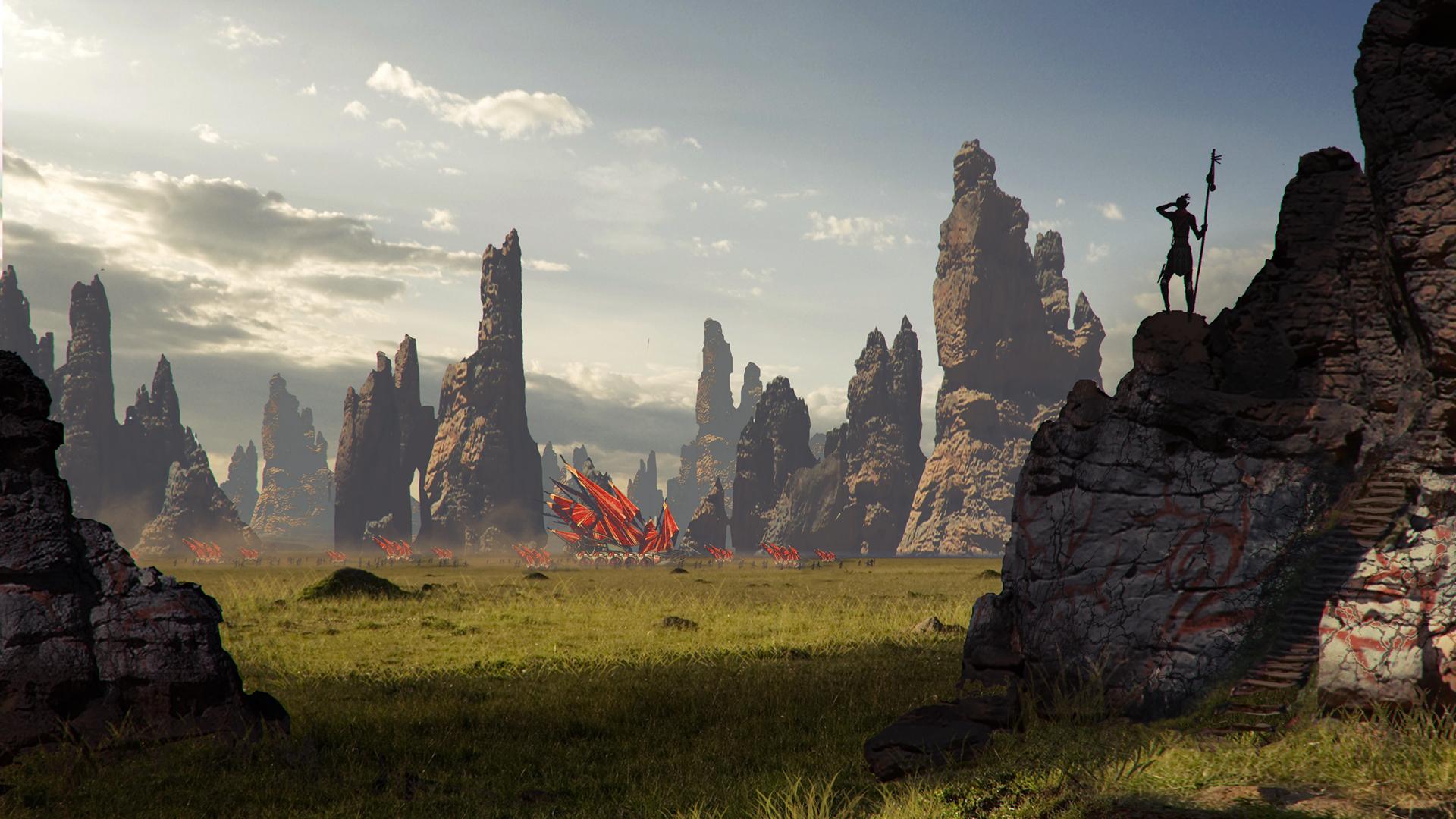
The question of whether Dragon Age: Inquisition qualifies as an open-world game has been debated here and there for years. The game’s structure feels different from what players typically expect from the genre.
Their design choice has sparked ongoing discussion. Does Dragon Age: Inquisition deserve to be called an open world?
Looking at the Bigger Open World Picture
Dragon Age: Inquisition is designed in a way that features a lot of regions. So yes, it is very segmented.
At GameTyr, the distinction is simple: segmentation does not remove a game from the open-world category, it just weakens the sense of immersion and continuity in the game.
Even genre-defining titles like The Witcher 3: Wild Hunt rely on divided regions. While its zones are massive and richly connected, they are still technically separated. So if you were to argue that divided regions means the game isn’t open world, then The Witcher 3 wouldn’t count either.

This suggests that the defining factor is not seamlessness alone, but the scale, freedom, and systemic design within those spaces.
How Inquisition Handles Exploration
Dragon Age: Inquisition leans heavily into segmented exploration. Players move between regions using the world map or the War Table, rather than traveling across a single continuous landscape.

This structure introduces a noticeable sense of disconnection. You are not journeying across a living, uninterrupted world, but it’s more like picking your destinations. As a result, the game’s “freedom” feels more controlled and less emergent compared to open worlds with just one big continuous map.
Still, each region is expansive, filled with quests, collectibles, and side activities that encourage exploration on a large scale.
Comparing It to Dragon Age: Origins
Looking back at Dragon Age: Origins helps clarify things. Origins is best described as a semi open-world experience. It features a hub-based structure with smaller, more contained areas connected through a central system.

Inquisition, by contrast, significantly expands the scale of its environments. While still segmented, its regions are far larger and more exploration-driven, pushing it closer to full open-world territory.
Final Take
For me, Dragon Age: Inquisition absolutely qualifies as an open-world game, just not a particularly cohesive one.
Its segmented design doesn’t disqualify it, but it does hold it back. The lack of seamless traversal breaks immersion and weakens the sense of a truly interconnected world. At the same time, its massive regions and freedom within them still deliver the core pillars of open-world design.
It sits in an interesting middle ground: technically open world, but emotionally less “open” than the best in the genre.