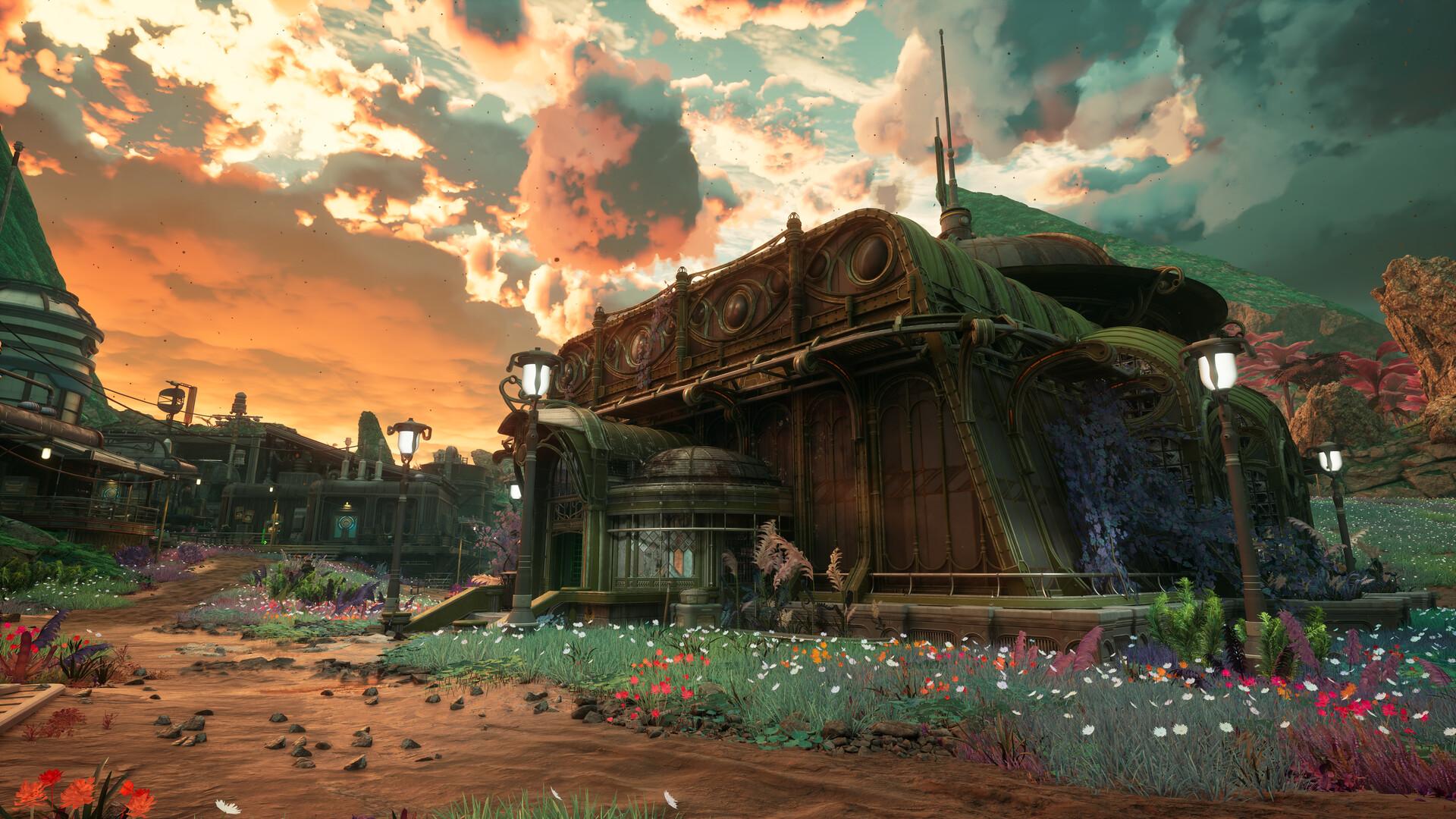
So, Outer Worlds 2 just dropped, and honestly, it feels like we’ve come a long way from that E3 2021 trailer. I mean, Obsidian’s space RPG, I’m talking about the first Outer worlds, just in case you didn’t know, was one of those games that caught everyone off guard back in 2019, funny, sharp, and packed with that signature “dialogue-heavy chaos” the studio’s famous for. But let’s be real, it wasn’t everyone’s cup of tea. Some folks loved the branching conversations and choices; others just wanted less talking and more, well, shooting things in space.
Now, Outer Worlds 2? It’s here. Reviews are rolling in, and surprisingly, or maybe not, they’re leaning toward the positive. It seems Obsidian might’ve pulled off something here, despite a somewhat ballsy pre‑launch move that raised a few eyebrows. Yeah, that “Consumerism” moment, premium edition early access, higher price, and giving more profit to auntie’s choice.
And considering all the chatter around Xbox lately, most of it not too flattering, Outer Worlds 2 might just be the redemption story they needed. Smart writing, a bigger stage, and yeah, a whole lot of corporate satire baked into its narrative.
But as much as the game’s humor still hits that Obsidian brand of “we’re all doomed, might as well laugh,” there’s one big question left. Can its new open world design actually take this sequel from a clever space RPG to something truly expansive and alive?
That’s what we’re diving into today, the biggest open-world, or in this case, semi open world upgrades from Outer Worlds 1 to 2, and whether they’re enough to make this universe worth exploring all over again. And with Outer Worlds being semi open world at its core, let’s see if Outer Worlds 2 finally pushes it into full open world territory, or if it doubles down on bigger, denser zones without crossing that line.
Third Person Perspective
First off, the perspective shift. Outer Worlds 2 finally lets you play in third person. I know, it’s like we’ve been asking for this since the first game, and now we can actually see our character rocking that new armor we spent way too long scavenging for. In the first game, the only time you saw yourself was in the menu, or by leaving your character alone for a while until the camera rotated around you. Now, being able to actually see yourself in motion adds an extra layer of immersion, or let’s just say, more excuses to take screenshots.
Weapon System Changes
So, let’s really talk weapons. Back in Outer Worlds 1, your arsenal was decent but had its quirks, the kind of quirks that made you debate whether the gun in your hand would survive a firefight or stop doing decent damage midway. Durability was always on your mind: shoot too much, repair too little, and you’d be left slapping raptidons with a broken wrench. You also had to play inventory Tetris since every item added weight, meaning if you’re anything like me then you were probably constantly shuffling gear, dumping that tenth plasma rifle, picking only the shiniest armor, and generally being way too stingy with loot.
Now, in Outer Worlds 2, the shackles are off. No more durability, no more weight limits. You find it, you keep it, so the inner loot hoarder is free to just go wild and collect every over-the-top science weapon you stumble across. And the best part? Throwables. Grenades finally entered the mix. The first game made you rely on standard shooting, but now you can chuck a sci-fi grenade and watch chaos unfold. Honestly, the explosions have that throwback “Halo” vibe, I’ve lost track of how many times I’ve just yeeted a grenade instead of aiming for a weak spot. There's a much larger menu of weapons, from blades to hilariously named science guns. Feels like Obsidian wanted to give everyone a bigger arsenal.
Crafting and Dismantling
If there’s one thing that always felt optional in the first game, it was crafting. Sure, you could dismantle gear, but it mainly just supplied you with repair parts, so you'd fix things, rinse, repeat, and move on. Outer Worlds 2 completely flips this into a more rewarding loop. Every broken toaster or spare helmet you break down now delivers actual crafting materials, like scrap metal or rare oozy space minerals.
Workbenches let you turn these parts into new weapons, mods, and ammo, so suddenly, all that junk isn’t just clutter, it’s opportunity. Grenades, specialty rounds, armor mods… it can get a little wild how quickly you end up with whole new toys just from playing the scavenger. But with it every junk you have becomes a dilemma making your ask your self, “should I dismantle it to craft something else?” or “should I sell it for money so I can bribe my way through some of auntie’s soldiers.
Companion Gear and Abilities
Outer Worlds 2 rolls in with a fresh crew, and they each come unique weapons and abilities right out of the box. Their unique weapons scale off of your progress. And if you feel like that’s not enough, now the game gives you the choice to upgrade their weapon with mod kits. With this new feature, each companion feels like they have their specific roles, especially with different perks that give more personality to each of them. Valerie being more of a support companion for example.
Contrast that with Outer Worlds 1, where companions were basically extra inventory slots with opinions, you could slap a machine gun or the famous "moonman helmet" on anyone and call it a day, then watch their ability pop off in dramatic slow‑mo for that “mini cutscene” flair. Outer worlds 1 gives companions a more customizable feeling, but the sequel changed this to a more streamlined and personalized approach. And well to each their own I guess, but which one do you guys prefer?
Respec and Skill Flexibility
Character building in Outer Worlds 1 was pretty forgiving. Messed up a skill? Wanted to switch tactics halfway? The respec machine was there for you, always ready to let you hit "undo" on bad decisions. Even your companions could get a fresh restart, so you could experiment, try wild builds, or double back when you realized you made them a master of dialogue instead of shotguns. That was an exaggeration, but essentially you can reset their perks too.
Well, Outer Worlds 2 puts a lock on that. You can only respec once, right after the tutorial, and then you’re stuck with your choices for the rest of your journey. If you picked a specialty at the start thinking, “I might want to change later,” the game basically goes, “Nah, you live with it now.” It makes every skill decision feel heavy, sometimes maybe a little too heavy. Is it more immersive? Maybe. Or maybe it just means you’ll do a lot more planning and agonizing upfront. Flexibility took a clear step back.
Reworked Skill System
In Outer Worlds 1, you built a character by assigning classic attributes that fed into grouped skills and then layered perks on top, while optional Flaws were strictly negatives you could accept in exchange for an extra perk point tied to your behavior in-game. Outer Worlds 2 reframes that foundation: you choose a background and pick from positive and negative traits at creation, then invest into individual skills rather than broad categories, which makes each point feel more specialized and role‑play driven from the jump. The headline difference is how Flaws plug into that identity, still optional and behavior‑triggered, but now designed as paired tradeoffs that can add a tangible benefit alongside a drawback, shaping the way a build actually plays instead of simply being “pain now, perk later”.
In practice, that means the sequel’s skills-and-flaws loop nudges you to lean into habits instead of ironing them out: consistent actions can surface a permanent modifier mid‑run, and if you accept it, you get a meaningful upside with a cost that colors your moment‑to‑moment decisions going forward. The first game’s version felt like a bonus button for perk points when you didn’t mind a handicap; the sequel’s feels more like a personality stamp that rewards commitment and makes your build feel lived‑in.
Expanded Exploration and Planet Size
Exploration, this one’s big, literally. Outer Worlds 1 had some fun planets, sure, but the locations often felt more compact, like every area was a slice of space with a few enemies, loot chests, three species of local wildlife, and the occasional side quest that made you laugh. Definitely not a universe to get lost in.
Now with Outer Worlds 2, the worlds are larger, more open, and packed with a bit more variety. But if we're being real, exploration still isn’t a goldmine of secrets. You’ll stumble into a weird zone, maybe find a space rift, but most detours reward you with loot or gear, usually more of the same. Still, it’s got a stronger sense of scale, like you’re actually wandering a massive frontier rather than just backyard asteroid fields. Enemies are a bit more diverse, routes to objectives are less linear, and if you feel like just getting lost for an hour, you can. One thing to note, though, Outer Worlds 2 has more to show for when it comes to life outside the settlements, as you can find soldiers in the wild, minding their own business.
And real quick, a word about loading. Outer Worlds 1 was notorious for those “please wait” screens whenever you entered a town, survival logic or not, time was still spent staring at loading bars than getting to your next witty conversation or heated shoot-out. Felt a little less like a seamless world.
Outer Worlds 2 cleans this up nicely. Most towns and populated areas now seamlessly load in. Fewer gates, and no waiting. Suddenly, walking into the heart of a settlement feels like stepping onto a bustling space street, not a locked instance. You get to keep your immersion going.
Mobility and Movement Abilities
Time to talk movement. Still no vehicles, so if you’re dreaming of racing a hoverbike across the craters, keep dreaming. Outer Worlds 1 was all about making do with your feet, or teleporting everywhere like a responsible, slightly lazy explorer. That’s pretty much how most players did it anyway: get to the goal, fast travel back, repeat.
Outer Worlds 2 stays true to that, but adds some much-needed fun to getting from point A to point B. Double jump! Which makes it feel almost like full-on space parkour, letting you skip, hop, and leap around obstacles. So exploring isn’t just walking, it’s bouncing through gravity fields and feeling oddly nimble for a space mercenary. Even if you’re just headed to your next side quest, it all feels smoother, with more verticality and movement options. Sure, half the time you’ll still use fast travel, but when you do decide to hoof it, at least now you get to show off a few flips along the way.
Faction Radio Stations
And finally, one new little detail I love, radio stations. They’re subtle, but depending on your faction standing, you’ll hear broadcasts commenting on your actions. It’s not a massive feature, but it adds a nice layer of atmosphere to the world. Oh, and they have different music for each faction, too. This little touch makes the universe feel reactive, even if it’s just a voice poking fun at your questionable space capitalism decisions.
Conclusion
Here’s where it settles for me: Outer Worlds 2 doesn’t tear up the blueprint so much as clean the desk and finally give you space to work. Although Outer Worlds 2 remains as a semi open world, Obsidian took what core mechanics were already there, and focused on improving them. It’s less “brand-new galaxy” and more “same star system, just finally breathing.”
And that’s why the consensus leans upward: although Obsidian didn’t so much as reinvent anything, the refinement definitely hits, for the better too: smoother combat rhythm, cleaner exploration loops, sharper role-play vibes. That’s why Outer worlds 2 feels like the better counterpart to the original overall, even if there are tiny misses here and there.
So the final question is simple and fair: do these changes actually make Outer Worlds 2 the better game? Or do you think the original is still the original for a reason?