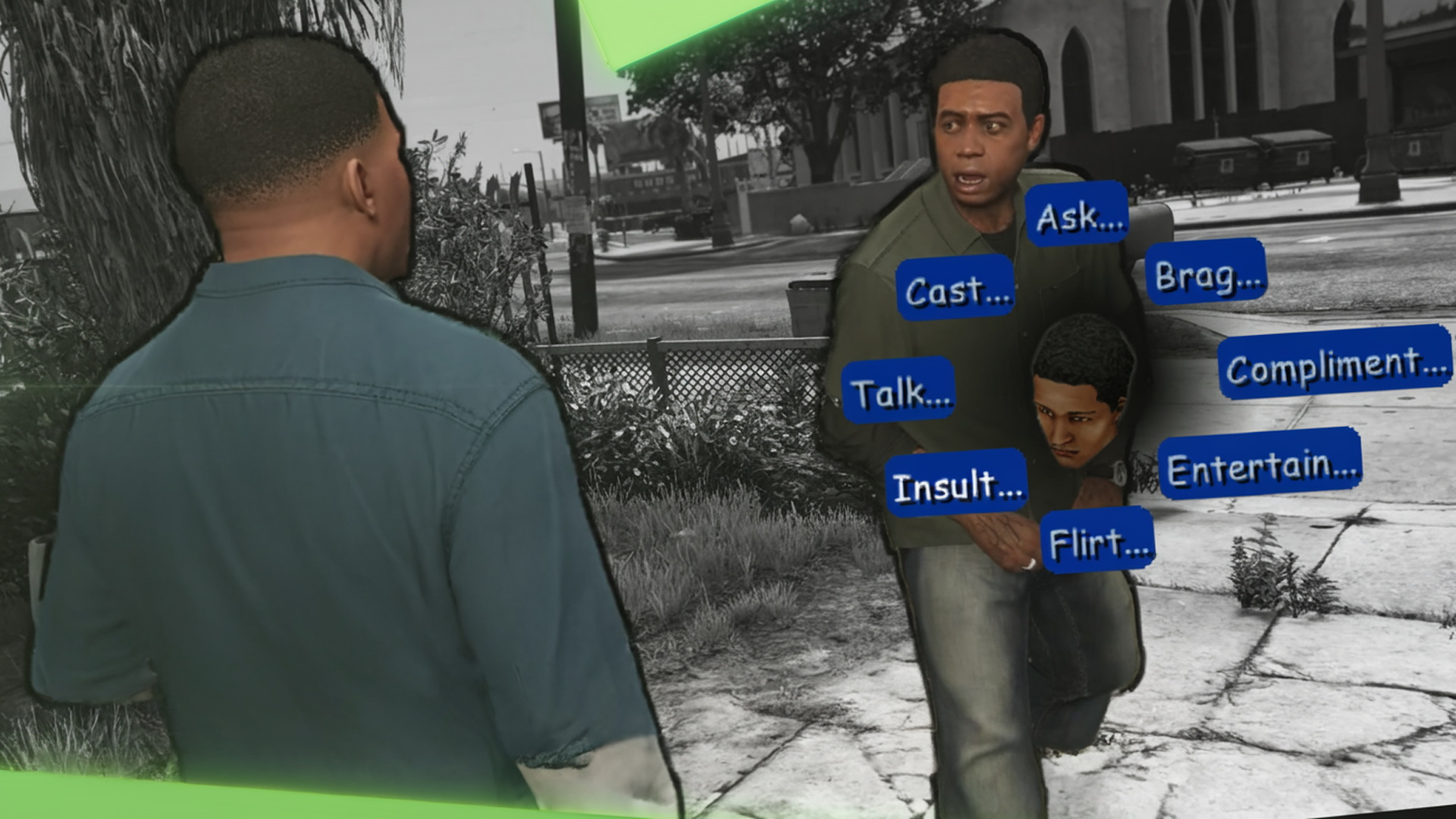
You know what always bugs me in open world games? NPCs never went deeper than just ‘press X to romance’? I mean relationships… real relationships… are systems where relationships evolve over time, where your standing with people shifts from acquaintance to friend, nemesis, or even lover, all based on how you treat them. Here’s the thing. We keep getting bigger maps, better graphics, and more side quests… but the people living in these worlds? They might as well be props from the way they just walk back and forth like 90 times without actually interacting with you. This is definitely the genre’s biggest flaw. So here’s the breakdown on our hot take: why most open world games skip social mechanics, what makes them so powerful when done right, and why the first developer to truly nail them could redefine the genre.
What Are Social Mechanics?
Before we go anywhere, What even ARE social mechanics?. Well, basically, they’re systems that keep track and simulate your relationships with NPCs. Think about The Sims. You don’t just talk to a Sim once and walk away; every interaction matters. It’s not just picking from a predetermined dialogue tree like a majority of the open world games nowadays and moving on, it’s actually being able to choose how you interact with someone. Stuff like hugging, joking, arguing, even just saying hello, all of it nudges your relationship meter up or down. Over time, those little choices add up, and suddenly that neighbor is your best friend, your worst enemy, or your new spouse.
That’s the power of social mechanics. They make NPCs feel like people you’re actually building a history with. It’s simple on paper, relationship bars, interactions, and consequences, which basically means NPCs stop acting like they have the memory of a goldfish..
Games like Xenoblade Chronicles actually visualize this idea… at least partially… through its affinity systems. If you fight alongside the same teammate long enough, they’ll start trusting you, unlocking new combat abilities and personal conversations. If you help enough people in a town, then the entire community warms up to you, changing dialogue and quest options over time. The game remembers your behavior and it rewards you with new stuff.
The Social scarcity of Open Worlds
Let’s be honest, most NPCs in open world games are like glorified quest boards with legs. You talk to them, they give you a mission, you complete it, and… that’s it. Maybe they’ll say “thanks” the next time you pass by, but it doesn’t really change anything, it’s not like they’ll remember the time you saved their life or stole their horse.
It’s surprising how rare social mechanics are in open world games. Especially when games put a ton of effort into environmental details, wind-blown grass, and reflective puddles, but the people populating these worlds barely get any attention. Sure, they look believable at a glance, especially when they’re walking back and forth or supposedly “hammering a new weapon”. But when given a closer look, when you actually “talk” to them, these “people” barely give any emotions to what you’re saying. Maybe enough to make every NPC you come across start looking like just another “Steve”.
Sure, there are glimmers of something more. Skyrim lets you marry certain NPCs, gain loyal followers/companions, and even watch some characters react differently based on what you did or the quests you’ve done before.
They have something similar in Kingdom Come Deliverance too, where if you commit crimes or fail quests, that shifts some of the NPCs attitude’s permanently. They did add another small cool feature though. The game actually tracks how people see you. If you show up to town covered in blood or wearing dirty peasant clothes, guards stop you and shopkeepers treat you with suspicion. If you dress like Noble, well… you get the point.
They’re not the best example by any means, but there are moments where it feels like the world actually gives a damn about how you play the game. These little touches hint at what’s possible, but they’re still rare exceptions. You don’t really see a lot of it out there, what you DO see nowadays is still mostly just big maps and static characters.
Why Social Mechanics Could Be the Gamechanger
So why should you care about social mechanics? Because relationships are one of the most powerful motivators in storytelling. I mean, think of it this way, in real life, people shape our experiences more than places do, and the same can be true in games. Imagine this: you help a struggling farmer early on, and weeks later you find out they’ve opened a thriving shop in the city, greeting you as if you’re their long-lost son. The point is, imagine if the game actually lets you build one-on-one relationships with certain NPCs, and you can do it however you like; chatting, gifting, serenading, or even outright insulting them. We do see a glimpse of these in Red Dead Redemption 2 through its honor system and the game’s blatantly obvious NPC reactions, but Xenoblade Chronicles goes even further by letting entire towns and the NPCs you’ve interacted before change depending how you treat them.
These kinds of interactions make the world feel like it’s alive and actually reacting to you And they make the story feel like it’s YOUR story. It’s no longer just you finishing the main quest and that’s it, but it becomes your own decision making. It becomes a lot more interesting when NPCs actually seem like they have memories, preferences, and even growth. Not just as another place where you get yet another fetch quest for the 100th time.
Alright, if a game truly nails this, it wouldn’t just be another cool feature. It would be THE feature. Open worlds are massive, beautiful, and full of side quests, but games rarely go all out on social mechanics. I don’t know about you, but a fully functional relationship system could make open worlds endlessly replayable. You might go through your first playthrough being an absolute saint, and the next one you could be an absolute menace, or you could just play it safe by being neutral the way through. The last ones a bit boring but you get the point. Essentially, the same game can tell infinitely different stories, just because you decided to treat the people in it differently.
Why We Rarely See It
Now you might be asking. If this is so great, why don’t more developers do it? One word: complexity. Here you’re not simply just building a single storyline. You’re building dozens of branching relationship arcs that have to interact with the main narrative without breaking it. You need logic that can track player actions, remember them, and respond consistently. It sounds like the devs need to consider everything, and in a way they actually do.
Even a dialogue-heavy game like Cyberpunk 2077 limits deep social reactivity to only a few of the characters, because scaling that level of responsiveness to an entire city takes an incredible amount of resources and is technically risky as well.
And let’s be real, most studios already struggle to develop massive open worlds on time. Adding a branching social system is like adding on another game entirely. It’s expensive, risky, and if done poorly, it can come off as gimmicky, doing more harm to the game than good. And yep, I’m looking at you Beyond Good & Evil 2, which until now is stil said to bel in development. Come on. It’s about time ubisoft.
Every so often, you find a game that experiments with it, even if it’s only a tiny little bit. When they do, it shows just how much potential there is when NPCs more than just standing quest givers. These aren’t perfect examples, but they show that this stuff works and players actually enjoy the idea of it.
I’m sure a lot of you are fans of this first one, or at least the series. Cause the game in question is Final Fantasy 7 Rebirth. It blends social mechanics into the popular series through its bond system, by making dialogue choices, side quests, and mini-games all affect who the main character grows closer to as you play. And they matter a lot in how the game plays out, because those bonds directly shape later scenes and gameplay. It gives the sense that relationships might be more than just a side feature, since they can even shift the story’s tone.
Dragon’s Dogma: Dark Arisen uses its pawn system to create a form of indirect social mechanics, where your main pawn develops a personality based on your actions, and other players’ pawns carry over memories from their travels. It’s an interesting twist, but it doesn’t fully explore direct NPC relationships in the game world.
And even as far back as Shenmue, they already had NPCs that have their own schedules, remember your past conversations with them, and react differently if you keep showing up… without having a visible relationship meter. Talk to the same shop owner every day and they’ll start recognizing you. Annoy them enough and they’ll actually stop being polite. Shenmue made a big point that even the world itself can be the main character in the game even if it’s not part of the main story.
Then there’s Fable 2 and 3, and this one is BIG. I’d even say it’s the most notable example of an open world RPG that made social interaction part of the core gameplay loop. Nearly every NPC had a visible relationship bar, which meant your choices, gestures, and gifts directly shaped whether you were seen as a beloved hero or a feared tyrant.
Don’t get me wrong, the interactions can still become repetitive if you chose the same handful of gestures over and over again, but the ambition was there, and it was a BIG DEAL: Fable 3 treated social mechanics not as a side activity, but as a BIG part of who your character was and how the world reacted to them. Even today, VERY few open world games have committed so fully to making the “people” in the world feel like they’re living or at least seeming like they have a mind of their own.
The Open World We’ve Never Seen
Now I want you to picture this: an open world game that pulls off every large-scale system we’ve seen so far, essentially the seamless implementation of great open world mechanics of a game like GTA V, but then to top that off, they slap on deep social mechanics of a game like the Sims, but applied to every NPC, not just to a handful of them,.
So it feels like every person you meet is more than just background noise. They have a personal history, a network of friends and enemies, shifting goals, and maybe fears that evolve with what you decide to do in the game. This means they’ll remember how you treated them. They’ll gossip about you to others. And just maybe… that gossip of you might even ripple through the social fabric of a city or faction, changing whether they boo you or cheer as you walk past them...
We’ve already seen a TON of games maxing out map size and graphical beauty, but to me,The real next-gen leap is actually a socially dynamic open world that blends the scope of GTA V with the complicated relationships that you have in The Sims. The first developer to pull that off won’t just make a good game, they’ll set a new gold standard for the entire genre. And it’ll be the kind of world people talk about, not for its size, but for the unforgettable people they met during their playthrough.
Conclusion
I really do hope this reaches some game studios because we’re sick of just seeing massive worlds with barely any NPCs to remember, or any NPCs that react and evolve to how you decide to play the game. If they were to put just enough effort into giving every character personal histories, goals, fears, and relationships, maybe… just maybe, it might turn simple quests into personal favors, or even long-term alliances. Ultimately, though, the real next gen leap isn’t going to come from bigger maps and better graphics, it’s going to come from socially dynamic worlds where it feels like your choices actually affect the world. Until a game pulls that off, this vision will remain just that, a dream waiting to redefine the open world genre.