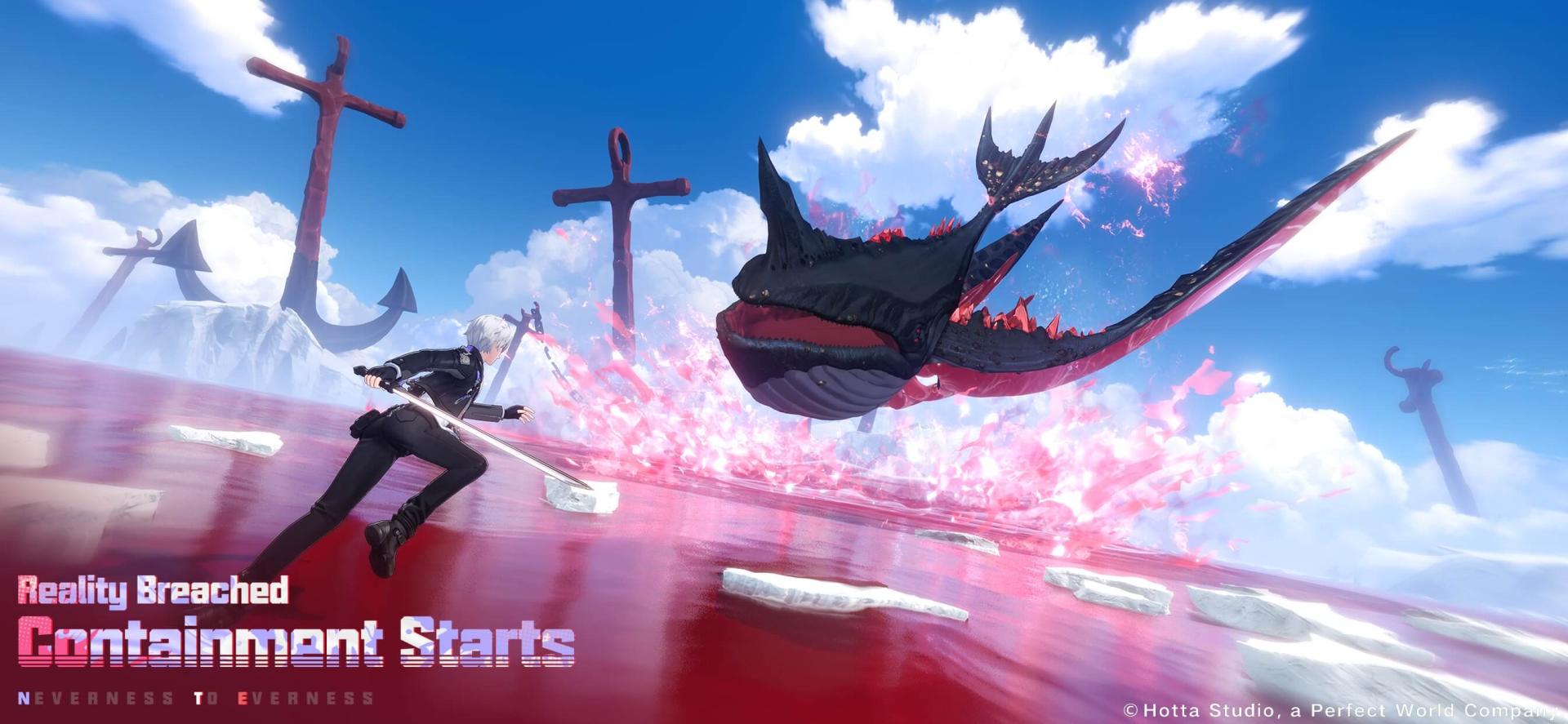
When Neverness to Everness launched globally, the conversation was supposed to be about its ambitious “anime GTA” formula, stylish city design, and massive commercial momentum. Instead, only days after release, the game found itself trapped in one of the gaming industry’s most volatile debates right now: generative AI.
The backlash didn’t explode because players found one suspicious image. It exploded because people felt misled.
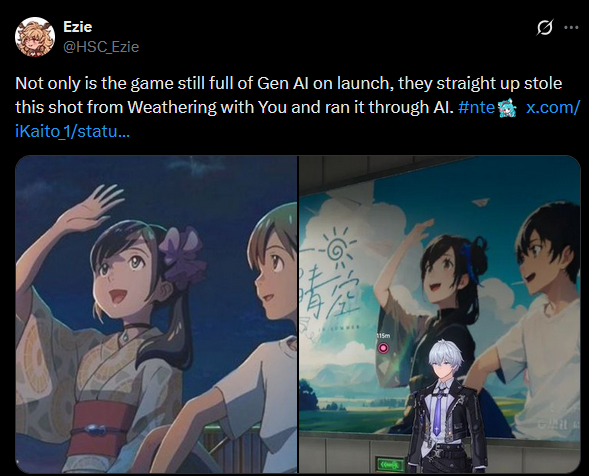
According to multiple reports, players began spotting assets inside the game and promotional material that carried common signs associated with AI-generated imagery: distorted details, inconsistent art styling, strange anatomy, and visuals that looked heavily derivative of existing anime works. One specific image drew attention for resembling scenes from Weathering with You.
The controversy escalated fast when popular VTuber Ironmouse publicly cut ties with the game after claiming her team had been told there was “literally no AI” involved in the project. Other creators and voice actors reportedly distanced themselves as well, including concerns raised by voice actress Meggie-Elise regarding the studio’s transparency around AI usage.
This stopped being a simple “AI art debate” the moment trust entered the conversation.
Hotta Studio’s Response
Developer Hotta Studio eventually released a statement acknowledging that “AI-assisted tools” had been used on “a small number of background and environmental assets,” while insisting that the game’s characters, story, and core world-building were made by human artists and designers. The studio also stated it would review and rework the flagged assets.
One allegedly AI-generated animation tied to the “Pink Paws Heist” content was reportedly removed shortly after criticism intensified.
From a PR perspective, the studio’s response felt very controlled and calculated. First, they admitted that AI-assisted tools were used, but only for a “small number” of assets. Then they tried to limit the damage by stressing that the AI usage was supposedly restricted to background or environmental material rather than major parts of the game like characters, story content, or core world design.
After that, the company shifted into damage-control mode by promising to review and replace the assets that players were criticizing. This is a common approach when studios face backlash online because it shows they are “listening” to the community while also trying to calm the situation down before it grows even bigger.
At the same time, the statement repeatedly emphasized that the heart of the game was still created by real artists and developers. The studio clearly wanted people to focus on the idea that human creativity remained the foundation of the project, even if AI tools had been involved somewhere in the pipeline.
The problem is that many players were already skeptical by that point. Once trust starts breaking, even a careful response can feel more like corporate damage control than genuine transparency. Instead of fully ending the controversy, the statement mostly shifted the debate toward whether the studio had been honest from the beginning and how much AI was actually used behind the scenes.
Why Players Reacted So Aggressively
What makes this situation particularly explosive is the type of game NTE is trying to be.
Anime-style games rely heavily on artistic identity. Fans are emotionally attached to character illustration, environmental mood, stylized cinematics, and handcrafted presentation. In this genre especially, players don’t just consume gameplay but also consume artistry.
Many players are worried that studios might start relying too much on AI instead of hiring artists to make original work. Even if developers say it was only used for small background assets, some fans still see it as the beginning of companies trying to save time and money by replacing real creative work with automation.
The other issue is how close AI-generated images can look to existing artwork. In Neverness to Everness, people immediately compared some visuals to scenes from Weathering with You, which made the situation even worse. Whether the accusations were fully accurate or not, the similarities were enough to make people suspicious.
A lot of players also connect AI usage with cutting corners during development. So when they notice strange-looking posters, backgrounds, or promotional images, they start nit picking and questioning how much effort actually went into making the game. In a genre where presentation matters a lot, that kind of doubt spreads very quickly.
More than anything, it really comes down to trust. Once players start feeling that a studio hasn’t been completely open about its use of AI, even small visual quirks begin to look questionable. Every frame, image, or cutscene gets picked apart for hidden signs, and from that point on, the issue stops being about a single asset or isolated example, it turns into a wider doubt about the whole production.
And to be fair, some players probably overreact whenever they see anything remotely “off-looking.” Internet AI witch hunts happen constantly now. There’s also a real possibility that some suspicious assets were simply rushed or poorly optimized rather than fully AI-generated.

On The Other Hand
Not everyone agrees with the backlash.
Some players argue the controversy has become exaggerated because the studio admitted AI was only used for minor environmental assets, not core character work or narrative content. Others believe AI-assisted workflows are inevitable in modern AAA and live-service development, especially for repetitive filler assets like posters, background textures, or temporary animations.
There’s also a practical argument here:
Games today are enormous. Open-world projects with constant live-service updates demand massive production pipelines. Some developers see AI as a support tool rather than a replacement for artists.
And honestly, that argument isn’t entirely unreasonable.
If AI is used responsibly for placeholder work, cleanup tasks, or internal iteration, many players probably would not care, if studios were transparent from the beginning.

The Trust Problem
The biggest problem for Neverness to Everness was simply the use of AI, it was the feeling that the studio wasn’t being fully upfront about it.
players were already excited about the game. NTE had strong momentum, huge visual appeal, and one of the most interesting urban fantasy setups in the gacha market. The game genuinely looked capable of becoming a major long-term competitor in the genre.
But once people start believing a studio hid something, every asset suddenly becomes suspicious. That kind of distrust spreads faster than any official clarification can stop.
I also think this controversy reflects a bigger industry problem. Publishers and studios clearly want the efficiency of AI tools, but they still market games using the language of handcrafted creativity. Eventually those two realities collide, and when they do, communities react hard.
At the same time, I don’t think this controversy automatically kills NTE.
If Hotta Studio genuinely reworks the flagged assets, becomes more transparent moving forward, and avoids further deception allegations, most players will eventually move on (especially if the gameplay remains strong).
The bigger question is whether this becomes a temporary PR disaster or the moment that permanently damages trust in the NTE brand. But still using AI generative tools as a creative replacement, It’s a big no for many.