If you’ve been keeping up with the releases from last year, Kingdom Come Deliverance 2 was definitely one of the best. Not only was the gameplay amazing, but it also has one of the biggest and most realistic open worlds we’ve seen in a long time. The world is full of huge landscapes, dense forests, and towns that actually feel spot on with that medieval feel. On paper, this is the kind of open world people have been asking for. But after spending some time in it, I kept asking myself a really uncomfortable question. Am I actually exploring… or am I just wandering around meaninglessly? And this isn't just about one bad game, but what I’m trying to say is that even great open worlds run into this problem.
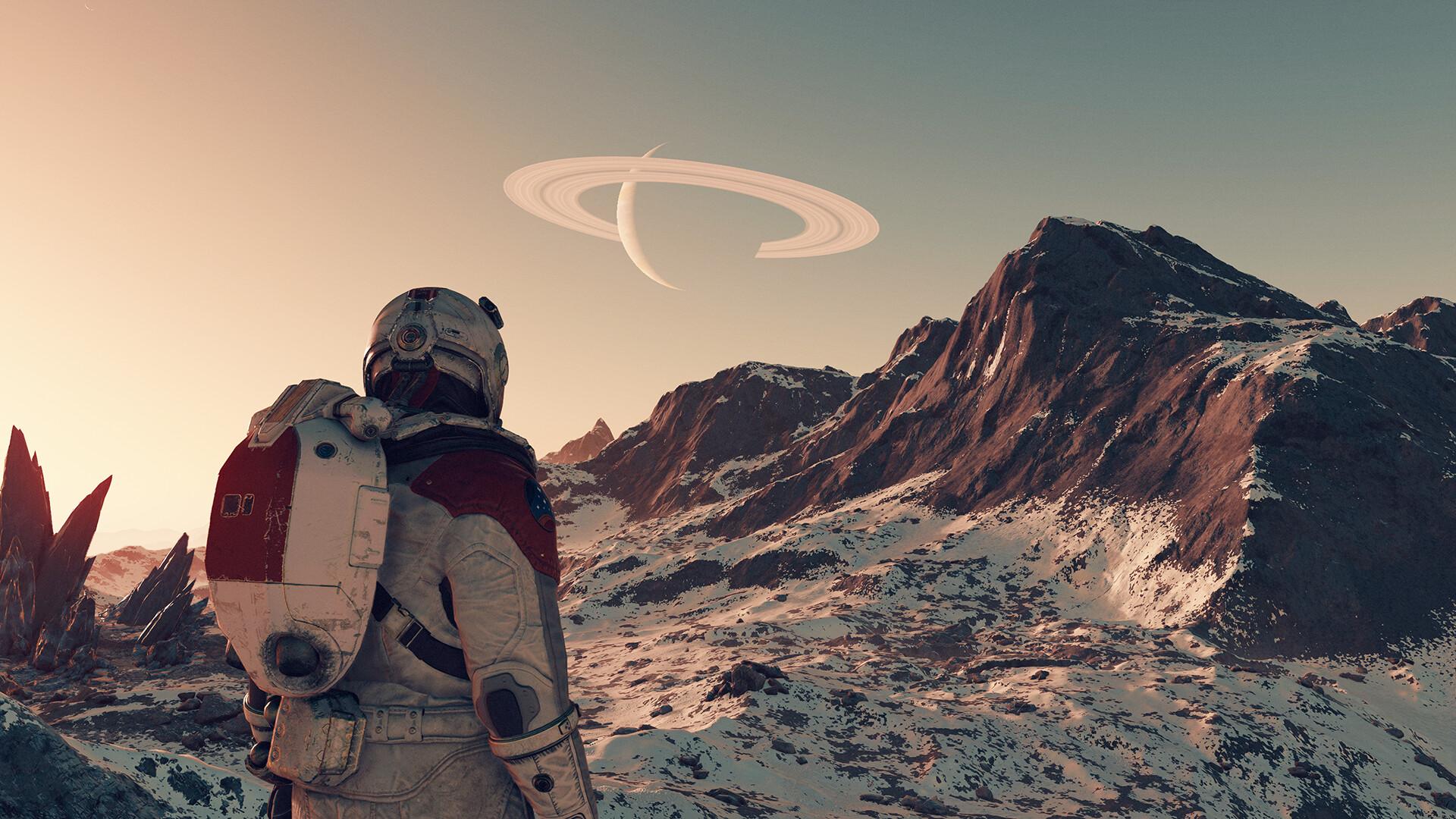
So the real question is “Why does exploring open worlds sometimes feel boring now?” And this is where a game like Starfield comes in. In the trailers, it offers almost infinite exploration with entire planets and what seems like endless space at massive scale. But once you actually start playing, you realize how little of that scale translates into meaningful discovery. You usually land on a planet, walk for minutes at a time, and mostly find the same things repeated over and over again.
Starfield did not invent this problem, but it makes it painfully obvious, especially when games like Kingdom Come are slightly guilty of it too. Open worlds keep getting bigger, more detailed, more impressive. So are modern open worlds just badly designed? Or are we playing them wrong?
Let’s zoom out and talk about what is really happening.
The Map Design Problem
When you think about it, Open world maps are supposed to pull you in. They are supposed to make you curious about what is over the next hill. But more and more often, they do the opposite. The core problem is simple. It’s the way game devs have been designing their maps these days. It’s all about what you can find or do while you’re exploring the open world. If it’s not rewarding to actually go out of your way to walk off the main path, then what’s the point? And even worse, if you make the map twice as large but you don’t double the amount of interesting activities, systems, or rewards, all you have really done is stretch the same content even thinner. And that’s what most games have done nowadays.
So you end up riding, walking, or fast traveling through massive stretches of land where nothing happens. In Kingdom Come Deliverance 2, you’ll mainly just be walking and riding horses. I know there's random events here and there but after 40-60 hours of gameplay, going from 1 quest to another is nothing short of a long walk. NPCs are almost nonexistent most of the time, their activities stretch out pretty thin. It’s not necessarily bad design, but it’s a trade off between realism and engagement. Kingdom Come seems to prioritize a world that’s realistic over constantly feeding you new discoveries, and for some this might be really appealing, but for others it can turn routine travel to just another long boring stroll. Quick tip from me though, you might wanna sit around the bathhouse so you can eye out the finest bathmaid.
And this is where Elden Ring absolutely nails it. Its world is dense, vertical, and constantly rewarding. You ride for a few minutes and you almost always find something interesting. A hidden dungeon, a secret boss, an underground area, or loot that actually changes how you play. You’ll notice pretty early that if you see something in the distance, it’s probably worth checking out.
Repetition Is the Silent Exploration Killer
But yea for most games, even when there is something to find, it’s often not rewarding enough to take the short to maybe hour long detour to explore. Most games nowadays… and I’m sure you’ve heard of this before… are guilty of making a ubisoft style world. If you haven’t heard of this term before, well… Ubisoft games like Assassin’s Creed are infamously known for making you go up towers to unlock extra content like revealing the map, locating side activities, and unlocking fast travel points. And following the success of Assassin’s Creed 2, other games started following this structure. It doesn’t sound that bad at first, but once you realize you have to do this for every region in the game…well you’ll know how much pain it is.
And that’s just one of the things game devs have the bad habit of these days. A lot of modern open worlds rely on content that looks different on the surface but behaves the exact same way. What I mean are side quests that are practically fetch quests at their core, and while the “narrative” around might be different. Let’s not kid ourselves. When a side quest tells you to find 10 broken twigs when the last just told you to catch 5 rabbits, they’re basically the same thing. Repetition doesn’t only come from reused content, but it also comes from interaction patterns that become predictable after you’ve spent a decent amount of time in the game.
And collectibles are even worse. I’m talking specifically about those collectibles that you grab and that only add to your achievements statistics. You run across the map grabbing items that don’t change your abilities, your playstyle, or the world of the game at all. These practically are empty items that you collect, and unless you’re a completionist, you probably won’t even bother finding these anyway. Except for the playboy magazines in Mafia 2, this collectible alone adds 1 minute of playtime on steam everytime I get it.
World Reactivity
This is where older or smaller games often outperform modern giants. Think about games like Fable 2, or even earlier RPGs with much smaller maps. You learn very quickly that if you wander off the path, something usually happens. You either find a weird NPC, a puzzle door that might lead you to a different realm, or maybe just a silver key to unlock special chests. With things like this, you’ll happily explore every corner of the map, cause I know I did. Now, I know Fable 2 didn’t have the most open of areas, but it shows that the world actually reacts when you do something.
But there are some modern open worlds that are decent at this. Ghost of Tsushima does this by putting you in the dark with no quest markers, literally. You’re just riding toward a main quest, minding your own business, when you hear shouting on the road. You turn the camera and see Mongols harassing villagers. You step in, deal with them, free the villagers, and instead of just getting some generic reward, one of them tells you a rumor. And the thing is, it never asked you to step in, you just feel like the game’s nudging you to do so, cause it feels rewarding.
Kingdom come deliverance 2 does something similar, just in a slower, more grounded way. If you picklock some chest in a random house early on and get caught, they’ll most definitely run to an officer to report you. Then hours later, if you go back there again, they’ll question why you haven't been caught yet. And if you do get caught later on, you’ll probably end up in a pillory where you’ll get shamed by people throwing random junk at you.
Basically, if a game makes you feel like exploring every corner of the map is going to lead somewhere or to “something”, then naturally, you’ll be motivated to keep doing that right? Especially if it changes something about your gameplay.
When Realism Becomes an Excuse
And speaking of gameplay, it’s nothing without visuals, and most modern open worlds are definitely visually stunning. There is no denying that. But it sure seems like the devs only go all in on the visuals and realism sometimes and slack off on the actual content of what’s in the visuals. I mean, I guess you can cut them some slack if it’s a story-based open world like L.A Noire, but if it’s something like Horizon Zero Dawn, then you’d probably expect something more from the world than just pretty backdrops and paths, right?
Well, the sad truth is that there’s nothing much past the stunning mechanised dinosaur-filled world. Once you step off the main paths, the backdrops start to crack. The world looks incredible, but it doesn’t really do anything. You move through these massive, detailed environments, but interaction usually boils down to fighting enemies, grabbing resources, and moving on. And even then, there’s not much of those either, so exploration rarely leads to anything genuinely surprising. At that point, it starts feeling less like an open world and more like Forspoken’s map.
And this is where realism turns into an excuse. The world is realistic, so it’s empty on purpose. But realism should be the foundation for the content that you can actually do inside it. As our lord and savior Gaben, argued during Half-Life’s 25th Anniversary Documentary, “realism itself isn’t automatically fun”. He questioned why something being “realistic” should matter if it doesn’t make the experience more interesting or engaging for the player. Visuals can hook you, but they can’t carry exploration alone. And once the wow factor fades, you start asking the same question every time you wander off the path: why am I even here?
Psychological Design
You might not believe it at first, but open world design is built around psychology. And once you start noticing it, it’s kind of impossible to unsee.
You know, when you explore the game’s world, and reveal a new part of the map, or maybe tick off an icon on the map, or even clear an activity? The game gives you a completion visual, a checklist, or a percentage going up somewhere… basically anything to show you achieved something? It gives you that sense of a dopamine hit, and it feels good, even if what you just did wasn’t exactly as exciting as your first fus ro dah. Over time, this makes you stop exploring because you’re curious of what you’ll find or get. It makes it more like you start exploring because your brain wants that next little hit.
And that’s not it, cause with how most games are designed lately, cough more ubisoft roast incoming cough, it gives you this fear of missing out on side content kind of feeling. I don’t blame you for falling for it though, cause every time you open your map, it’s flooded with icons. You know what I’m talking about, and if you don’t… well, does a bazillion question marks, collectibles, activities on a map sound familiar?
Even popular modern games are guilty of doing this. If you look at Marvel’s Spiderman, although it is a good game, it follows the Ubisoft-style game design, where every activity is just a bunch of checklists on the map. Once you unlock a tower, the game tells you exactly where to go in the world, and once you activate it… Well, you start becoming a sheep and just do the activities as you're told. And the worst part is you won’t even realize it's happening. These things are dumbing down how we should play the game. Sometimes it makes me think, what is it about game studios nowadays? Do they think we’re all just 8-year-olds?
But for some people, yup, I’m looking at you, completionists, they wanna chase the checklists and tick them all off. It’s not as bad when the side content is actually worth it. But nowadays, well, let’s just say a lot of “doubt” comes to mind. Players are forced to spend hundreds of extra hours doing extra junk just to get that 100%.
With all that being said, what makes modern open-world games worse nowadays isn’t just one thing. It’s the overall design that gives you an illusion of being “engaged”.
Why Indie Open Worlds Feel More Alive
This is where things get interesting. AAA studios, or even AAAA studios for the studios that think they’re better than everyone else, often design their games to have big maps and do that to flex their budget. Bigger worlds look impressive in trailers and store pages. They basically sell the ambition, but most of the time, that big map you see in the trailers doesn’t actually house any meaningful content inside of it.
Now here’s where it takes a turn. AAA studios might’ve just unintentionally left a gap that Indie games can actually fill. And while indie games can’t compete in size, they can definitely compete in making their worlds way more detailed than the AAA junk that’s out nowadays. Games like Hollow Knight prove that a smaller world packed with intention feels infinitely more explorable than a massive one filled with barely anything. Every corner in the game actually matters, every shortcut changes how you move, and every discovery you find actually alters your understanding of the world.
The point is, the devs behind Hollow Knight made sure that they didn’t waste a single space in the game with any bloat, and that’s how most successful indie studios have designed their open world games. They didn't start making a big map, but they started small and filled it to make it feel bigger and expanded it whenever it felt too crowded.
That is just one example, of course. I know a lot of people haven’t really played indie games, so I will say this. If you start playing indie games, you’ll be surprised at how well they design the way you explore in the game, even getting you hooked to keep playing. So if you’re an AAA kind of person and haven’t been playing any indie games, you might wanna start getting on them. I promise you that it’ll give you an experience that an AAA can’t, well, at least the AAA slop that’s been out anyway. But if you’re an avid indie enjoyer, go on and share your favorite indie open-world gems that you think some people might not know about.
Conclusion
So when you really think about it, the problem with modern open worlds is not that they’re too big. It’s that they are big without a reason. Size on its own does not create exploration. Detail on its own doesn’t create curiosity. And realism on its own definitely doesn’t create engagement.
What actually makes exploration work is meaning. It’s knowing that when you go off the path, something might happen. Something might react. Something might change how you play, or how the world sees you. Once that trust is gone, exploration stops being exciting and starts feeling pointless. And you also know that even the better open-world games can still fall into the same trap. Some corners of the best games still feel like they’re just there for extra space. I mean well, no game is perfect, I guess.
So maybe the question isn’t why open worlds are boring now. Maybe the real question is why developers keep choosing to focus on size over content, even when we have so many examples that show that it doesn’t damn work.
At GameTyr, we don’t judge open worlds by how big the map is. We judge them by how much changes when you step off the path. And until more games start designing for that, exploration is going to keep feeling like wandering, instead of discovery.
But then you might be asking, “So which open-world game does exploration the best?” Without a doubt skull and bones from Ubisoft. Okay, jokes aside, we think Red dead redemption is among the best.