If you ever wondered what it’d be like to play as one of the Four Horsemen of the Apocalypse, Darksiders 2: Deathinitive Edition might be one of those games. First released back in 2012 for PC, and 7th gen consoles, this open-world and oversized weapon hack-and-slash adventure was developed by Vigil Games and published by THQ. You step into the boots of Death himself, in a third-person perspective that blends fast-paced combat with RPG elements and parkour-puzzle-filled dungeons. Set in a post-apocalyptic fantasy world, the game expands on the universe of the original Darksiders. Also, the Deathinitive Edition is a remastered version of the game released later in 2015 with enhanced visuals and extra content. So, let's take a look inside the heavy boots of Death.
Side Activities
When it comes to side activities in Darksiders 2: Deathinitive Edition, there’s a good variety to keep you busy outside of the main storyline.
First up are the side quests. These range from simple fetch tasks to multi-step errands with mini-stories attached. Some involve helping out the NPCs scattered across the different realms, like hunting down escaped souls, clearing out corrupted zones, or gathering rare items. They aren’t particularly deep and do feel more like a chore to complete, but they do offer XP and good loot. To paint a picture for you, this is a quest where you have to go out to only fetch items in dungeons for a certain NPC in-game.
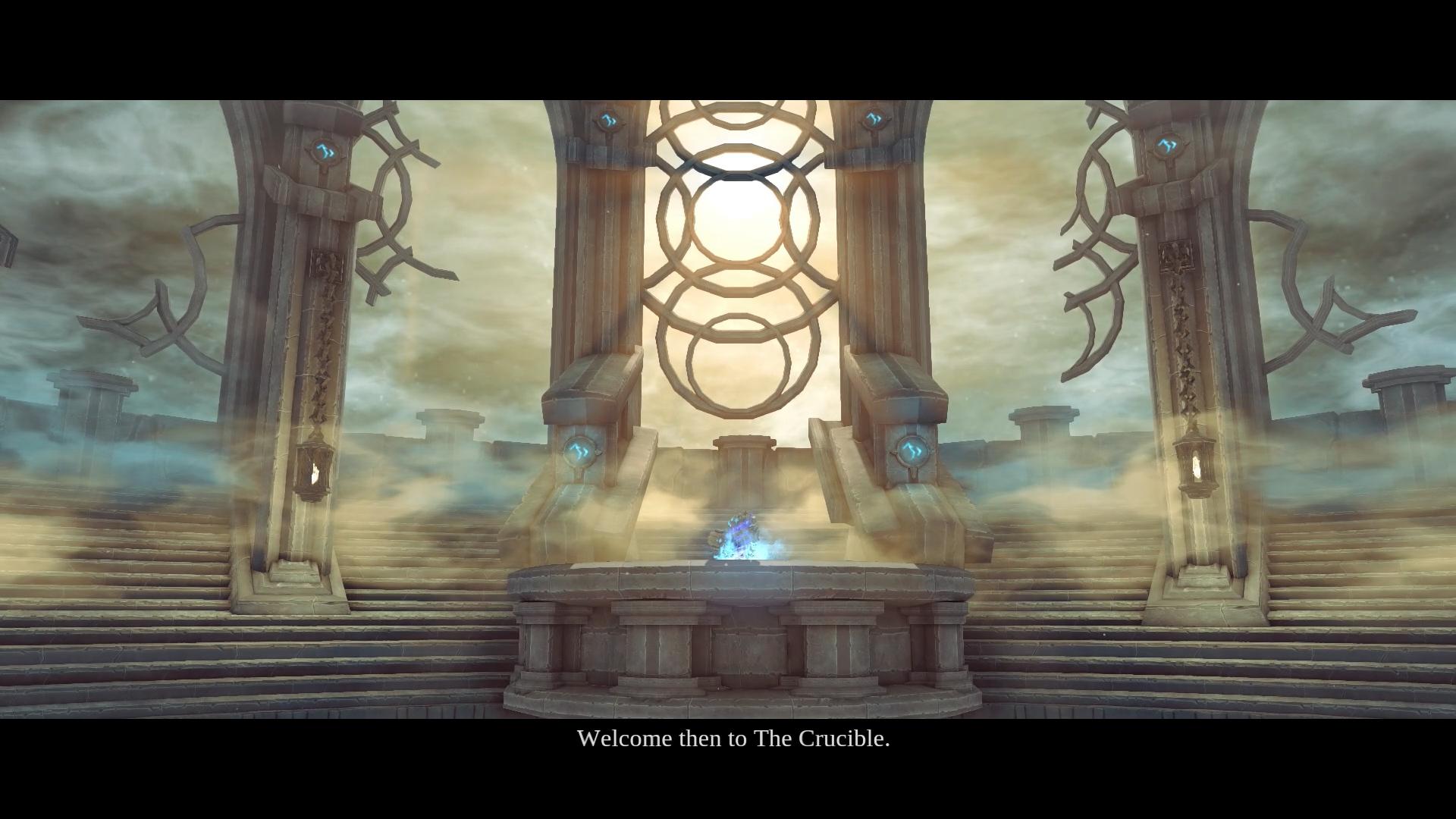
Then there’s the wave-based arena, like the crucible, which isn’t the traditional side activity but should be considered one nonetheless. Here, Death goes up against waves of increasingly difficult enemies. It’s purely combat-focused and offers a challenge, but not what you might expect. Surviving rounds feels more repetitive than challenging. Though it does reward you with a loot, it’s not something that is worth the effort.
Collectibles are scattered across the world, and they come in several flavors. You’ve got Book of the Dead pages, relics, stonebites, and gnomes. Some of these unlock lore entries, others lead to bonus loot. Like when you complete the book of the dead pages, you can unlock a dungeon full of bonus loot. Most of the page do require a bit of exploration or backtracking with late-game abilities just to collect them, so unless you’re a completionist, you probably won’t bother with collecting most of them beyond what you come across.
And of course, there’s shopping. Vendors across the realms offer different types of gear like talismans, scythes, to combat training and potions. While loot drops are the main way you’ll gear up, each shop gives you a way to offload junk, buy healing items, or snag unique weapons and armor pieces. Some merchants also offer rare items so be sure to keep an eye on those.
Overall, the side activities aren’t revolutionary nor do they have any depth, but they give you just enough reasons to explore beyond the main story.
Area of Freedom
Darksiders 2: Deathinitive Edition offers a multi-hub world that is divided into 4 realms. Each of these regions acts as a self-contained hub, with its own zones, dungeons, NPCs, and quests. While you can freely explore within a given region once it’s unlocked, meaning certain realms are off-limits until you hit the right point in the main quest.

Travel between these major regions isn’t done by just walking to the edge of the map. Instead, you need to use specific portals at the edge of the map, which gives the sense of connection between the realms. It puts you through a loading screen too, but it gets you there. There’s also a fast travel system that lets you warp between discovered points within a region, which makes backtracking for quests, collectibles, or shops pretty convenient.
As for the size and design of the regions, they’re moderately large and filled with points of interest like dungeons, hidden loot spots, and side quests. That said, the level design leans toward structured pathways rather than complete open roaming. There are few open spaces around the map. So, you’ll notice that many areas guide you through tight corridors, or scripted routes, which can make exploration feel a bit narrow sometimes. Invisible walls are pretty noticeable as well, you'll have cliffs or hills that you can't go past. So while there’s freedom to explore, it still feels like you're going through corridors more often than you'd like.
Basically, Darksiders 2 has more limitations than it has freedom.
Liveliness
The world of Darksiders 2: Deathinitive Edition is kind of satisfying to look at, with each realm offering a distinct mood and aesthetic. The Forge Lands are earthy and vast, filled with towering structures and molten rivers, while the Kingdom of the Dead gives off a ghostly, ancient vibe with decaying ruins and bone-covered paths. The environmental design does a solid job of conveying each area's tone through color, and architecture. Layered over that is a haunting soundtrack, low hums, echoes, and subtle ambient sounds like clanking chains or distant roars, which helps reinforce the feeling of a post apocalyptic world.
Settlements are few and far between, and they tend to be more functional than lively. You’ll find key NPCs in places like Tri-Stone and Eternal Throne, but don’t expect crowds or bustling activity. There are very few NPCs. Most characters stand in place and wait for interaction, and while blacksmiths hammer and merchants call out now and then, it’s mostly window dressing. There’s no day-night cycle or any NPC routines to give towns that lived-in feeling. They fall short in terms of immersion and dynamic behavior.
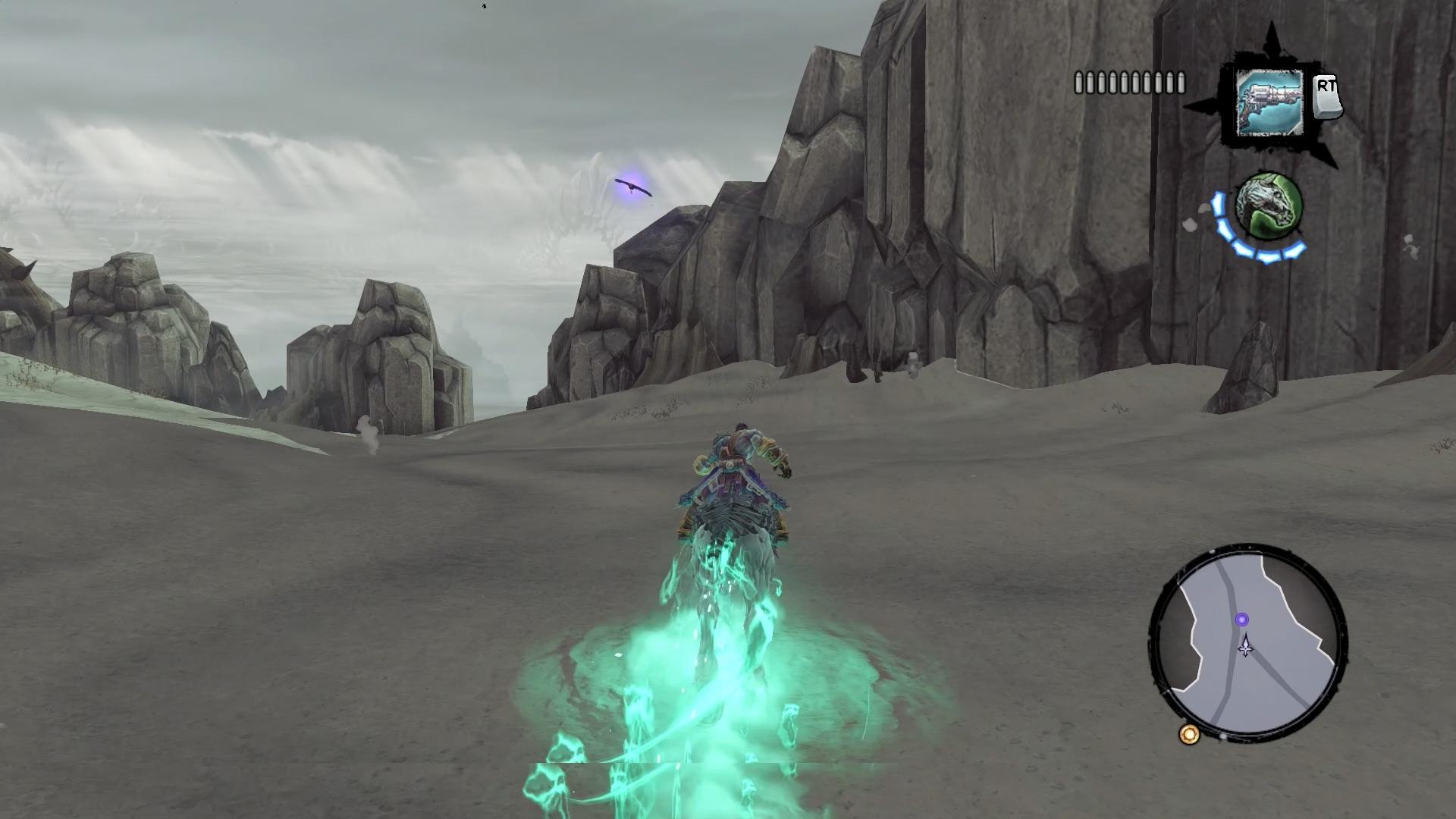
Once you leave town, the wilderness is a mix of enemy ambushes and more than occasional quiet moments. Each realm has its own set of creatures, constructs in the Forge Lands, undead in the Kingdom of the Dead, corrupted angels in Lostlight, but beyond that, the world feels empty with very very few NPCs in the wilderness. Wildlife is nonexistent, and you won’t come across travelers, or random events while exploring. There is one merchant in each of the realm's wilderness, but that is it. The roads and open fields might look grand, but they’re often just a backdrop for your next fight.
So with that being said, the game offers very little when it comes to liveliness.
Customization
Onto customization. First, there’s weapon customization, which mostly comes down to loot variety. Death can equip both a primary, weapon which are his signature scythes, and different types of secondary weapons like axes, hammers, claws, or gauntlets. These weapons come with different stats, elemental effects, and bonus perks like health boost or critical chance. You can’t modify individual weapons directly, but because gear drops are frequent and varied, you’ll often be switching based on stats and playstyle preferences.
One of the more interesting features is the possessed weapon system. These are special loot items that you can “feed” other weapons and items to level up. As you upgrade them, you can transfer over specific traits from the sacrificed gear, allowing you to craft a weapon with a custom blend of attributes. It’s a cool mechanic that adds strategy to inventory management and gives you more long-term investment in certain gear pieces, especially if you find a weapon type that fits your playstyle.
Armor customization follows a similar loot-based structure. You’ve got separate slots for shoulders, chest, gloves, boots, and talismans. Each piece can affect stats like strength, defense, arcane power, or resistance. Each piece of armor also has its own look to it, so there’s still something to make your version of Death look and feel like your own, whether you lean into brute strength, or fast mobility gear.

Then there’s the skill tree. You earn skill points by leveling up, and you can spend them in one of two branches: Harbinger which is focused on melee combat and critical strikes or Necromancer, which is focused on magic and summoning. Each tree has a set of abilities you can unlock, and you can mix and match points between both trees depending on your playstyle. While it's technically possible to max out the entire skill tree, you'd need to reach a very high level to do so, which typically requires a full playthrough plus what could be hundreds of hours in side activities or a few New Game+ run. Resets, or what this game calls Respecs, are also available through specific NPCs if you want to experiment with different builds. So, while you have a bunch of skills to choose from with each of them having different use cases, at the end of the day the hack-and-slash is what you’ll be doing the most throughout your playthrough.
All in all, Darksiders 2’s customization options are fulfilling to explore and experiment with.
Engagement
Darksiders 2’s engagement is practically almost non-existent. And even more so, the game doesn’t start off strong either. Areas unlock as you progress through the story, limiting the feeling of discovery early on. Side activities, while varied on paper, lack any meaningful depth. Most side quests are basic fetch tasks or repetitive combat missions, and collectibles feel more like checklist items than rewarding discoveries.

Gameplay itself follows a loop that gets old fairly quickly, enter a dungeon, solve a few parkour puzzles, fight a few waves of enemies, and move on. You do have the fun giant boss fights in this game as well, but just not enough to have a lasting impact on engagement. This pattern repeats across regions with only minor variation, making the overall experience feel padded. The game does offer satisfying combat and a decent amount of combat customization through weapons, possessed weapons and skill trees, and that can only carry the player for so long because it doesn’t add distinct feeling playstyles to the combat. But the lack of narrative stakes in side content, combined with the predictability of gameplay loops, makes it hard for the game to hold attention over long sessions.
In the end, Darksiders 2 struggles to create a compelling gameplay rhythm. It leans more on its style and combat than on substance or surprise, and that hurts long-term and even short-term engagement.
On that note, Darksiders 2 almost hit a partial pass on engagement.
Uniqueness
Darksiders 2 sits in a strange space when it comes to uniqueness. On one hand, it implements features from a bunch of different genres, hack-and-slash combat like God of War, Zelda-style dungeon puzzles, and Diablo-style loot systems, but at the end of the day, it combines them within an open world RPG game. It doesn’t necessarily break new ground in any of these mechanics, but it does blend them together into a package that’s somewhat rare to see.
That said, the way these elements are executed doesn’t always feel as unique as the concept suggests. The transitions between dungeon crawling, platforming, and loot grinding often feel disconnected, like pieces of different games stitched together rather than parts of a unified whole. The game has a combat system involving oversized weapons that feel fun, puzzles mashed into an RPG setting, and a loot system that gives you a unique experience during every playthrough. These systems each function fine on their own, but they rarely build on each other in meaningful ways. So while the overall mix of themes, aesthetics, and gameplay genres gives Darksiders 2 an illusion of its uniqueness, it’s more of a fusion of familiar parts than a truly unique experience.
To put this aspect to a close, while uniqueness is there, it falls short of being one of a kind.
Verdict
And with that, we’re ready to put this near-death experience behind us. While Darksiders 2: Deathinitive Edition shows promise on paper in several areas, it ultimately fails to deliver on most of them. Because of that, it’s hard to recommend this game. It falls short on freedom of exploration, creating a believable living world, and maintaining player engagement. That said, the game does offer a decent amount of side activities, enough customization options to keep things interesting, and a combination of genres that make it somewhat unique. All things considered, Darksiders 2: Deathinitive Edition settles into a D Tier on the GameTyr scale.