Ever wondered what it’s like to save the world both on the battlefield and war table, then killing demons with a mixture of combat skills and tactical planning? Dragon Age: Inquisition has you covered. Released in 2014, this RPG made its debut on PC, Gen 7th console and onwards. Developed by BioWare and published by EA, it followed up on the franchise's legacy with its big, bold new chapter. Set in the vast fantasy continent of Thedas, all viewed from a third-person perspective (though you can zoom out for a more tactical, top-down look for the point-and-click mechanic). You control the Inquisitor, a customizable hero caught in the middle of a civil war, demonic invasions, and political messes, because why stop at just one world-ending crisis? But with all that going on, does Dragon Age: Inquisition actually deliver a world worth exploring? Let’s take a look.
Side Activities
Let’s talk about side activities now. First up are side quests. Side quests in Dragon Age: Inquisition are everywhere. They range from simple fetch quests to involved missions with dialogue choices and minor consequences. You’ll find people needing help, forgotten villages, and ruins full of secrets. Some quests are tied to factions like the Templars, and your decisions can affect how those groups see you. Companion quests dive into your party members' backgrounds, letting you influence their personal arcs and gain each of their loyalty. Then there's the Judgment system at Skyhold. After certain missions, you're given the chance to judge prisoners or controversial characters. You can execute, imprison, exile, or get creative depending on the situation and your Inquisitor’s personality. It's a cool little touch of roleplay. You’ll also have some quests to close demon portals.

Next up is treasure hunting. You can find interesting loot scattered around ruins, abandoned forts, caves, and old battlegrounds across the world. Some treasure is locked behind puzzles or in hidden spots, while others are guarded by tough enemies. But the most exciting form of treasure hunting comes from dragon hunting. There are ten High Dragons across the map, and each one is a unique boss fight. Once you defeat them, not only do they drop rare items but they also drop rare materials like dragon bone and scales, which are top-tier crafting components. They also drop powerful gear and accessories. Each dragon feels like a mini milestone, which can be satisfying to some.
The war table at Haven and later Skyhold is where you plan the Inquisition’s more global movements. There are two kinds of operations here: story-critical missions that unlock new regions, and side operations or ops that offer passive rewards. Each op takes real-time to complete, ranging from a few minutes to a few hours. Some operations trigger special dialogue with companions or provide gear you can’t get anywhere else. It’s more of a strategic layer and menu based passive activity.
Crafting in Inquisition is deep if you want it to be. You can craft weapons, armor, and upgrades at the crafting benches in the settlements. To do this, you need schematics (found in loot, shops, or quest rewards) and crafting materials like metals, leathers, and cloths. There’s also potion crafting, where you upgrade healing potions, resistance tonics, and grenades by collecting ingredients.
If you like tracking down every last thing, there’s no shortage of collectibles. You’ve got shards (used to unlock magical barriers in the Forbidden Oasis), astrariums (constellation puzzles that reveal hidden doors), and basic collectibles. Some give you codex entries, while others reward you with loot or open hidden areas. They’re not necessary to finish the game, but they offer a completionist challenge. Many of them are marked on the map, but a few require actual exploration or solving puzzles to access.
Vendors are spread across the main hub and camps in each zone. You can buy gear, schematics, crafting materials, and sometimes rare items tied to certain factions. Some shops unlock only after you gain influence or complete specific quests. Skyhold has its own group of merchants that refresh inventory over time. Shopping won’t completely replace loot drops or crafting, but it’s a good way to fill in gaps or grab items you missed.
Ultimately, Dragon Age: Inquisition definitely wins a pass by the sheer amount of side activities it has.
Area of Freedom
Dragon Age: Inquisition doesn’t feature one large, continuous open world. Some might argue it’s not even open world due to its segmented world design, but it does have multiple safe zones which act as multi-hubs. It’s segmented into 11 major regions, including 2 of its hub/settlement regions. Thus, Dragon Age: Inquisition counts as open world game in our books. Each region functions like its own open-world zone, either being a settlement or a non-settlement region. While the game lets you choose which area to explore based on your current objectives or curiosity, not all regions are available from the start. Some areas require a certain amount of “Power” to unlock them, which is a resource earned by completing quests and activities.

To move between regions, you use the world map or the war table at your Inquisition headquarters. From there, you select a region on the map and fast travel to it. There’s no direct traversal between regions. You can also fast travel between camps or discovered points within a region once they’ve been unlocked.
As for the size and exploration of each zone, most regions are fairly large and give you a good amount of freedom to roam, but not every area is equal in size. Some regions are big and explorable, while some are on the smaller side, which are mostly the settlement regions. A majority of the regions have soft invisible walls that is essentially terrain that hinders you from going further, like a steep hill, but mostly when it's the edge of the map. Most areas are open and free to roam without the feeling of any corridor like areas.
In a nutshell, Dragon Age: Inquisition’s world design is definitely more on the higher end of the restrictive side.
Liveliness
Thedas is a world of visual variety. Each region carries a distinct atmosphere, where one region is a region full of stormy coasts, another is full of sand filled red canyons. You've even got snowy landscapes and lush hinterlands. The lighting and environmental color palette help reinforce the tone of each area, and the ambient soundtrack supports this further, but this is on top of the actual sound effects, wind whistles through trees, wildlife chirps in the background, and magical rifts pulse with ominous sound design.
Settlements vary widely in liveliness. Some villages, like Redcliffe and Crestwood, feature a decent amount of NPCs who walk around, interact lightly with their environment, and sometimes comment on nearby events. Larger hubs like Skyhold have even more NPCs, with companions training, guards patrolling, and crafters at work, though NPC behavior remains mostly in their own small bubble. The amount of NPCs in the settlements and dialogue between them helps each area feel lively, though.

Out in the wilds, things get quieter, a lot quieter. Most regions have wildlife like a ram roaming around, but the main activity comes from hostile creatures, bandits, or demons. Some zones feel less populated in between objectives, with large chunks of land containing only occasional combat. While there are occasional smaller camps you can rest at or fast travel between, these have very few NPCs. You may bump into the odd side quest giver off the beaten path, but random travelers or NPCs on the roads are almost entirely absent.
All in all, Dragon Age: Inquisition feels like it’s half the liveliness it could be.
Customization
Character creation in Dragon Age: Inquisition is detailed, but not overly complex. At the start, you choose your race, class, and gender. From there, you’re given a fairly decent set of facial customization sliders, the options include face shape, skin tone, eye and nose structure, tattoos, and hairstyles. However, body customization is limited. You can't adjust height, weight, or physique, and your voice is limited to one or two options depending on gender.
Now the skill tree. The skill tree system is tied to leveling up. Each level earns you a skill point, which you can spend across trees based on your class and specialization. Skill trees are divided into offense, defense, utility, and class-specific abilities, with each tree branching off into passive bonuses or active abilities. You can eventually unlock a specialization for your character mid-game, which adds an entirely new tree. And just note that you do have to make a choice on your preferred trees, because you won't be able to max them all out.
Since you'll be exploring in a party, you'll get to pick which companions will be in your party. Each character has a different background, specialty, and unique skills. You're also given the choice to customize their skill tree and gear. So you'll be able to adjust how your party will work around you. However, you won’t be able to change their base physical appearance. So cosmetic customization is strictly from the gear.

Weapon choices are tied to your class. Warriors use two-handed weapons or a sword-and-shield setup, Rogues use daggers or bows, and Mages are locked to staves. Each type of weapon has its own damage, animations, and stat bonuses. While you’ll find many different weapons throughout the world or as quest rewards, the differences are mostly in stats and visual design rather than drastically different mechanics.
Armor choices are more flexible. You can equip different armor sets for both your character and your party members, and each piece comes with its own stats and appearance. Some armor is class-restricted, meaning you can't equip heavy armor on a mage, for example. The amount of armor sets to choose from is decent, but most of the armor sets share similar silhouettes, so visual variety is there to a certain extent.
Weapons and armor can also be modified through an upgrade system that works alongside crafting. The twist with crafting is how modular it is, most gear has multiple slots where you can plug in different materials, and each material gives specific stats. That means you can fine-tune a sword or chestpiece to match your playstyle. When crafting gear using schematics, many items come with upgrade slots; such as grips, pommels, and blade components for weapons, or arms and legs for armor. These components not only change the appearance of the gear but also influence its stats, such as critical chance, armor rating, or bonus health. Additionally, weapons can be slotted with runes that provide elemental effects like fire, frost, or spirit damage, which can give you an edge against certain enemy types. Also, you can change the tint color of the armor, hinting a small additional personal touch.
Mount choices are available once you progress past the early game. You unlock your first mount quickly, and additional ones can be acquired through quests or by purchasing them. There are different types of mounts, including horses, and even exotic beasts. Each mount has a unique look but no meaningful gameplay difference, meaning no speed variation, combat abilities, or stats. They serve purely as a fast way to traverse open areas with different visuals.
Lastly, the Skyhold, your base of operations, offers a few customization options. You can change your throne, banner designs, bedspread, and decor by finding or unlocking new designs in the world. These changes are visual only and don’t affect gameplay. So that's about it.
To sum up everything in the customization aspect, you won’t be bored with the customization options in the game.
Engagement
Most of Dragon Age: Inquisition’s engagement loop is built around the Power and Influence system. Doing side content like closing rifts, completing side quests, claiming camps and capturing keeps earns you Power and influence. You need Power to unlock new regions through the War Table, and some of these regions are where main story missions take place. So once you enter this new region you gotta go through this main quest first. Once you’re out of the main story quest in this new region, you set up camps, explore the area, and get more side content to complete. So even if you spend a lot of time doing side content, you’ll eventually loop back to the main story. This structure ties everything together, making sure you're always working toward story progression, even if you're just off clearing side quests.
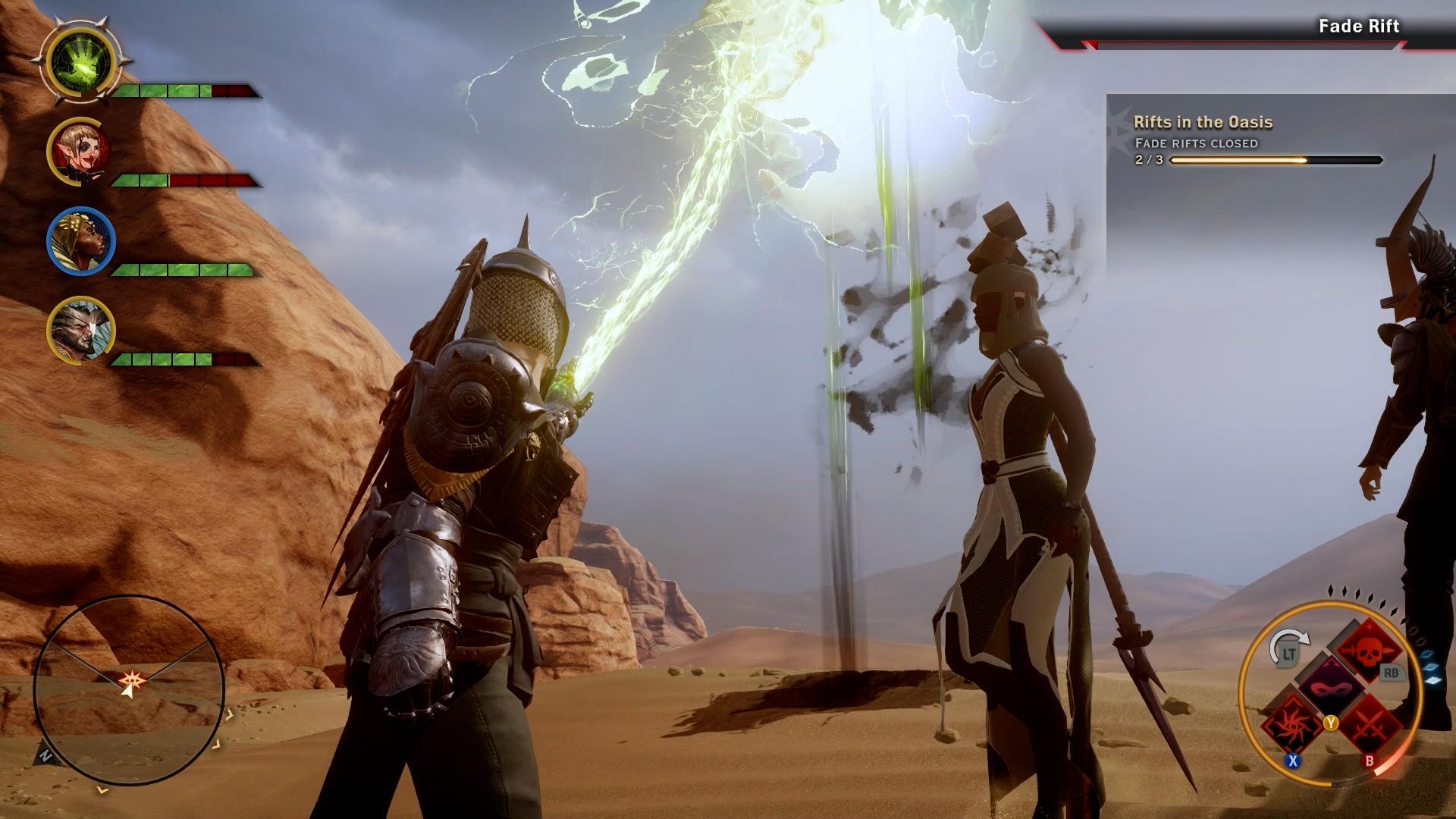
That said, this system can become repetitive over time. While early progression feels meaningful and satisfying, the constant need to farm Power through similar types of content; fetch quests, rift battles, and map cleanup, can start to blur together during long sessions. Some of this content also feels like a chore after a while, like in the case of rift battles, which have little to no variations. The overall goal of racking up power remains, but the variation in side tasks doesn’t always keep up with the game's length, making the engagement loop feel stretched in the later stages.
Essentially, Dragon age: Inquisition’s engagement starts strong but still struggles to endure over the full duration of the game.
Uniqueness
Dragon Age Inquisition combines a mechanic into the open world genre that we have not seen before, of which is skill based combat with a tactical twist on top of it. It's just simply something rare in the genre. Rather than just mashing the same button over and over again, you can choose between multiple combat skills that have their own animation and effects. You’ll be able to dodge using a combat skill or even summon an earthquake. This also translates to the top down approach, which almost feels like the more usual way to play combat skill based games. So, you have the choice to choose how you want to play the game.

But it doesn’t end there. Most RPGs cast you as the lone hero, the chosen one, the rogue outsider, the underdog with a destiny. This game tweaks that formula a bit. Sure, you’re still special, but you’re not just fixing problems with a sword and some fireballs. You’re running an entire army as well. As the Inquisitor, you're in charge of a growing military and political force. That means commanding armies, managing a war council, forging alliances, making judgment calls, and occasionally deciding who gets thrown in the dungeon. It’s less “wandering adventurer” and more “fantasy leader with a sword.”
That leadership angle isn’t just tied to the war table or castle decisions either. It carries over into combat. Whether you’re charging into battle with a greatsword or casting spells from the backline, you still feel like you're leading your squad. You decide your party composition, direct their tactics, and can even pause the action to issue commands from a top-down view. It’s not just about doing the most damage, it's about being in control over the whole party.
So with that, Dragon age inquisition combines a feature with the open world genre that makes it like no other.
End Verdict
And with that, our time with the Inquisition comes to an end. Dragon Age: Inquisition could be a game to note on your list, especially for those who enjoy ticking off side activities and diving into a ton of customization options. On top of that, it has something that makes it unique even in the genre. But outside of that, it struggles to hold its ground. The engagement loop starts off promising but quickly becomes repetitive. The world lacks the freedom you'd expect from an open-world RPG, and the liveliness of its regions falls short. All things considered, Dragon Age: Inquisition falls into the B Tier on the GameTyr scale