Ah, Fable III... the game that places you as a prince promising you could rule a kingdom… and then made you busk for money. Released back in October 2010 for the Xbox 360 and later in May 2011 for PC, Fable III was developed by Lionhead Studios and published by Microsoft Game Studios. Set in the Fable-flavored kingdom of Albion, the game mixes third-person hack-and-slash combat with Fantasy RPG elements and a sprinkle of royal political drama, ‘cause ruling is never as simple as slashing bandits or flirting with townsfolk. Let’s dive into the wild, weird, and sometimes wonderful world of Fable III.
Side Activities
Now, let’s talk side activities, because what’s a fable game without a little quirky distraction from the main story.
Side Quests in Fable III are scattered throughout Albion and range from helping townsfolk with personal problems to chasing chickens in a village square. Some are straightforward fetch quests, others toss in humor, or even moral choices. You’ll know when you play the game, but there’s just something about Fable side quests that have that unique sense of Humor. Take a look at this side quest that gets you involved in a mini-sized Dungeons and Dragons-like game. Anyway, the number of side quests in Fable 3 aren’t exactly endless, but they do add charm and help flesh out the world in that quirky Fable style.

For earning gold, you’ve got Jobs, which are essentially money-making minigames. Blacksmithing, lute playing, and pie-making are the main gigs, each involving rhythm-based button presses. They’re repetitive by design, but necessary if you want to afford... well, anything later in the game. It's not glamorous, but hey, sometimes you just gotta get your hands dirty to get that bread.
Fable 3 also lets you earn gold through Real Estate & Property Management, which is surprisingly solid. You can buy homes and businesses, upgrade them, set rent or prices, and watch your bank account grow passively while you do absolutely nothing. It’s one of the most efficient ways to get rich, and it even affects how NPCs perceive you.
On the more social side, there’s Relationships and Family. You can interact with every NPC, get married with your lover and even have kids. For each NPC, you’ll have a relationship bar, and you increase it by chatting, dancing or whistling at them. You can also gross them out to decrease the bar, so that’s always an option too. And everytime it’s maxed out you get a special side quest that’ll level up your relationship. You can pretty much do this until the very highest level, which is… you guessed it… Marriage. This feature adds a layer of social simulation that's kind of similar to the sims in a way.
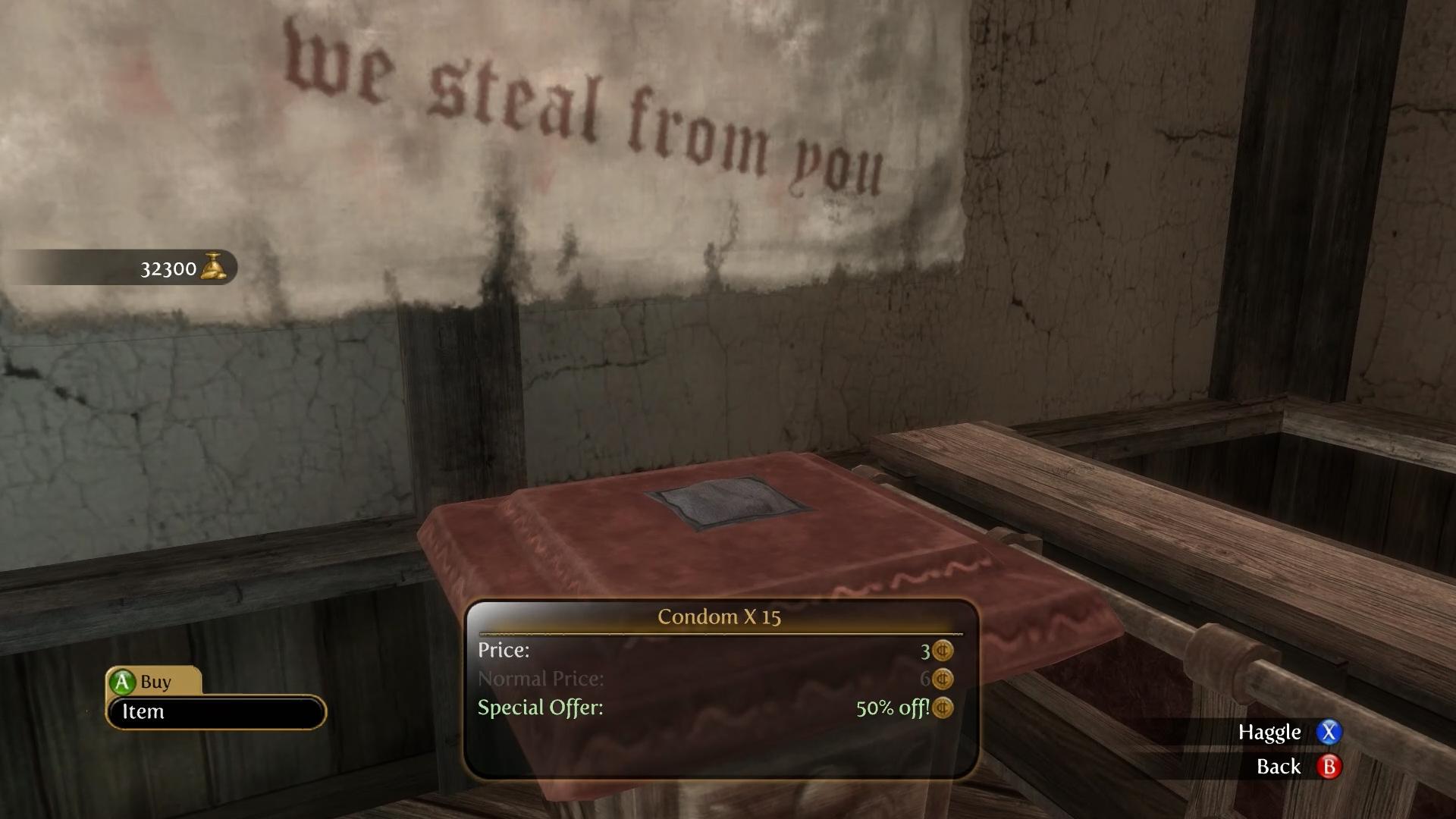
Then there's Shopping. Whether it’s weapons, clothes, furniture, random items or potions, the markets of Albion offer plenty to browse. Prices vary based on region and your reputation, and relationship with the NPC. Each shop or store in the game also offers a set of different items. So you'll most likely find unique items in each of the stores in Albion.
Finally, Collectibles. These include Silver and Gold Keys used to unlock special chests, special demon doors, rare books, gnomes you need to shoot (yes, they insult you constantly), and Auroran flowers. They’re scattered around the world and appeal to completionists, though the rewards vary in usefulness. The Keys are obviously used to open special chests, which reward you with either gold or useful items. Then there are the Demon Doors, magical, talking stone faces that serve as mini-challenges or riddles. You’ll need to meet certain conditions to open them, like being in love, wearing specific outfits, or showing off your moral alignment. Inside? Hidden areas filled with loot, jokes, or just weird scenery. They’re optional, but fun for players who enjoy a bit of mystery.
Overall, there’s definitely a wide variety of side activities to mess around with.
Area of Freedom
When it comes to openness, Fable III is rather lacking, especially in the seamless, go-anywhere sense. Instead, the game is divided into 16 distinct regions, towns, wilderness zones, caves, and dungeons, classifying it more as a multi-hub open world game. So while Albion feels like a single kingdom, you’re really moving between self-contained areas rather than one continuous map. Also, some places are locked behind story progression, gradually opening more of the map as you move through the main questline.
Traveling between regions is handled mostly through fast travel, which you can access via the in-game map. You can also walk between certain regions by finding their connecting exits, though this leads to a loading screen. Some special areas, like the desert region of Aurora can’t be traveled to other than by using fast travel as well. So, that further decreases the feeling of how connected the world is.

Each region in Fable III varies in size. However, while there are a many regions that offer medium sized to big open areas, some of them are rather limited in size. Towns like Brightwall or Bowerstone Market have shops and NPCs to interact with evenly spread within the open area, while outdoor zones offer some light exploration, enemies, and the occasional collectible. That said, some regions feel narrow or guided, with defined paths and a few open pockets here and there. There are invisible walls almost everywhere and blocked-off terrain that limit how far you can wander. Even in the wider outdoor zones, you’ll hit the edges pretty quickly.
All that being said, Fable 3 more than definitely lacks in the area of freedom department.
Liveliness
Albion in Fable III is a kingdom in the midst of industrial change, and the game’s regions reflect that with a decent mix of visual variety and atmosphere. From the cozy countryside charm of Brightwall Village to the gloomy, factory-choked streets of Bowerstone Industrial, each area carries its own tone. Snowy landscapes, swampy forests, and craggy caves all have distinct moods, and the game’s dynamic lighting effects help sell each environment. The ambient soundtrack supports it nicely, you'll hear birdsong in the woods, distant market chatter in towns, and a soft, eerie quiet in caves or crypts.

Settlements try their absolute best to feel inhabited. Larger towns like Bowerstone Market or Brightwall are populated with a lot of NPCs such as vendors, guards, and townsfolk all going about their routines. They all spend their time chatting, shopping, dancing, or even getting absolutely wasted. This is all on top of the day and night cycle, where stores close and the streets become empty at night. NPCs also react to your character’s morality and title, which adds a layer of interactivity. That said, wandering through a bustling market square or passing by a group of villagers applauding your royal status makes the experience feel rewarding. These features all add up to feel like a believable atmosphere, at least in the settlements.
Once you leave the town gates, however, things quiet down, and that still might be an understatement. The wilderness areas have their own set of threats, wolves, bandits, and mercenaries, but they’re mostly empty aside from combat. You won't find any NPCs strolling around these areas, and you definitely won’t run into campsites, caravans or travelers that make the world feel in motion. Wildlife is also pretty much non-existent, further increasing the feeling of emptiness in the wilderness.
Summing the Liveliness up, Fable 3 does its do an acceptable job of presenting a rather believable world.
Customization
Let’s start with weapon customization. Instead of a traditional loot system with tons of different weapons, Fable III takes a more streamlined route. You’ll mostly be using a handful of three weapon slots, consisting of the melee weapon, ranged firearm, and magical gauntlets slot. Each of these slots house space for a variety of weapon choices as well, given that you already collected them from looting or purchasing them. There are weapon rarities as well in the game. So you can be sure that there are more than a few varieties to choose from. Also, your melee and ranged weapons can evolve over time based on your actions. For example, if you generally just take the more good samaritan route during your playthrough, your weapon’s appearance might change, growing brightly coloured vines that reflect your behavior. Some weapons also have specific challenges tied to them, which, once completed, unlock an upgrade to the weapon. Each weapon has 3 upgrade levels. Magic works a bit differently: you wear gauntlets that control elemental spells like fire, ice, vortex or blades, and you can combine two elements for a hybrid effect, like fire and blades or shock and vortex.
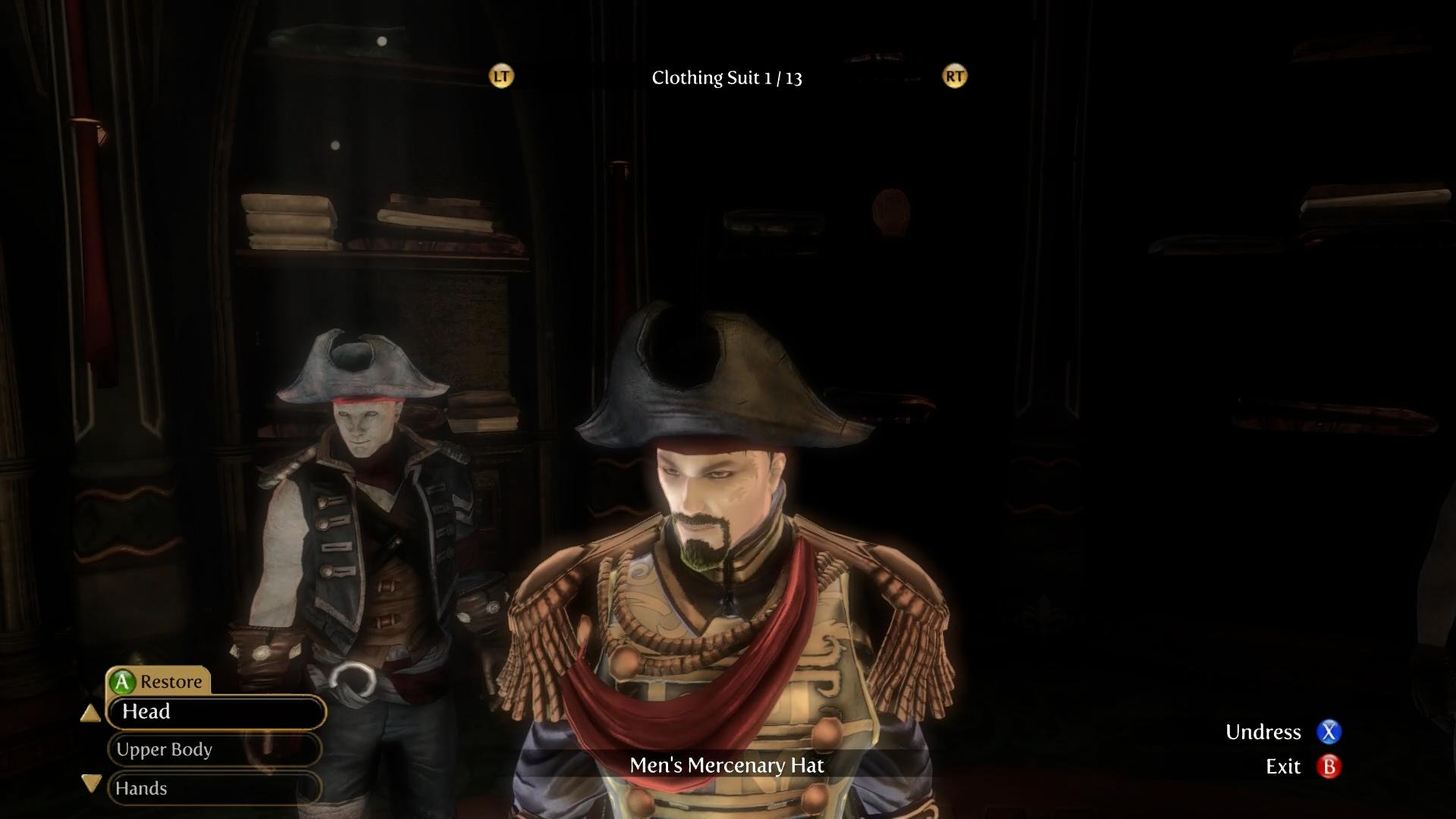
There are a decent variety of clothing customization. You can mix and match individual clothing pieces, hats, tops, trousers, boots, and you’re free to dye each piece in up to three different colors. The dye system gives you some flexibility to personalize your look, whether you want to go full saint, goth, or something completely goofy. The clothing sets in the game also usually have some sort of theme to it, which also lets you dress up as a chicken. There’s also no armor system, so clothing is purely cosmetic.
Finally, we’ve got home furnishing. While you can pretty much own every house in the game, you can still customize each and every one of them with furniture of your choosing or if you’re lazy like me you just let your butler do it for you. If you want to do it yourself, you can go inside and rearrange furniture, and swap out decorations. Items like beds, chairs, tables, and rugs can be bought from shops, and placing them is pretty straightforward using the in-game interface. It’s not the most detailed interior system, but it adds some personality to your home, especially if you’re into the landlord roleplay side of things. Speaking roleplay, these homes house your families in them. And what's interesting is you can choose to marry more than once. So you can quite literally become Gengis Khan.
Before we wrap the customization up. Although Fable 3 has a unique way of acquiring new skills, you can still max out everything by unlocking every chest with the locked skills in it. So with that being said, it’s not a customization feature that we will include in this review.
To sum things up, the choice of things to customize in the game is definitely more than a few.
Engagement
What keeps Fable III engaging isn’t just its side content, it’s how the game slowly ties your choices and gameplay systems back into the main story. The Road to Rule path acts as a progression system that unlocks core abilities and gameplay features like buying and renting houses, flirting to even scaring NPCs. But here’s the hook: these unlocks require skill points called Guild Seals, which you primarily earn by advancing through the main story. So if you want to fully engage with Albion’s mechanics, whether it’s property management, family life, or improved combat, you’ll be dying to keep pushing forward in the story.

Well… at least until you’re 3 quarters into the game, because at that point you'll be able to reach the end of Road to Rule. But that's where another interesting feature comes in that stretches engagement until the end of the game. The story presents you with a series of weighty decisions, whether to keep promises or sacrifice integrity, such as choosing between turning a shelter into a brothel to gain more gold or keeping it as it is. These choices aren’t just for show, they quite literally affect the whole world. They also affect your character’s morality, how NPCs react to you, and even your character’s appearance. Together, these systems give real stakes to your journey outside of the main story while still keep you engaged all the way to the end, making Fable III a game where narrative and gameplay systems walk hand in hand.
So, Fable 3 has engagement that stretches all the way to the end.
Uniqueness
What truly sets Fable III apart from other open-world RPGs is how it allows you to live in its world, not just fight through it. It does this by presenting you with unusual RPG mechanics.
You may be royalty, but the game still lets you live the way you want to. Want to settle down in a modest house, get married, raise children, and decorate your home? The answer to that is the game’s social and property mechanics. Or you can climb the property ladder, essentially become Albion’s biggest landlord, and rake in rent with the game’s Real Estate and property management system. The game also gives you the option to work humble jobs like blacksmithing or playing lute gigs, despite your noble bloodline, giving you a variety of ways to earn gold. These mechanics aren’t just slapped on; they’re fully functional systems that allow you to shape your identity in the world, almost as if you're living in it. This is all displayed when it comes to maintaining your family. You can do this by constantly interacting with them, or upgrading your family house, ‘cause otherwise you gotta pay child…wife or even ex-wife support.

This level of lifestyle freedom and immersion from all these mechanics, is still extremely rare in open-world RPG games, especially ones with a royal or world-saving narrative. The ability to balance both epic stakes and mundane personal choices gives Fable III a distinct flavor that few other titles, even today, replicate.
Thus, Fable 3 passes the uniqueness aspect with flying colors.
Verdict
As the final chapter of Albion unfolds, it’s time to weigh the tale of Fable III. Fable III is a decent choice for an open world game, one that leans heavily into fantasy RPG mechanics. The game offers more than a fair share of features that might pull you in, whether it’s the above-average amount of side activities, a solid range of customization options, multiple engaging mechanics, or its immersive lifestyle-driven uniqueness. That said, a few caveats hold it back: the liveliness noticeably dips outside of settlements, and the area of freedom often feels restricting than seamless. All things considered, Fable III still earns its place in the B tier here at GameTyr.