What happens when you step out of a sealed vault and into a shattered version of Washington, D.C.? Fallout 3 answers that question by dropping players into a massive post apocalyptic world where survival, exploration, and choice drive the experience. Released in October 2008 for PC, PlayStation 3, and Xbox 360, this open world action role playing game was developed by Bethesda Game Studios and published by Bethesda Softworks.
Set 200 years after a devastating nuclear war, the game takes place in the Capital Wasteland, a ruined stretch of the Washington metropolitan area where danger and discovery often sit just a few steps apart. Players can switch between first person and third person perspectives while engaging in real time combat that blends gunplay, melee encounters, and RPG systems. It remains one of the defining post apocalyptic open world games of its generation. So after all these years, does Fallout 3 still hold up as an open world worth exploring, or is it more of a relic from a different era of game design?
Lengthy Side Quests, Loot Driven Exploration, Crafting, and More
Fallout 3 offers a strong variety of side quests that often feel just as intentional as the main storyline. Many are tied to factions scattered across the Capital Wasteland, letting players influence local politics, settlements, and power struggles. Others stand completely on their own, telling smaller but memorable stories that flesh out the world. There are even questlines that lean into the bizarre side of the Fallout universe, such as the alien themed encounter that is almost like a whole different story altogether. The structure encourages player choice, with multiple outcomes depending on how situations are handled, making side quests one of the game’s most substantial optional activities.
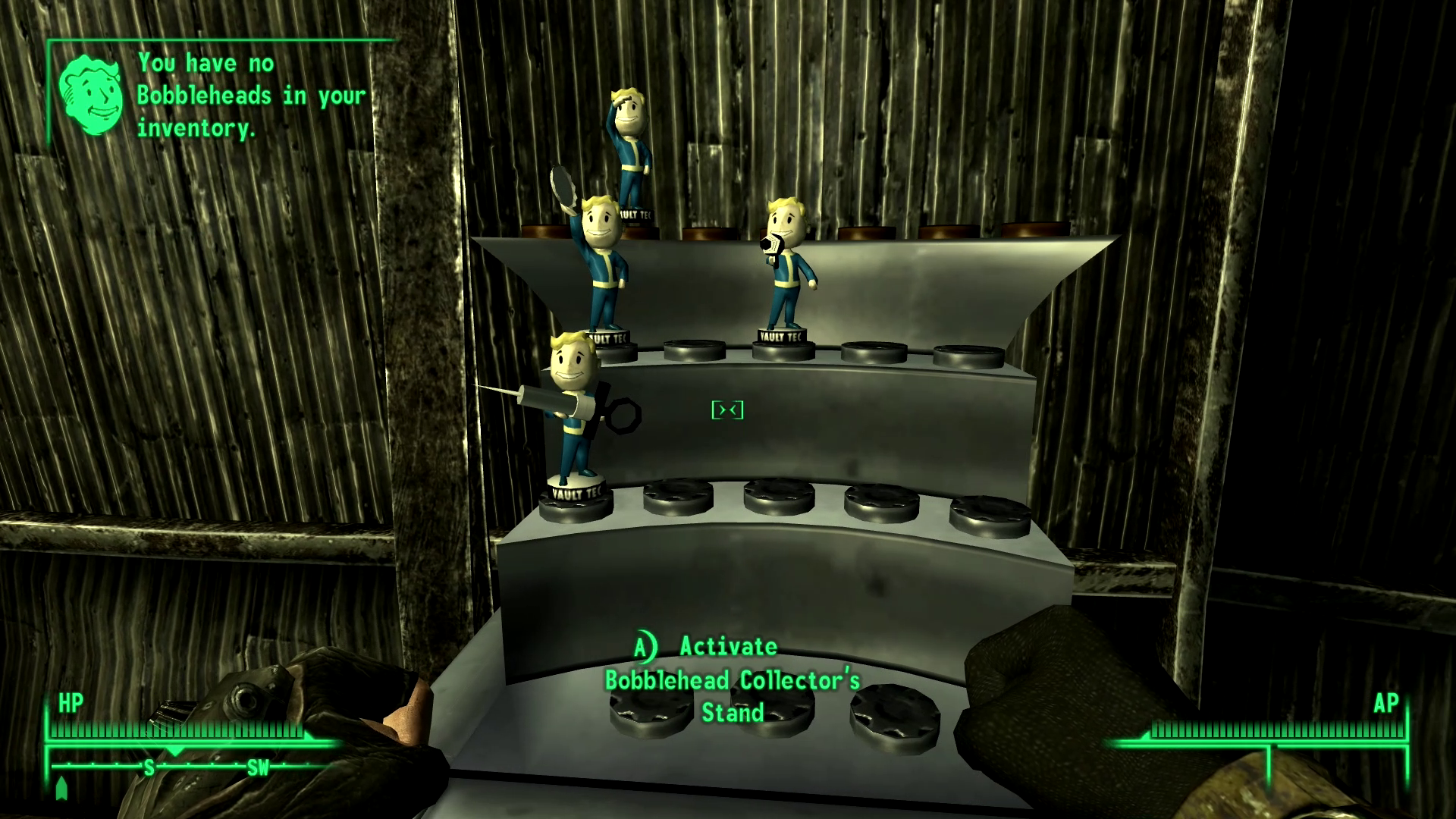
The game keeps collectibles simple with Vault Tec bobbleheads placed throughout the map. Each one permanently boosts a specific stat or skill, giving them practical value beyond completionism. Because many are hidden in dangerous or remote locations, finding them naturally overlaps with exploration rather than feeling like a checklist task. While there is only one collectible category, the gameplay benefit makes each discovery worthwhile.
Looting drives much of the player economy, and stores provide a reliable outlet for turning scavenged gear into useful resources. Vendors carry different inventories, which means checking multiple shops can lead to better weapons, armor, or supplies. On top of that, wandering merchants travel through the wasteland, sometimes appearing when least expected. This adds a bit of unpredictability to trading and reinforces the sense that the economy still survives despite the collapse of civilization.
Exploration is a huge chunk of the game, and it’s consistently rewarded, especially when diving into abandoned vaults, metro tunnels, and forgotten landmarks. These locations often hide rare weapons, stronger armor, or valuable equipment that can noticeably improve survivability. The process rarely feels forced since the open world design naturally pulls players toward unusual structures on the horizon. For players who enjoy searching every corner of the map, the payoff is usually tangible.
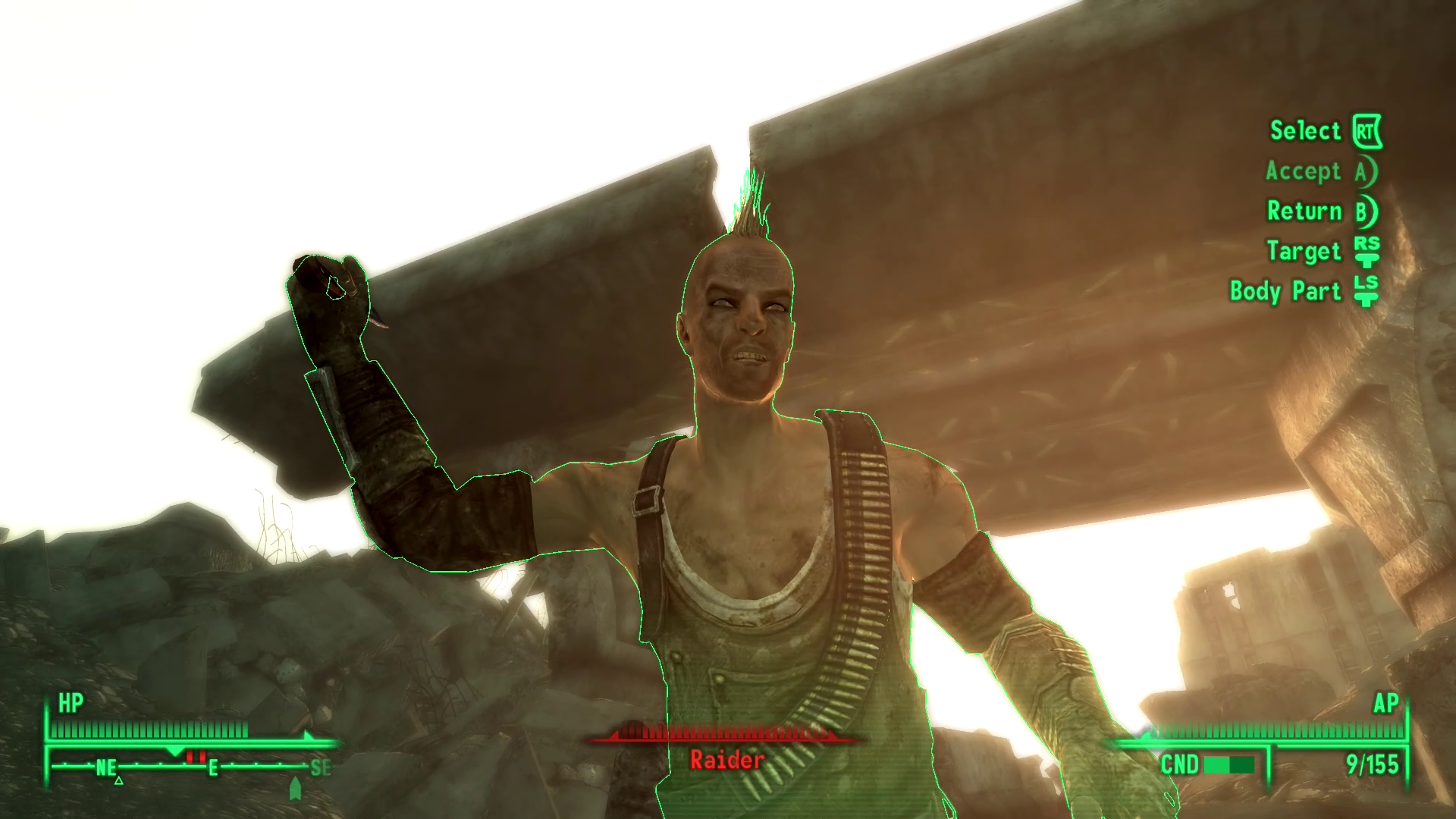
When you’re traveling around, you may come across slaves held by raiders and you’re given the choice to choose whether to intervene, stumble into firefights between hostile groups, or get tracked by bounty hunters depending on prior decisions. Super mutants and other threats can also appear without warning, turning routine travel into sudden combat scenarios. These unscripted moments help the wasteland feel like you’re always on alert.
Crafting exists but stays rather minimal. There are only a handful of schematics to collect, and the system focuses on building new quirky weapons. Even with the limited selection, many crafted weapons have unusual effects that make them fun to experiment with. It isn’t a deep crafting system, but it adds another layer of utility to the junk players pick up across the wasteland.
It’s pretty clear that Fallout 3 has various activities to indulge in.
How Open is the Capital Wasteland?
The Capital Wasteland in Fallout 3 is presented as a single continuous open world. Players can move across the map with relatively few structural barriers, and most locations are accessible once you are capable of surviving the threats along the way. Travel between locations is straightforward. Players can walk to any visible landmark, using natural geography and ruined infrastructure as footing. It can only be done by foot though.
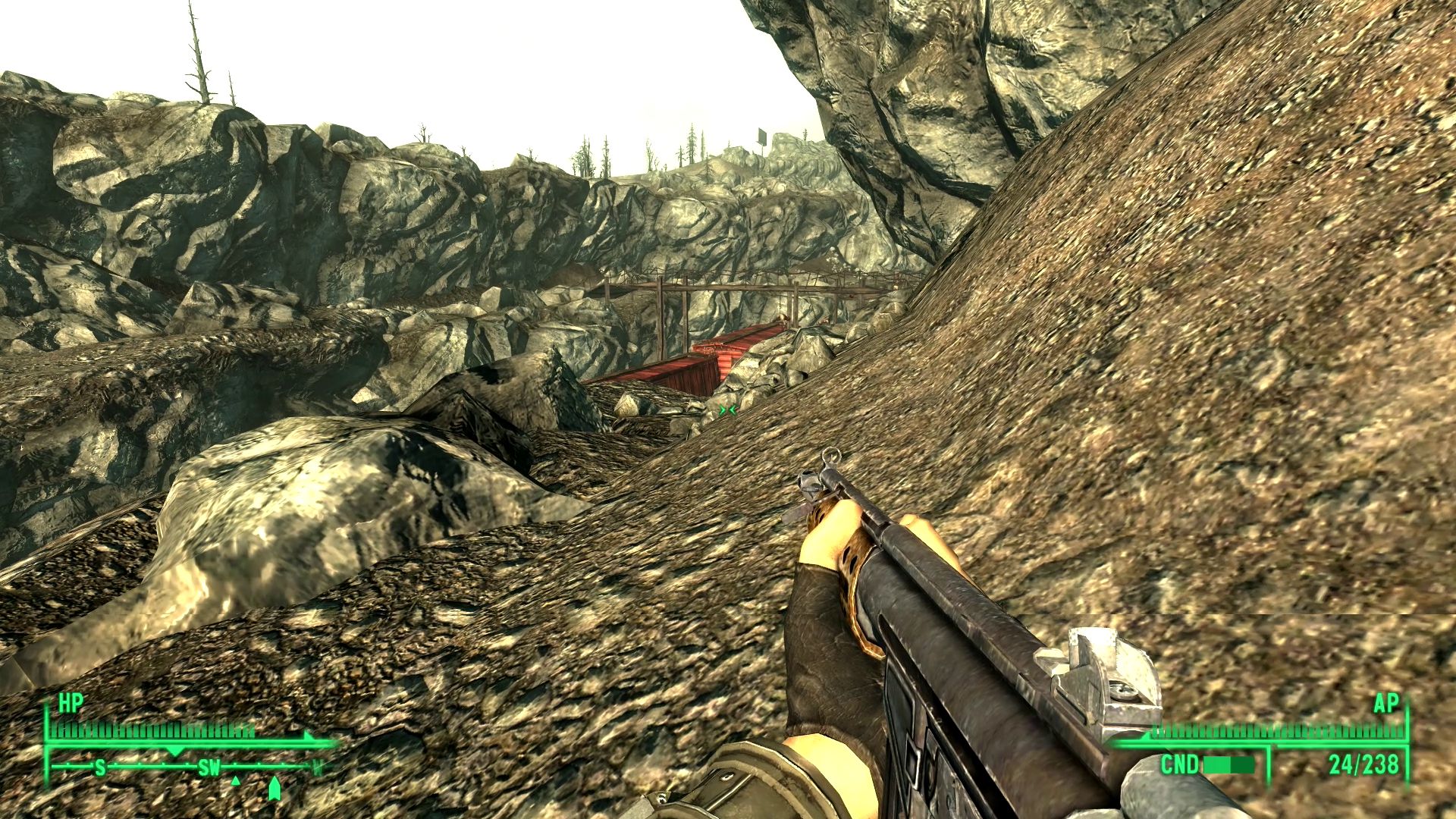
So, it does feel slow at times. However, after discovering a location, fast travel becomes available, as long as you are not in combat or otherwise encumbered. Invisible walls are uncommon in the game, though the outer edges of the map are naturally closed off to prevent leaving the game area.
Overall, the layout supports close to endless exploration.
Life in the Post-apocalyptic Wasteland
Fallout 3’s overall atmosphere leans heavily into a muted, almost monotone visual that aligns with the game’s post apocalyptic setting. Color palettes are often washed out, and large stretches of the wasteland can feel intentionally bleak. Music tends to stay in the background rather than drawing attention, and ambient sounds are present but not especially pronounced during moment to moment exploration. This restraint supports the tone, though it can also make long periods of travel feel subdued.
Settlements provide a slightly noticeable change, though. Most populated areas contain a reasonable number of NPCs who appear to follow a certain routine, whether that means leaning against walls, sitting at bar counters, or casually moving through the space. These small behavioral details help communities feel somewhat living. Conversations and local activity give the impression that daily life continues despite the surrounding conditions.
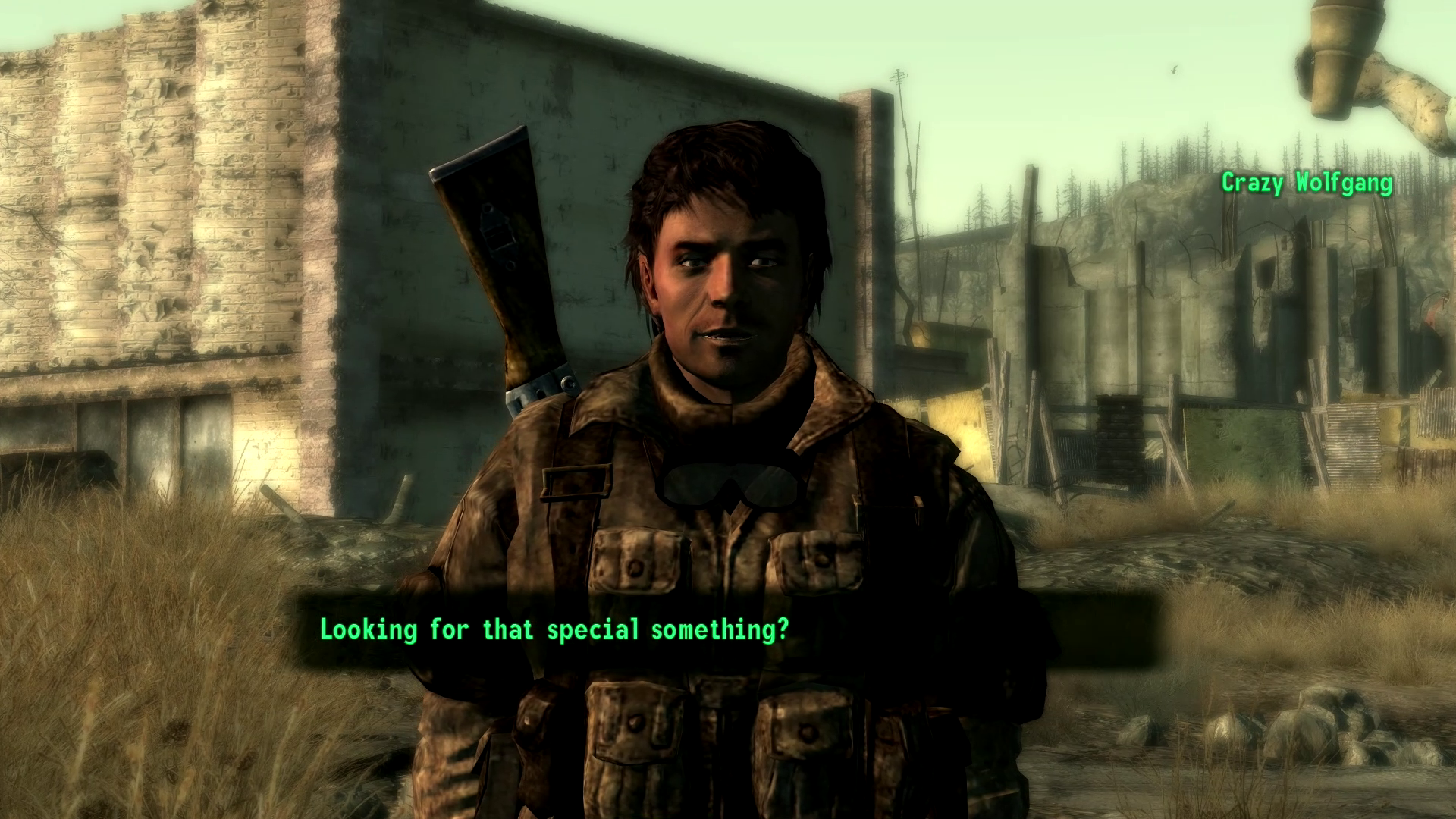
Outside of settlements, the world becomes significantly quieter. Large portions of the map are very rarely populated, and encounters are typically limited to hostile enemies, mutated creatures, or the occasional traveling merchant. While this emptiness is consistent with the devastated world theme, it also means that extended exploration can pass with minimal signs of NPC life.
Considering the theme, Fallout 3 has signs of life, but it still gets a partial pass.
Cracking the Vault Tec Builds, Weapons, Armor, and Player Choice
Character creation in Fallout 3 is notably detailed, especially for its time. Players can adjust facial structure, hair, eyebrows, age related features, and other smaller elements to shape how their character looks. The process is introduced naturally through the game’s opening sequence, allowing changes to feel integrated since the start. While the options don’t match the modern games today, they provide enough flexibility for players to create a distinct identity before stepping into the wasteland.
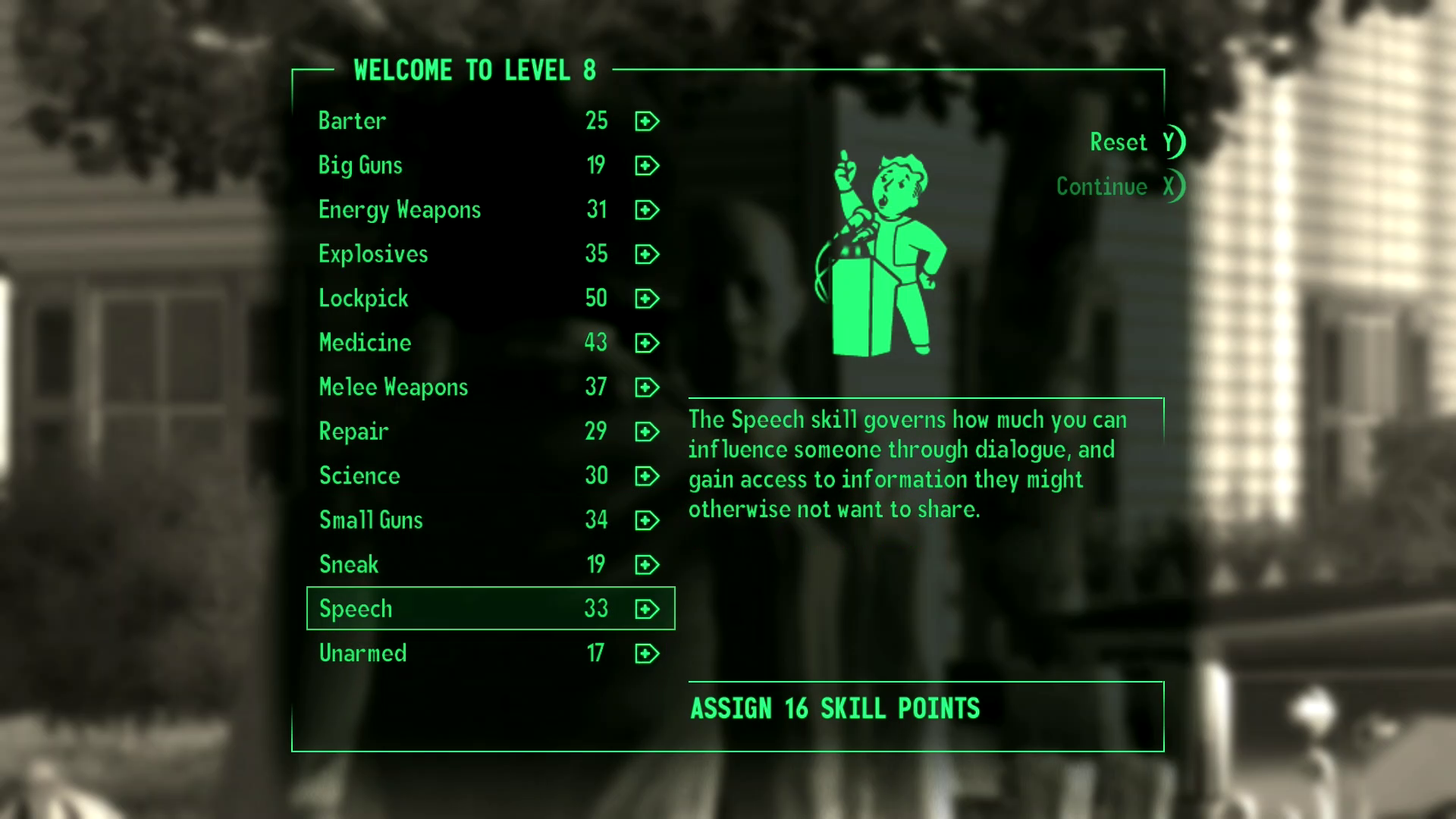
Perks and stats form the backbone of build personalization. Through the S.P.E.C.I.A.L. system and a wide selection of perks, players can lean into different playstyles such as combat efficiency, stealth, dialogue focused progression, or technical skills like hacking and lockpicking. Because perks unlock gradually as you level up, the system encourages long term planning without completely locking players into a single approach early on.
Weapon variety is extensive, covering both conventional and futuristic options. Players can equip anything from assault rifles and missile launchers to flamethrowers and plasma based weapons, each suited to different combat scenarios. Condition and ammunition management also influence effectiveness, adding a light layer of decision making when choosing what to carry.
Armor selection is similarly broad. Standard combat gear sits alongside more distinctive outfits, including several unique sets that stand apart visually and statistically. One example is the samurai themed armor, which shows the game that it’s not afraid to show its goofy side, despite the depressing setting. Armor choice often balances protection, weight, and bonuses, giving players practical reasons to switch equipment depending on the situation.

Lastly, player housing and companions add some personalization, though the scope is more contained compared to other systems. Housing upgrades allow the installation of useful stations such as a workbench, infirmary, or laboratory, turning your home into a functional hub rather than just a storage space. Companion options are limited but varied enough to complement different playstyles, and some are noticeably stronger in combat than others. The system offers helpful support without becoming a dominant layer of customization.
How Far does the Side Content Carry the Game?
Engagement in Fallout 3 largely comes from the volume of optional content and the flexibility of its core systems. There is a large number of side activities to dive into, and the variety in character builds, weapons, and armor gives players practical reasons to experiment with different approaches while they’re exploring the barren wasteland. Trying out new perks, swapping gear, or adjusting your playstyle can noticeably change how encounters unfold, which helps maintain interest over longer sessions. For many players, this mechanical freedom becomes the main reason for playing.
At the same time, these elements rarely create strong pressure to complete the main storyline. Progression peaks at the midpoint area, where advancing the narrative helps open access to additional side content and opportunities. Beyond that, much of what the game offers can be experienced outside of the main plot. It’s possible to spend dozens of hours exploring the game’s satisfying systems and clearing optional activities while barely advancing the main story.
As a result, the game only maintains interest approximately up until the halfway point.
Player Freedom and Moral Choice Amidst the Silent Chaos
What makes Fallout 3 stand out is closely tied to the level of moral flexibility given to the player, paired with the overall theme of the game. The game allows you to shape your role in the wasteland with relatively few behavioral restrictions. You might choose to help strangers, free captured slaves, and resolve conflicts in ways that benefit struggling communities, or take a more destructive route by turning against settlements and dealing with problems through force. These decisions are often acknowledged through the game’s karma system, reinforcing the sense that your actions carry weight within the world.

This freedom aligns naturally with the post apocalyptic setting, where social structures are fragile and personal ethics can vary widely from one survivor to another. Rather than steering players toward a single interpretation of heroism or villainy, the game leaves room for contrasting playstyles to exist without feeling out of place. The result is a world that supports different character identities while maintaining consistency in its post apocalyptic theme.
Ultimately, delivering a uniquely built open world
Verdict
And with that, it is time to step back out of the Capital Wasteland. Fallout 3 could be a game you might want to check out, especially if you’re into the theme. The game delivers greatly when it comes to activities to do outside of the main story, presenting a seamless open world, features to make your character your own, and an identity that makes the game stand out among other open worlds. However, it does fall short in giving life outside the towns and camps. Not to mention, the struggle of keeping players engaged until the end. That being said, Fallout 3 falls into the B Tier at Gametyr.