If you’ve ever wondered what it feels like to solve crimes in a classic Hollywood detective story, L.A. Noire might already be on your radar. Released on May 17, 2011 for the PlayStation 3 and Xbox 360, with a PC version arriving later that year, this story driven open world action adventure was developed by Team Bondi and published by Rockstar Games. Set in a meticulously recreated 1947 Los Angeles, the game places you in the shoes of LAPD detective Cole Phelps, navigating a post war city filled with corruption, organized crime, and uneasy secrets.
Played from a third person perspective, L.A. Noire blends investigation, driving, shooting, interrogation mechanics, and light combat. The game later received an enhanced re-release in 2017 for newer consoles, bringing updated visuals and bundled content. But with its heavy focus on detective work and realism, does L.A. Noire truly deliver a compelling open world experience, or is it more of a structured crime drama set inside one? Let’s break it down.
Beyond the Badge: Are L.A. Noire’s Side Activities Worth Your Time?
Starting off from the activities in the game. First up are Street Crimes, which are the most substantial side activities in L.A. Noire. As you patrol the city or travel between cases, the police radio occasionally reports ongoing incidents such as armed robberies, car thefts, gang shootouts, or suspects attempting to flee. Accepting these calls pulls you into short, self contained scenarios that usually involve chasing suspects, engaging in gunfights, or making arrests. While the structure is fairly straightforward, the variety in situations helps these encounters feel integrated into the daily rhythm of police work. They also encourage you to explore Los Angeles more actively instead of treating it purely as a backdrop between the main story cases.

Next up, Collectibles in L.A. Noire is present, but is fairly basic. Newspapers can be found during certain cases, each unlocking a short cutscene that hints at a larger conspiracy unfolding in the background. These moments add context to the narrative, though they are easy to miss and do not significantly alter gameplay. Police badges are scattered throughout the city as hidden items, functioning more as completion goals.
You also have vehicles that you collect, and it revolves around discovering cars across the city, whether they are parked along the street or hidden in less obvious locations. Unlocking a vehicle is as simple as entering it once, after which it is recorded in your collection. The feature reflects the automotive culture of the late 1940s and adds authenticity to the world, especially for players interested in period accurate designs. However, beyond tracking progress toward completion, there is little gameplay impact tied to collecting them, which makes this activity feel more about having them on the stats list later.
So, as you can probably already tell, L.A. Noire doesn’t have much going on outside the story.
One City, No Barriers: How Free Is Exploration in L.A. Noire?
L.A. Noire presents its version of Los Angeles as a single, continuous map, allowing players to move across the city without any hindrance at all. Entering most buildings does not trigger loading screens, which helps maintain spatial continuity while investigating cases or responding to calls.
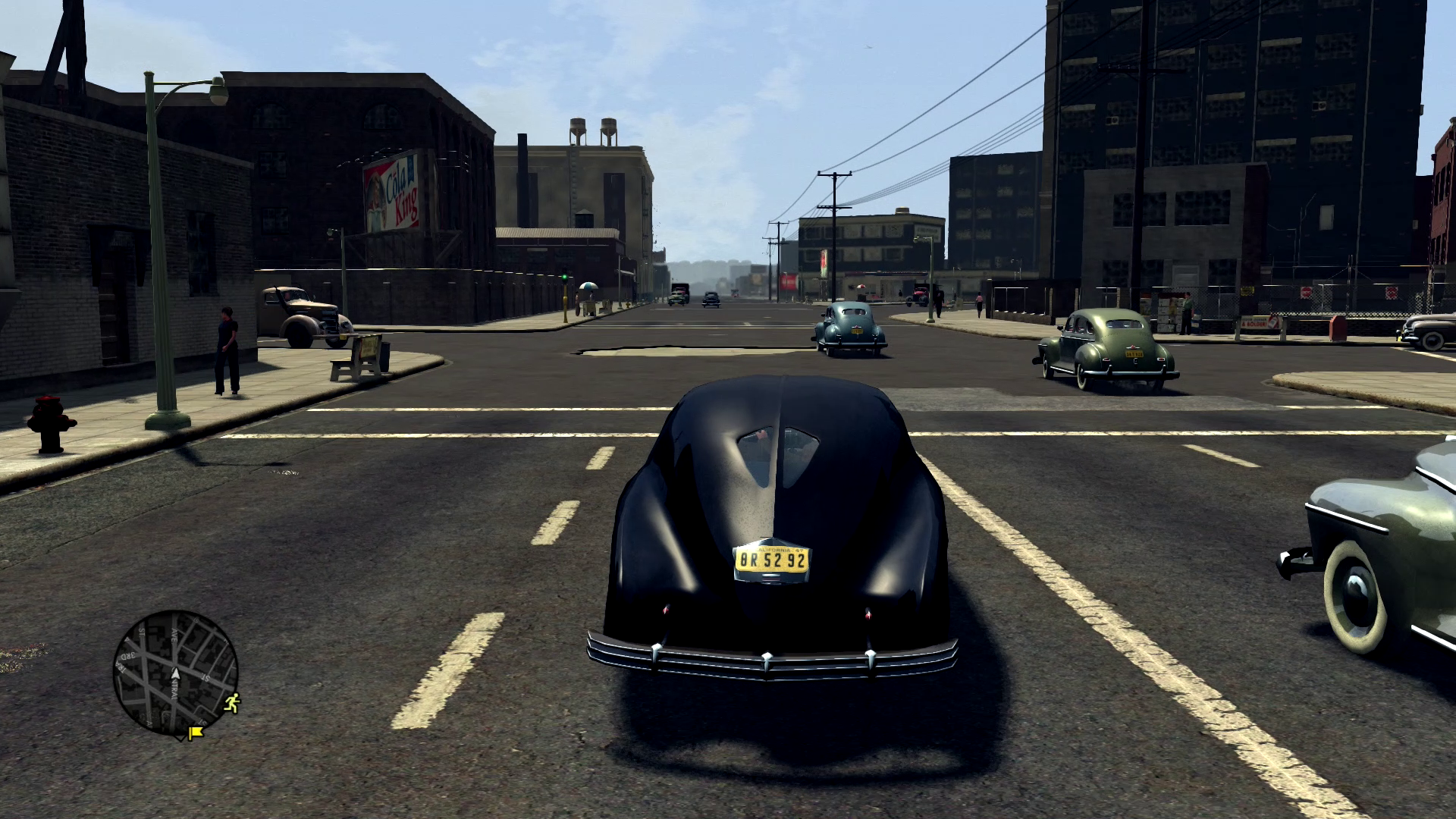
Traversal is primarily handled by car, fitting the scale of the city, and the option to let your partner drive with the ability to skip the trip reduces downtime without removing the sense of distance between locations. You can also travel by foot, but the case locations are quite far apart from each other. The map itself is sizable and open to exploration, covering a range of districts that reflect the character of late 1940s Los Angeles. While much of your movement is tied to case progression, the physical layout of the city supports uninterrupted travel and reinforces the feeling of operating within one connected urban space.
So, the game has a flawless open world map design.
A City That Breathes? Breaking Down the Realism of L.A. Noire’s Living World
The city’s presentation is closely aligned with the game’s investigative tone. Neighborhoods are visually distinct, with clear transitions between residential streets, commercial centers, and heavier industrial zones, giving the map a grounded sense of urban planning rather than a uniform layout. Subtle musical cues often appear when approaching crime scenes, reinforcing the investigative atmosphere without dramatically shifting the pace. Together, these elements help the environment feel purpose built for detective work rather than simply serving as a large backdrop.
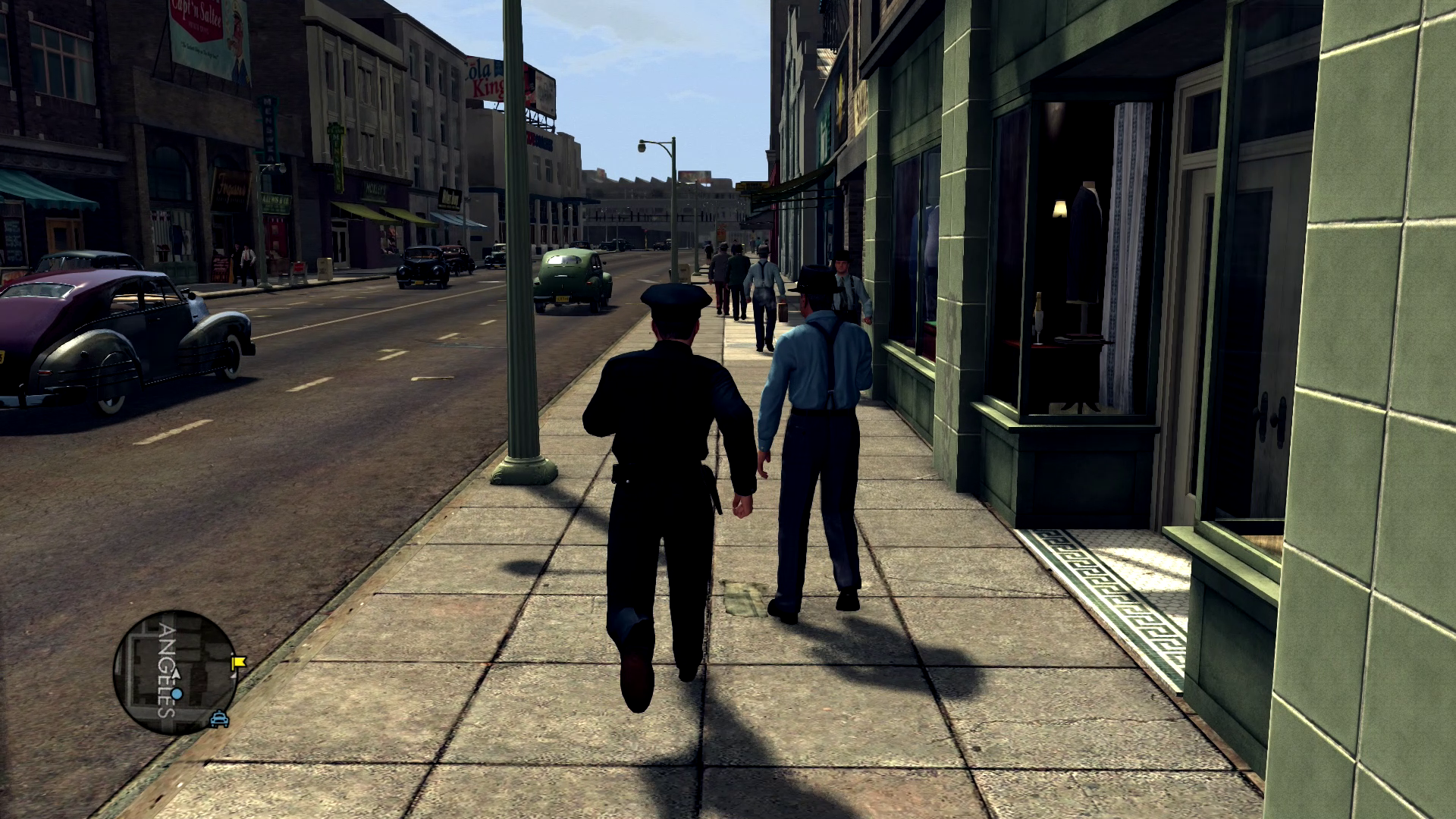
Across the map, pedestrian density remains fairly consistent, with NPCs walking along sidewalks, gathering in small groups, or going about everyday routines. Ambient chatter adds background texture, and civilians occasionally react to your presence with passing remarks, which supports the illusion of a living time accurate urban city. Direct interaction with most NPCs is not available, so these characters primarily serve as environmental detail rather than gameplay participants. Even so, their steady presence contributes to a believable urban setting.
That said, you won’t find the world of L.A. Noire empty at all during your playthrough.
Suit Up, Detective: How Much Control Do You Really Have in L.A. Noire?
Next up, let’s talk about the things you can change. Changing suits is the primary form of character customization in L.A. Noire. Players can switch between full outfits that slightly alter Cole Phelps’ appearance, with some suits offering minor gameplay perks such as improved ammo capacity or reduced damage in specific situations. However, customization is limited to preset ensembles, meaning individual pieces like hats, jackets, or accessories cannot be mixed and matched. This keeps the system simple and period appropriate, but it also restricts the level of personal expression available to the player.

As we mentioned before, there is vehicle choice, and that offers a small degree of flexibility, as you are free to drive different cars found throughout the city. Each vehicle varies in handling and speed, which can subtly affect traversal. That said, cars cannot be spawned on demand, and previously discovered vehicles are not readily selectable from a personal garage during free movement. As a result, the feature functions more as situational variety than as a structured customization system.
So, the options to personalize your playthrough is very limited, to say the least.
Case Closed or Checked Out? Examining What Keeps Players Hooked in L.A. Noire
Outside of the main story cases, L.A. Noire offers limited content designed to keep players consistently engaged. Progression is largely tied to completing investigations, and the game does not provide many layered activities that evolve over time or significantly reshape the gameplay loop. As a result, once you step away from the central narrative, there are few mechanics that strongly encourage extended play on their own.
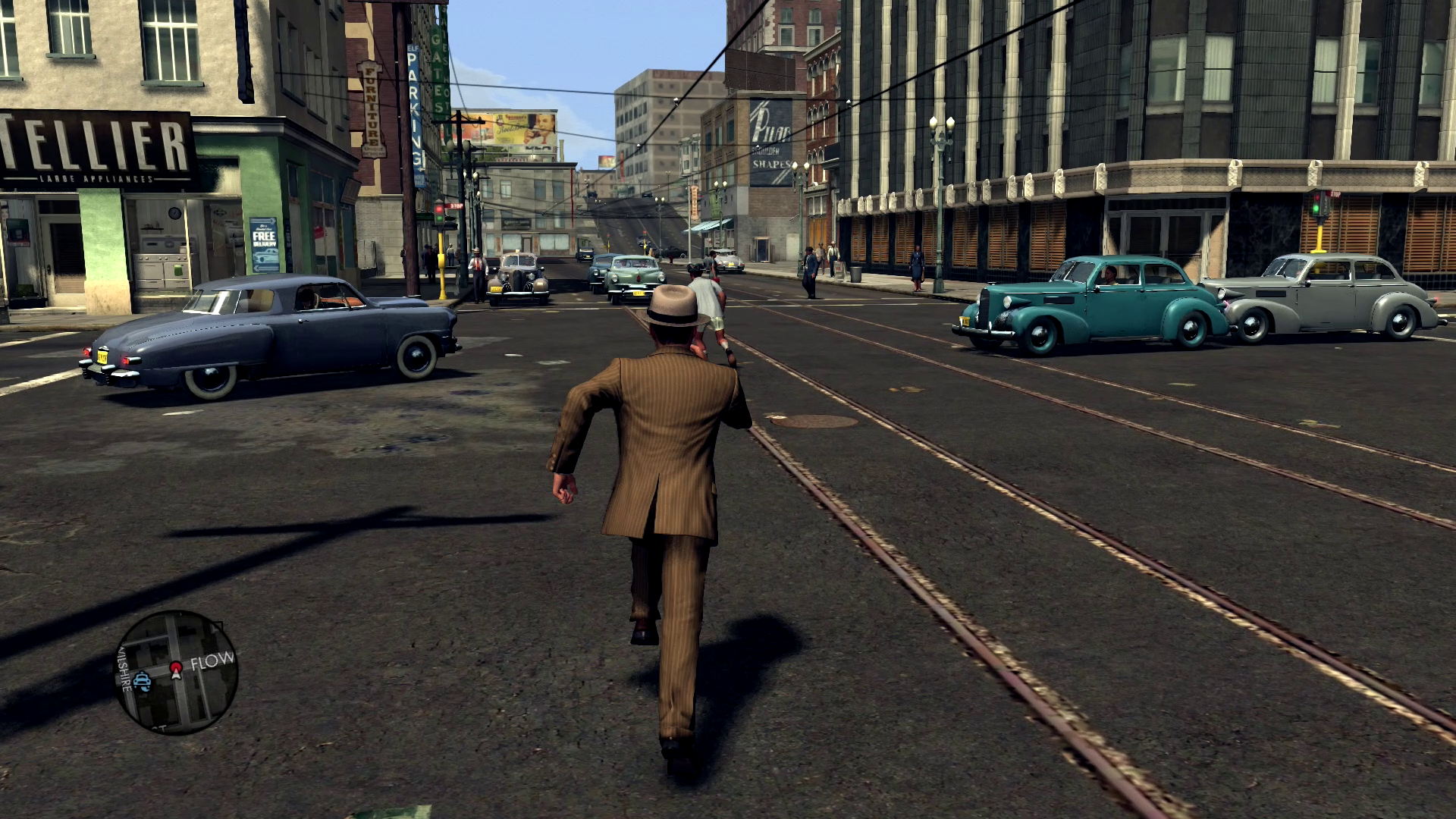
Street Crimes serve as the primary optional activity that can pull players back into moment to moment action. Completing them rewards experience points, contributing to the game’s ranking system. However, the XP structure has a fairly modest gameplay impact, mainly unlocking additional suits and granting intuition points that can assist during interrogations by removing incorrect answers or highlighting clues. These benefits can be helpful but are not required to finish the story, which keeps the core experience focused on narrative progression, without any side content driving interest.
Thus, any engagement in the game is purely from the main story of the game.
Not Your Typical Open World: Why L.A. Noire Still Stands Apart
L.A. Noire distinguishes itself by building nearly every part of the experience around investigative work, supported by a setting that reflects the look and tone of late 1940s Los Angeles. The city design, character presentation, and case structure all reinforce the idea that you are operating as a detective. This consistency gives the game a defining uniqueness, with its slower, methodical pacing standing apart from more action focused titles in the genre.
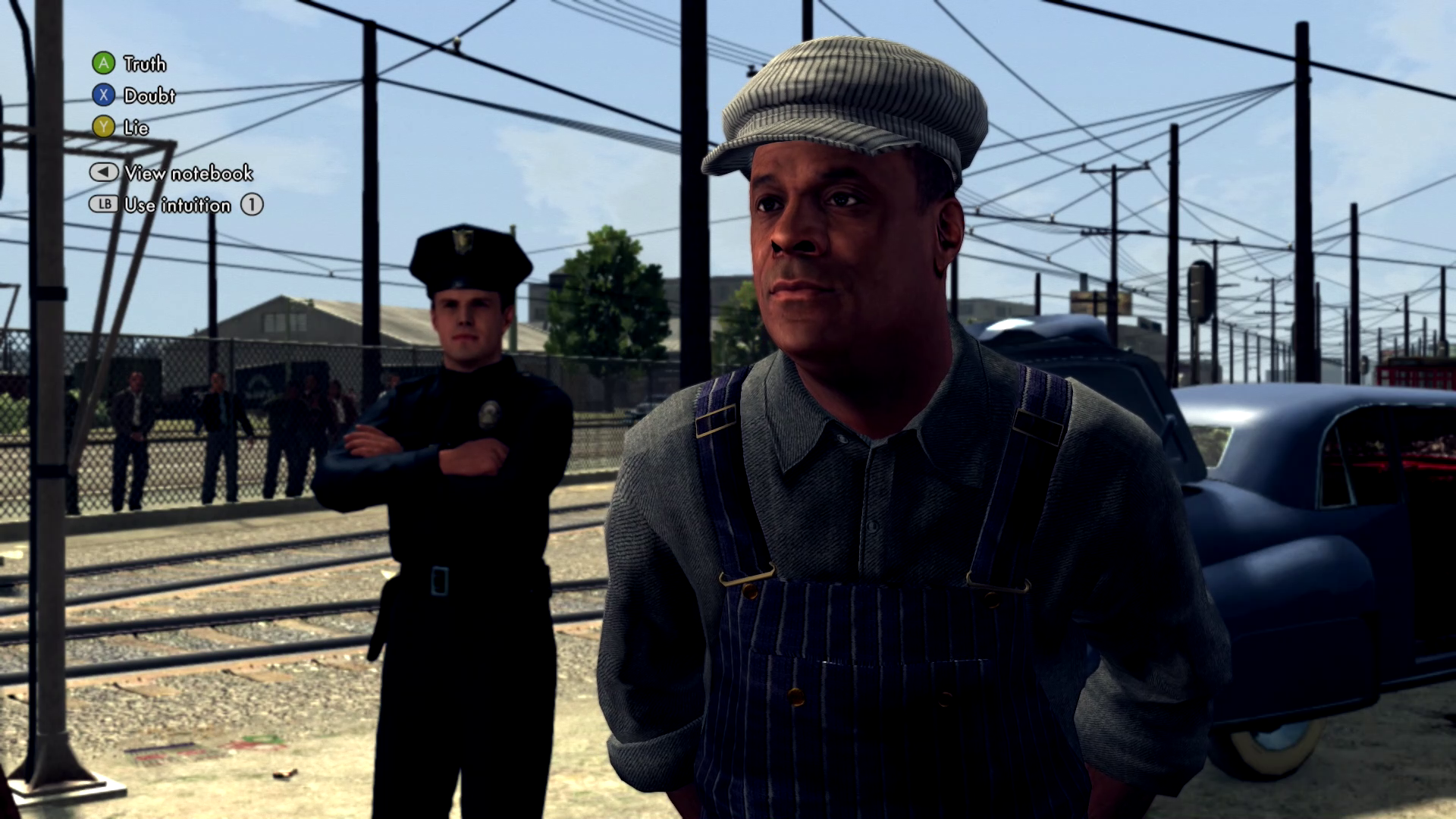
The investigation mechanics are a defining feature. At crime scenes, players examine objects for clues, interpret evidence, and piece together what might have happened before moving forward. Interviews with witnesses and suspects require attention to dialogue and behavior, and the game occasionally allows you to decide which suspect to charge based on the conclusions you draw. While the structure remains guided, the process of observation, questioning, and deduction creates a style of gameplay that is not commonly emphasized in open world design.
Ultimately, L.A. Noire has unique mechanics tied to the immersive detective theme.
Verdict
And just like that, the case is wrapped. L.A. Noire delivers an open world that is skippable, because it isn’t a traditional open world game, more of a story-based one. The game presents a believable cohesive city with strong thematic direction and distinct investigative mechanics, but offers limited side activities, minimal customization, and engagement that largely depends on the main story. All things considered, L.A. Noire settles into the C Tier at Gametyr.