What happens when an open world stops pretending you should take it seriously? Well, this time we’re landing in Steelport, a city that does not care about subtlety, realism, or my sense of self control. Saints Row The Third is one of those games where you boot it up thinking you will play for half an hour, and suddenly it is three hours later, and you’re causing mayhem with a tank in the middle of town because apparently that is a valid way to make money here. And that made me wonder, once the jokes fade and the chaos settles a bit, does this open world actually hold up as a place to explore, or is it just noise and explosions stitched together? Let’s break it down.
My first real moment in Steelport was not some dramatic shootout or story beat. I mean, the Intro was straight up chaotic and ridiculous, but the side activities are equally, if not more. It was me purposely running straight into oncoming traffic, flying past the windshield, and immediately being rewarded with cash because the game decided I was doing Insurance Fraud now. There wasn’t any build up, the game just expects you to do it. Just physics, a lot of bones breaking, and a points counter going up. That kind of sums up Saints Row The Third. The world constantly nudges you into side activities without ever feeling like it is pulling you out of the experience. You are not switching modes. You’re just existing in a city that happens to reward stupidity.

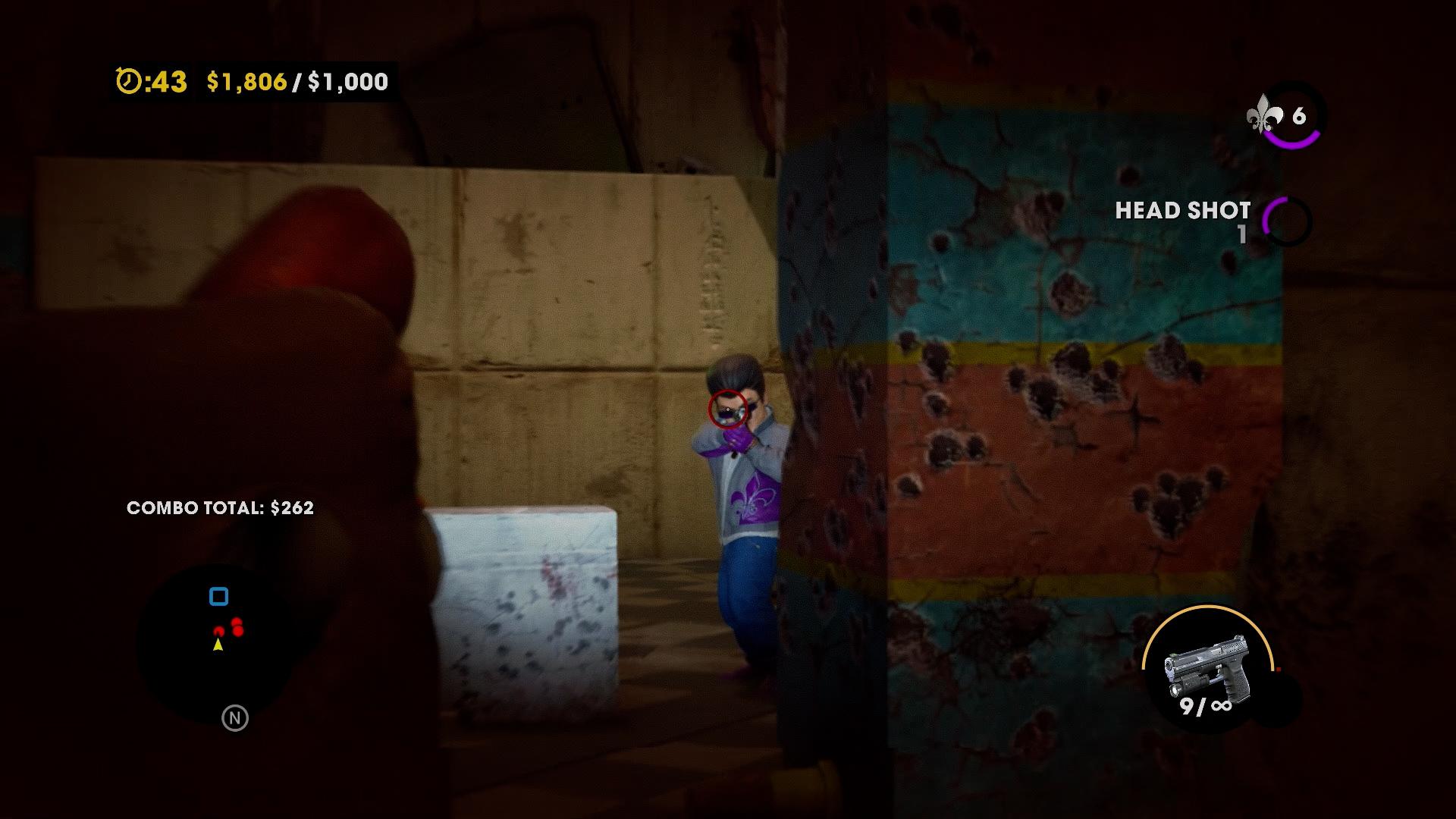
I spent a lot of time bouncing between activities. One minute, I am in a ridiculous game show shooting mascots with oversized heads, the next I am escorting someone through gang territory while everything explodes around us. Guardian Angel missions had me perched on higher elevation playing overwatch, while time trials turned the city into a racetrack I absolutely should not be driving on. They seem like trivial activities, but they all have small twists that keep them from blurring together. More importantly, they feel like things that belong in this world. Steelport feels like a city that would absolutely host a televised murder game show and call it entertainment.
Then there are the simpler jobs. Clearing gang operations, assassinations, stealing specific cars. These are more mindless, yeah, but they work as palate cleansers. Sometimes I didn’t want to think. I just wanted to cruise into a district, cause trouble, and leave richer than I arrived. The game never judged me for that. In fact, it rewarded me.
Money starts flowing fast, and that is where Saints Row The Third really locks you in. Buying properties became my quiet obsession. I would finish a mission, check my cash, and immediately start scanning the map for the next building to grab. Watching that hourly income climb was strangely satisfying. The game gently pushes you into this loop. Story missions give you active income. Side activities give you cash and respect. Properties turn all of that into passive income. For a good chunk of the game, it feels great.
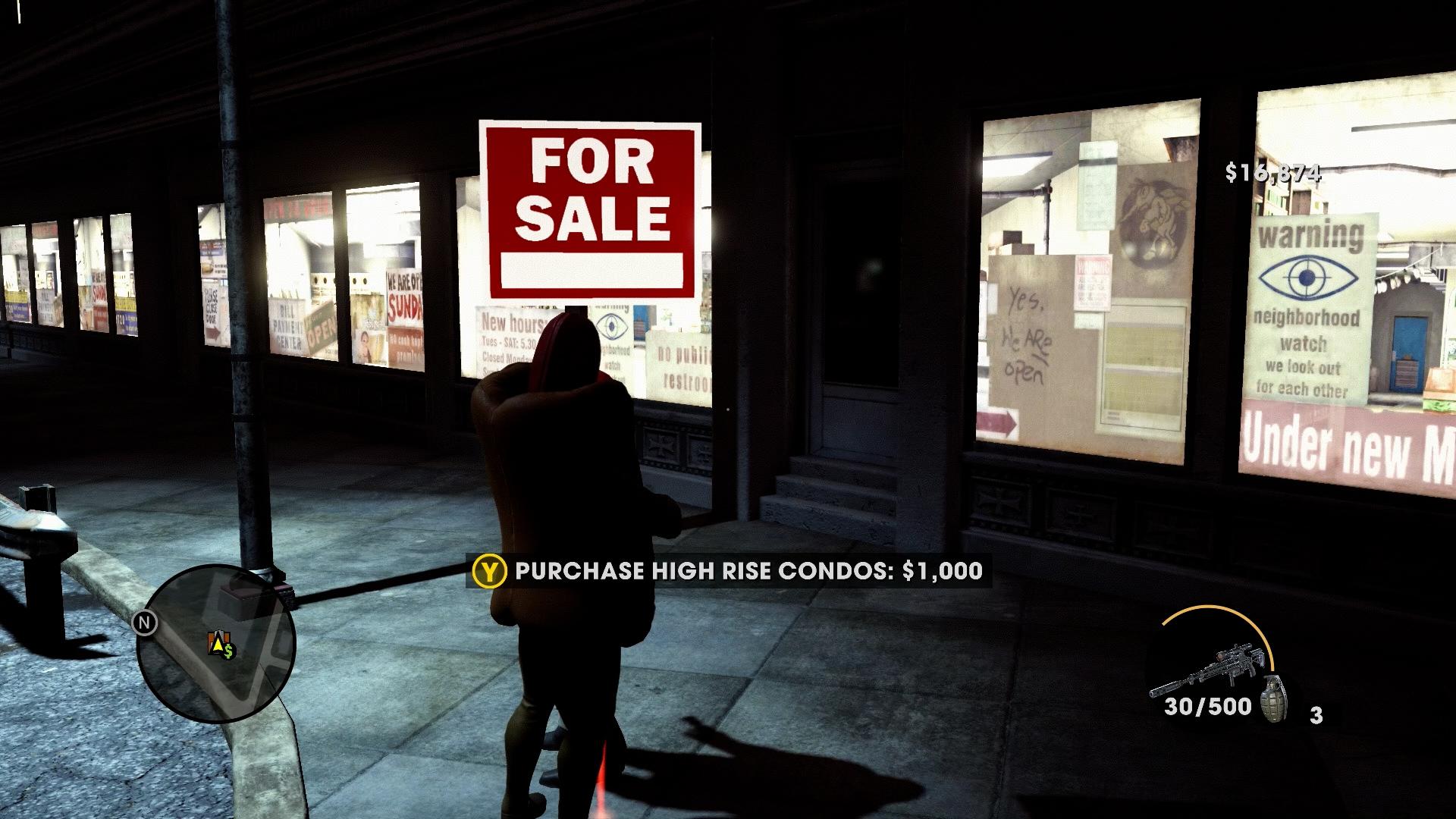
Eventually though, the system hits a ceiling. Once your hourly income is high enough, properties stop mattering. I noticed this gradually as I played the game more. I stopped caring about buying more. Upgrades were mostly done. Weapons were unlocked. Suddenly, the economic pressure that kept me engaged just disappeared. The city was still loud and goofy, but it wasn’t pushing me back anymore.
Steelport itself does a lot to keep things moving. It is one big connected map, which makes traversal feel uninterrupted. Not all buildings were accessible, but small buildings like stores just let me walk in without loading screens, while bigger interiors clearly signaled a transition, like your crib. It kept immersion intact throughout the whole map. Most of my time was spent driving cause that’s probably the easiest vehicle to snatch, but flying vehicles do change the perspective completely. Especially when you’re flying a VTOL superjet, a heli, or even a flying broom past skyscrapers. Being able to lift above the skyline made the city feel even larger, and occasionally reminded me that yes, the gaps in between the bridges aren’t just for decoration either. This also helped make the map feel a lot more scalable as well.
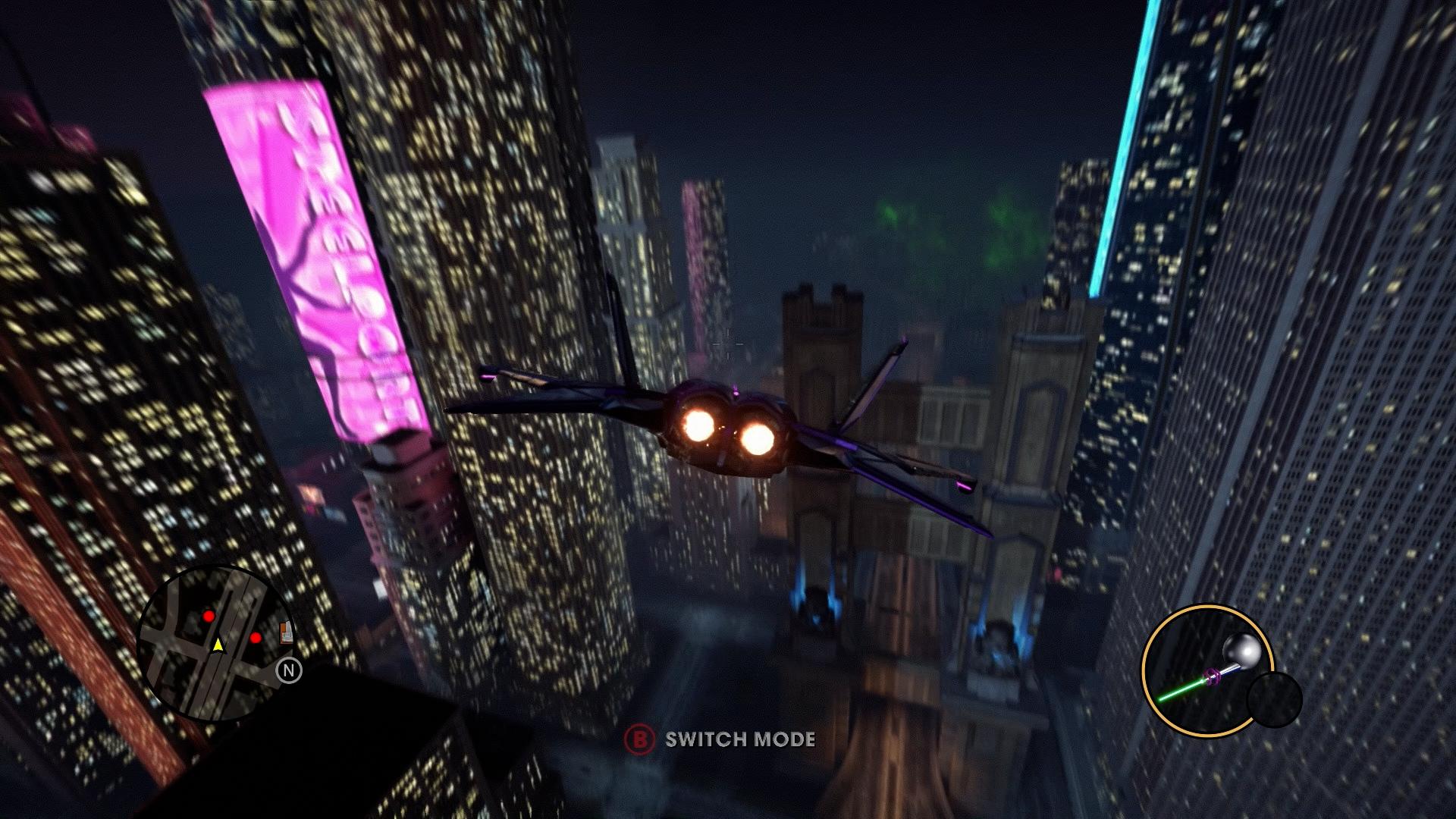
The city feels alive mostly through density. Cars everywhere. Pedestrians constantly moving, and chatting, but only reacting if I bump into them. They do not have deep behaviors, and they do not really acknowledge me unless I force the issue, but that still sells the illusion of their routines. Don’t get me wrong though, the world is also visually stunning enough. Radio stations help too. Music when driving, silence when walking, and news reports that actually react to my progress. Hearing the city talk about my actions made the chaos feel oddly grounded.
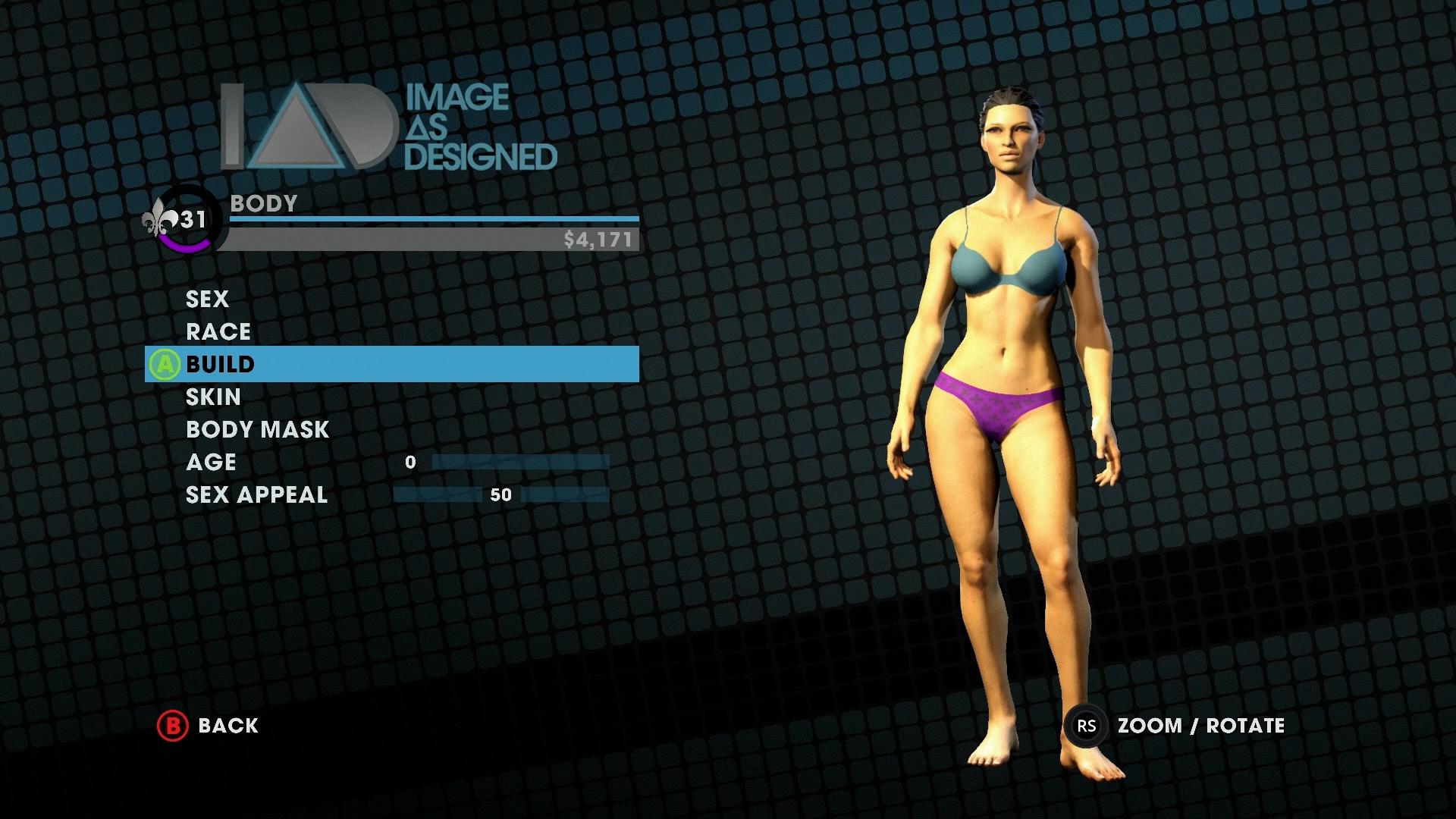
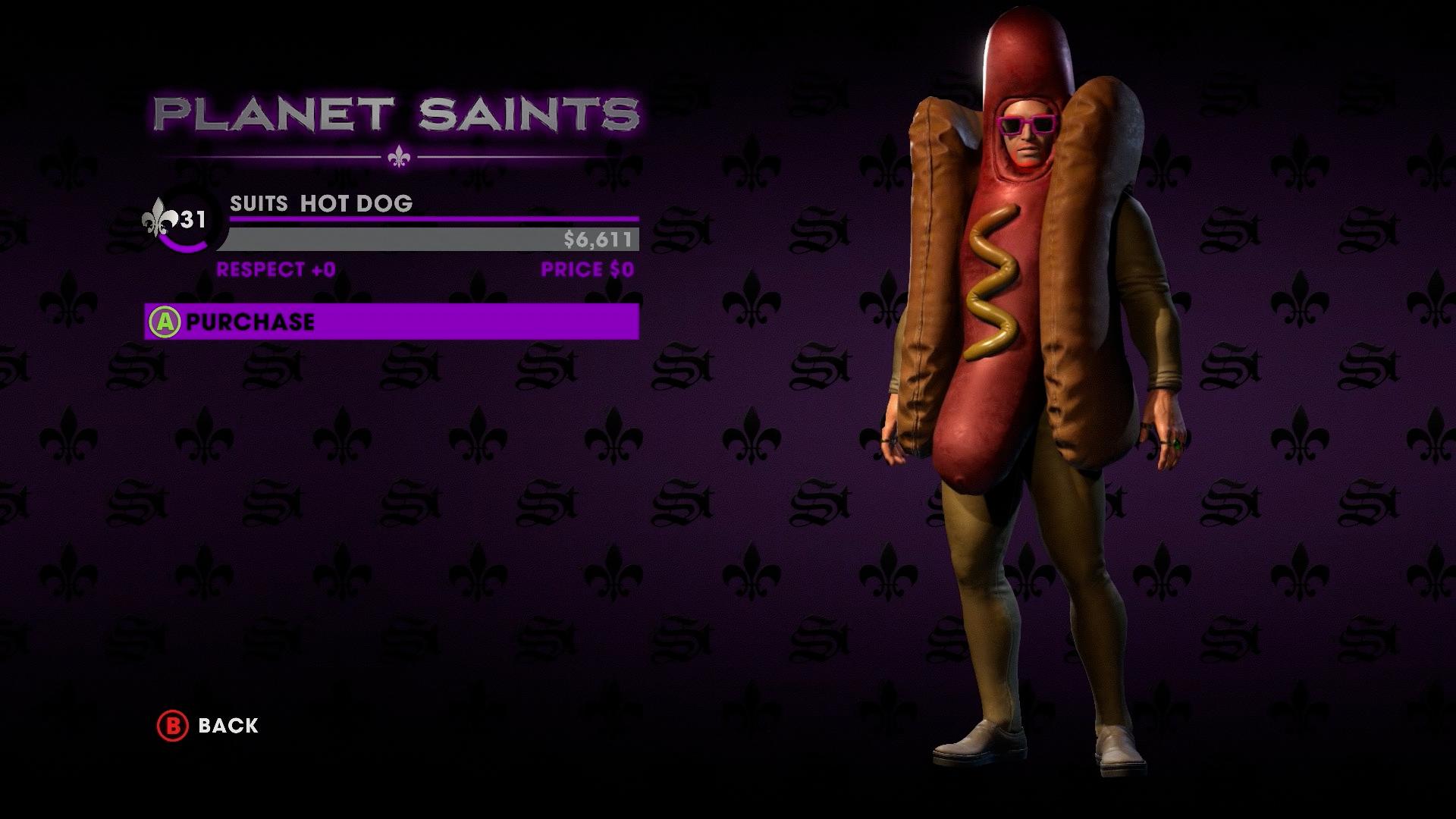
Customization is where I lost time without realizing it. Character creation alone could derail an entire session. Serious look, goofy look, full costume nonsense. And the freedom to change everything later meant I never felt locked in. If you ever decide to change into an alien mid game, you can. Clothing options are massive, from individual pieces to full outfits, even though they’re purely cosmetic, but I did notice one thing. Every shop of the same type carries the same inventory. It makes shopping convenient, but it also removes the excitement of discovering something new in a different district. Still, their massive pool of outfits extends to more quirky and goofy outfits too, as you’ve probably noticed by now that I’ve been wearing a hotdog outfit for most of my playthrough.
Weapons strike a nice balance. A solid range of pistols, SMGs, rifles, shotguns, all feeling distinct enough to matter. But that’s not how you're supposed to play the game, the ridiculous weapons are here too. They are stupid. They know they are stupid. The game never pretends otherwise. I mean, who thinks of a gun that shoots out sharks from below? And just take a look at this one. It’s safe to say you won’t be playing this in front of the kids. Vehicles follow the same idea, though. Plenty of ground and air options, all customizable. Paint, body kits, performance tweaks. Even your cribs are more than decoration. You upgrade strongholds for actual bonuses, tweak gang styles, emotes, and vehicle pools.
Character upgrades also make a real difference. Boosting health, damage, ammo capacity. I could feel the power curve. Early fights felt scrappy. Later ones felt effortless. Maybe too effortless, honestly.
Collectibles exist, but they are exactly what they feel like. Random items scattered around the map. Sex dolls, drug packages, loose cash. I honestly never even noticed them during my playthrough, which is why they never felt meaningful. More filler than motivation.
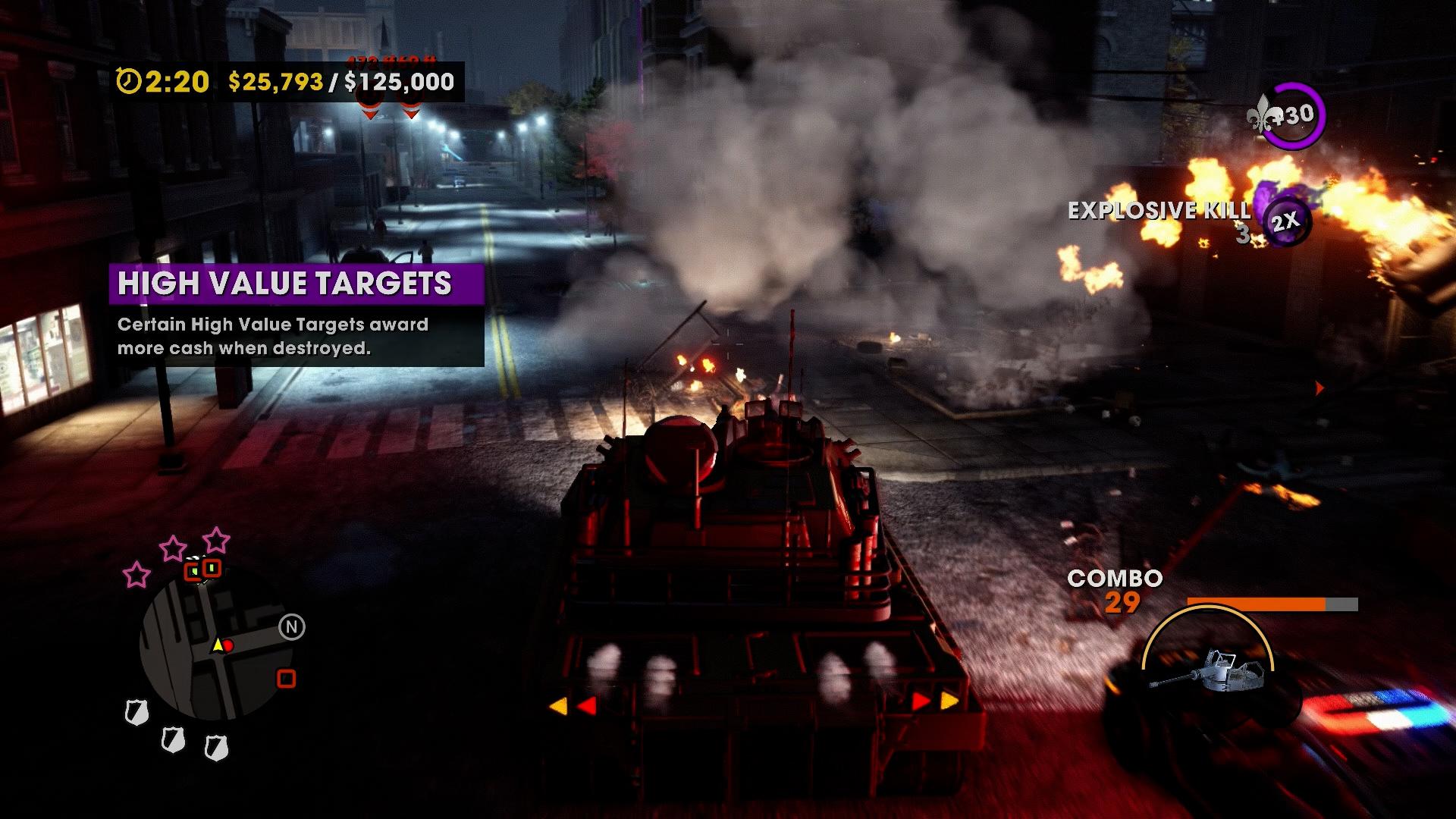
Despite being a clear GTA inspired game, Saints Row The Third never hides what it is doing. This is unrealistic GTA, and it commits fully. Cars crash like toys. NPCs ragdoll way too easily. You really can be whatever you want in this game, wanna call artilery strike in the middle of city? Go for it. Wanna rock some dancing emojis with a few energy drink mascots? Why not. Humor leans hard into the absurd and never apologizes. And it extends to every system in the game. That consistency is what makes it work. Even when systems run out of steam, the personality makes it distinct from other games, especially GTA.
Verdict
To end our journey in absurdity, Saints Row The Third is an open world that stops asking what you should do and starts asking how far you can push it. Steelport does not aim for realism. It pulls you in through constant motion, steady rewards, and chaos that feels fun right up until the systems begin to lose their bite.
Side Activities
Saints Row The Third is stacked with side content, and more importantly, most of it feels intentional. Insurance Fraud, Guardian Angel, time trials, escort missions, and that absurd game show all have small mechanical twists that keep them from blending together. Even the simpler tasks like gang operations and assassinations serve as low effort tasks when you just want to dabble in the world. Collectibles exist, but they are pretty much empty activities. Easy to ignore, easy to forget, and not very motivating. Buying properties can take some time, too, if you don’t bulk buy as soon as you get a lot of money. And shopping is there for those of you who enjoy the variety of items, as opposed to the variety of inventories. Still, the sheer variety and pacing keep the side content engaging for most of the experience.
Area of Freedom
The entire city exists as one connected map, which makes exploration feel smooth and uninterrupted. Small interiors like shops let you just walts in without any loading screens either. Ground vehicles dominate moment to moment play, especially when you’re just having your daily dose of pedestrian bowling, but flying vehicles open up the city vertically and make the map feel larger and more scalable. There is no traditional fast travel, but traversal itself is fast and flexible enough that it rarely feels necessary, even if the map itself is big.
Liveliness
Steelport feels busy through density, mostly. Cars are everywhere, pedestrians fill the streets, and the city sounds alive. NPCs don’t have complex routines, but still mind their own business. Radio stations pulling double duty as music and reactive world commentary help reinforce your impact on the city without demanding attention. It is believable enough to support the chaos. Especially when a majority of the map is just cityscape, it does enough to sell the feeling of an urban open world.
Customization
Now customization is where Saints Row The Third goes all in. Character creation, clothing, weapons, vehicles, cribs, and gang identity are all deeply customizable. You can constantly reshape how you look and how you play, and the game never locks you into earlier decisions. That said, you can literally become whoever and do whatever you want. The vast amount of options, from proper outfits to the more quirky to bizarre ones, and from normal weapons to overpowered weapons. It’s this mix between visual expression and mechanical upgrades that makes customization one of the game’s strongest pillars.
Engagement
Early and mid game engagement is driven by a strong economic loop. Story missions, side activities, respect, upgrades, and property income all feed into each other cleanly. But once passive income reaches a certain threshold, progression loses its meaning. Properties stop being worth chasing, upgrades cap out, and the game stops giving you reasons to push further beyond the main story. The fun does not vanish, but the pressure does.
Uniqueness
Saints Row The Third is essentially an exaggerated, unrealistic take on the GTA formula, and that is exactly what makes it different and fun to play. Physics is ridiculous, outfits are goofy, weapons are absurd, humor is shameless, and the world leans into spectacle instead of simply simulation. It never pretends to be grounded, and that consistency gives it an identity that stands apart from its inspirations. It is not subtle in the slightest, but it is confident in its identity.
That ultimately puts Saints Row: The Third firmly in A Tier for GameTyr.