If you’ve ever played Zelda Ocarina of Time, then you already know it helped define what an open world could feel like. But Breath of the Wild takes that foundation and pushes it into something that genuinely reshapes how freedom works in an open world game. Right from the start, Link wakes up with no sword, no armor, just this strange tablet and a faint voice calling my name like it knew me before I even knew where I was. Then the doors rolled open, the light poured in, and bam… the world hit me all at once. Rolling green hills, distant mountains, mist peeling off cliffs. It wasn’t the usual “here’s your tutorial, follow the waypoint.” It was just silence. Wind. Room to wander. And my brain immediately went, “Where should I even start?”

Now, Breath of the Wild is not just open. It is unstructured in a way that few games ever attempted before it. Basically, we’re just here to explore Hyrule at our own pace. After getting a few key abilities like the glider, bombs, stasis, and magnetism, I could technically head straight to the final battle. Very early into the game. No long chain of quests required. The choice has always been mine. Finish it now, or stay and live inside this world for as long as I want.
Since the very beginning, curiousity is what drove me to explore. The moment I got that glider, everything changed. Suddenly the world wasn’t just wide, it was reachable. Hills weren’t barriers. They were invitations. Somewhere far off, I could see snow on mountain peaks, volcanic smoke twisting into the sky, a desert haze on the horizon. I didn’t get a marker telling me to go there. I just… wanted to.
Climbing became constant. I stopped going around things and started going over them. My whole existence revolved around that little green stamina circle. Halfway up a cliff, rain would start falling and I would just slide down like a cartoon character who made a bad life choice. Still, I kept trying. Every single peak felt like a mini victory. Not because the game told me to go there, but because I decided I wanted to.

As I wandered, I started finding the towers. They stood there like ancient antennas waiting for me to reconnect the land. Climbing one and activating it revealed a whole region of the map. Most games, when you activate a tower or sync a viewpoint, immediately flood the map with icons showing every collectible, activity, and point of interest. Breath of the Wild does the opposite. A tower only reveals the terrain. After that, it is on you to pull out the telescope, scan the horizon, and mark anything that catches your eye. The game refuses to label collectibles or cities for you. It leaves that responsibility entirely to Link, making exploration feel like a real journey instead of a checklist.
There’s seven massive regions in total, each with a different atmosphere, and nine villages scattered across them. The world didn’t feel like separate levels. It felt like one long, continuous stretch of land, one unified map. A map that can be explored on foot or by your trusty horse. Also, those towers were my way back, letting me fast travel across the map.
Villages were charming but quiet. NPCs existed more as gentle guides than lively residents. Some followed routines, some stood in the same spot forever. Most didn’t really react to me beyond basic dialogue. Out in the wild, it was even emptier. Just me, the wind, and whatever monster I accidentally irritated. The lack of constant music made the world feel peaceful and sometimes a little too empty. When music finally kicked in during combat or in towns, it hit harder because of that silence.

Then the shrines started appearing. One here. One hidden behind a strange puzzle over there. One locked behind a side quest someone casually mentioned in a village. All one hundred and twenty of them felt like little brain teasers placed across the world. Some had me freezing water to make stepping stones. Some had me using magnetism to drag giant metal slabs around. Others leaned into motion control puzzles that made me twist my controller in ways I didn’t know were physically possible. They weren’t all equal in difficulty, but each one added another spirit orb to my growing collection. Those orbs slowly shaped my character as I chose between more hearts or more stamina. That decision felt small at first and huge later. It’s also convenient to know that completed shrines also act as fast travel points.
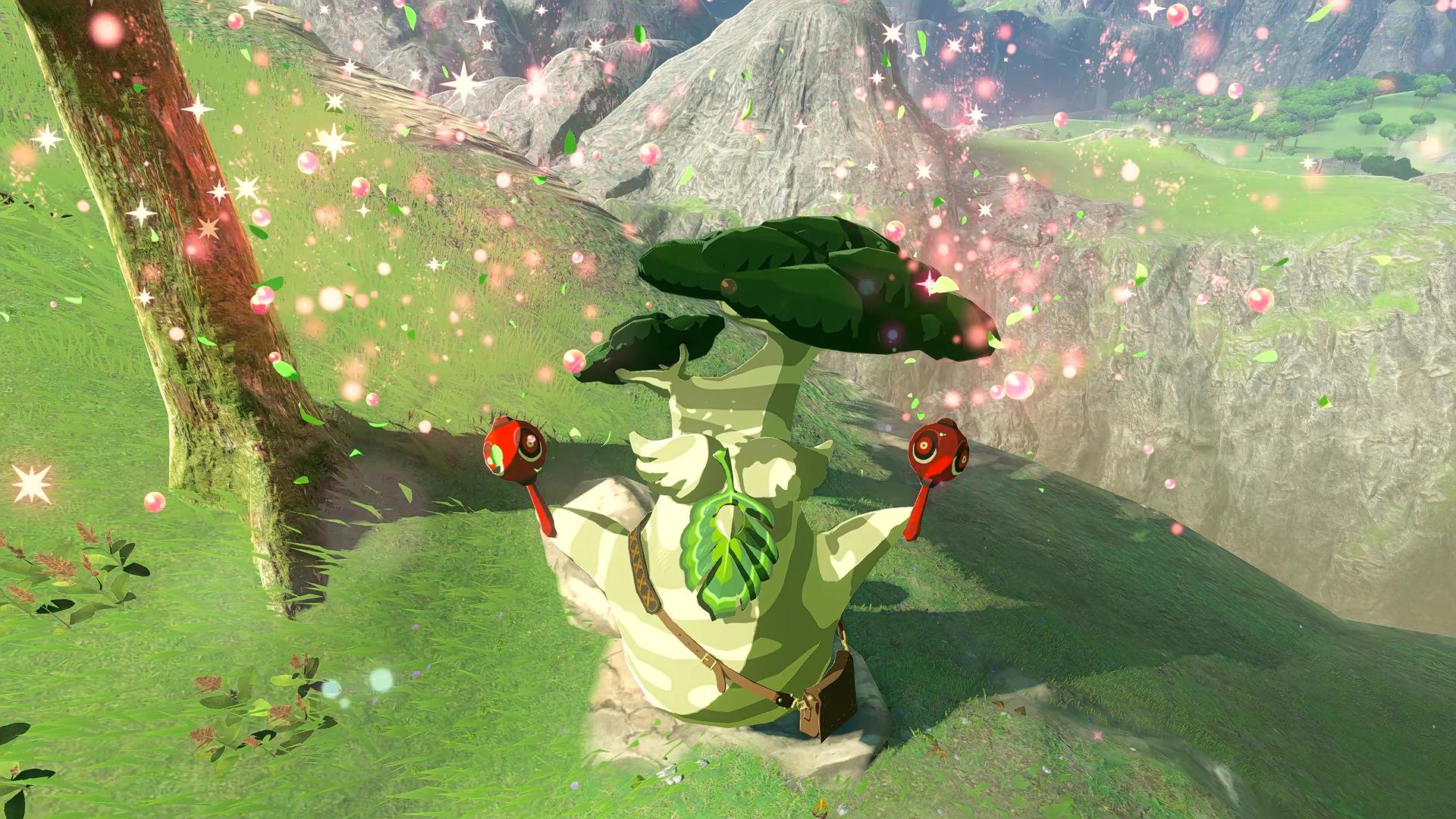
And then there were the Koroks. So many Koroks. Under rocks, inside trees, on top of random hills that I had no good reason to climb. Every time one popped out and giggled at me, I felt weirdly proud and slightly annoyed. But those tiny discoveries mattered. They expanded my inventory, gave me more freedom to carry weapons, shields, bows. It turned exploration into a permanent reward system without feeling like a checklist.
This is where the engagement really locked in for me. I stopped thinking about objectives. I stopped caring about what the main quest wanted. My entire loop became simple. Walk somewhere that looks interesting. See something in the distance. Climb it. Glide off it. Stumble into a shrine, a village, a hidden chest, or a new armor piece. Every discovery fed the next one. That rhythm of explore, discover, improve, repeat pulled me forward for hours without a single quest marker forcing my hand. It was pure curiosity driving everything. And I know not everyone connects to that. If you love structured quests and a heavy, story driven push, this world might feel too quiet, too open, maybe even a little aimless. But for explorers and creative players, it becomes a dream playground. You are constantly rewarded for curiosity, for going off the main path, for checking what is behind the next hill or inside the next ruin. So let us know which side you’re on down in the comments below!
Side activities blended into that loop perfectly though. Someone needed a missing item. Someone wanted help fighting off monsters. I ran into random ambushes in the wilderness and sometimes stumbled into situations where I was the one being saved instead of the other way around. I spent rupees unlocking Great Fairies, upgraded armor, even bought a house, which felt like a ridiculous but satisfying milestone. None of these tasks were deeply emotional, but they gave shape to my time in Hyrule.
I personalized myself through gear instead of a traditional skill tree. Different armor sets changed how I moved through the world. Some made climbing easier. Some helped with heat or cold. Some let me sneak around like I knew what I was doing. I even dyed outfits for no practical reason other than vibes. Horses became companions I absolutely got emotionally attached to way too fast. And cooking? That turned into a whole experiment. Throw enough random ingredients in a pot and you either feel like a genius or a danger to public health.
On top of that, the physics and chemistry systems changed how I approached everything. Fire spreads based on wind. Metal attracts lightning. Ice can be created, broken, and used. Objects react realistically to force and time. It wasn’t about finding the one correct answer. It was about creating one that worked. That sense of freedom, both in structure and in systems, is what made this world feel so different from anything else I had played.
Verdict
Looking back at that first quiet moment on the cliff, it finally makes sense. The game wasn’t trying to guide me. It was inviting me to explore, to try things, and to shape my own path. For players who like discovering their pace rather than being given one, this version of Hyrule feels less like a classic adventure and more like a personal journey shaped by small choices and unexpected detours.
Side Activities
Shrines, Korok seeds, mini quests, armor upgrades, cooking experiments. On the surface, these might seem like simple tasks, but most of them are discovered naturally through exploration instead of being dumped into your quest log. Nothing is screaming for attention, except for anything shrine related where you have unique puzzles to solve with different mechanics, yet there is always something quietly waiting to be found. The activities are not deep in narrative, but they are perfectly tied to the core loop of exploring and improving your character, making them feel meaningful without being overwhelming.

Area of Freedom
Climb it. Glide off it. Walk straight to it. Or go literally anywhere else first. The world is open in every sense, including verticality. Mountains, ruins, towers, forests, snow fields, deserts. Almost everything you see is reachable with the right planning and stamina. The landscape invites experimentation instead of limiting you. That seamless, uninterrupted space is a huge reason why the world feels so natural to move through.
Liveliness
Hyrule is beautiful, but often strangely quiet. The wilderness can feel empty for long stretches, with only the wind and distant wildlife keeping you company. Villages are charming but not bustling. NPCs exist more as guides than as deeply interactive residents. However, that silence works in the game’s favor at times. It creates a peaceful atmosphere that fits the tone and makes the world feel calm and ancient instead of crowded and chaotic. Still, for players who prefer constant activity, the world may feel a little too still.
Customization
There is no traditional skill tree here. Your identity is shaped through equipment, buffs, and choices rather than stats on a screen. Armor sets change how you interact with the environment. Food and elixirs temporarily alter your abilities, and different ingredient combinations can create entirely different buff effects. Weapons constantly shift as they break and get replaced. Even your horse can be customized, from its mane and saddle to giving it a personality that fits your style. You can even dye your clothes just for style points. It might seem like a lot, and it works well in moment to moment gameplay, but there is still a sense that the system could have gone deeper.
Engagement
The engagement here comes from how freely the game lets you explore. Every hill you climb, every ruin you check, every distant shape on the horizon becomes an invitation to open the world a little more. That steady rhythm of see, go, climb, discover, reward forms the core loop, and for open world explorers this becomes incredibly satisfying. It turns curiosity and wandering into momentum and progress. If you enjoy finding your own path, this version of Hyrule pulls you in without ever needing a heavy narrative push. But Some players might see that as a lack of direction and feel the engagement drop early. It all depends on what kind of player you are, yet for players like me, the engagement sits comfortably in green.
Uniqueness
What truly sets Breath of the Wild apart is its design philosophy. It is one of the pioneers of non linear progression, and you can finish the game very early if you choose to. You are not boxed into long chains of mandatory progression. Once you layer in the physics systems, things open up even more. You can push a raft forward by fanning its sail with korok leaves, burn grass to create an updraft for your glider, and watch objects behave in believable ways. Suddenly there is no single correct solution, only creative ones. That mix of non linear structure and system driven gameplay makes it one of the most influential and distinct open worlds ever created.
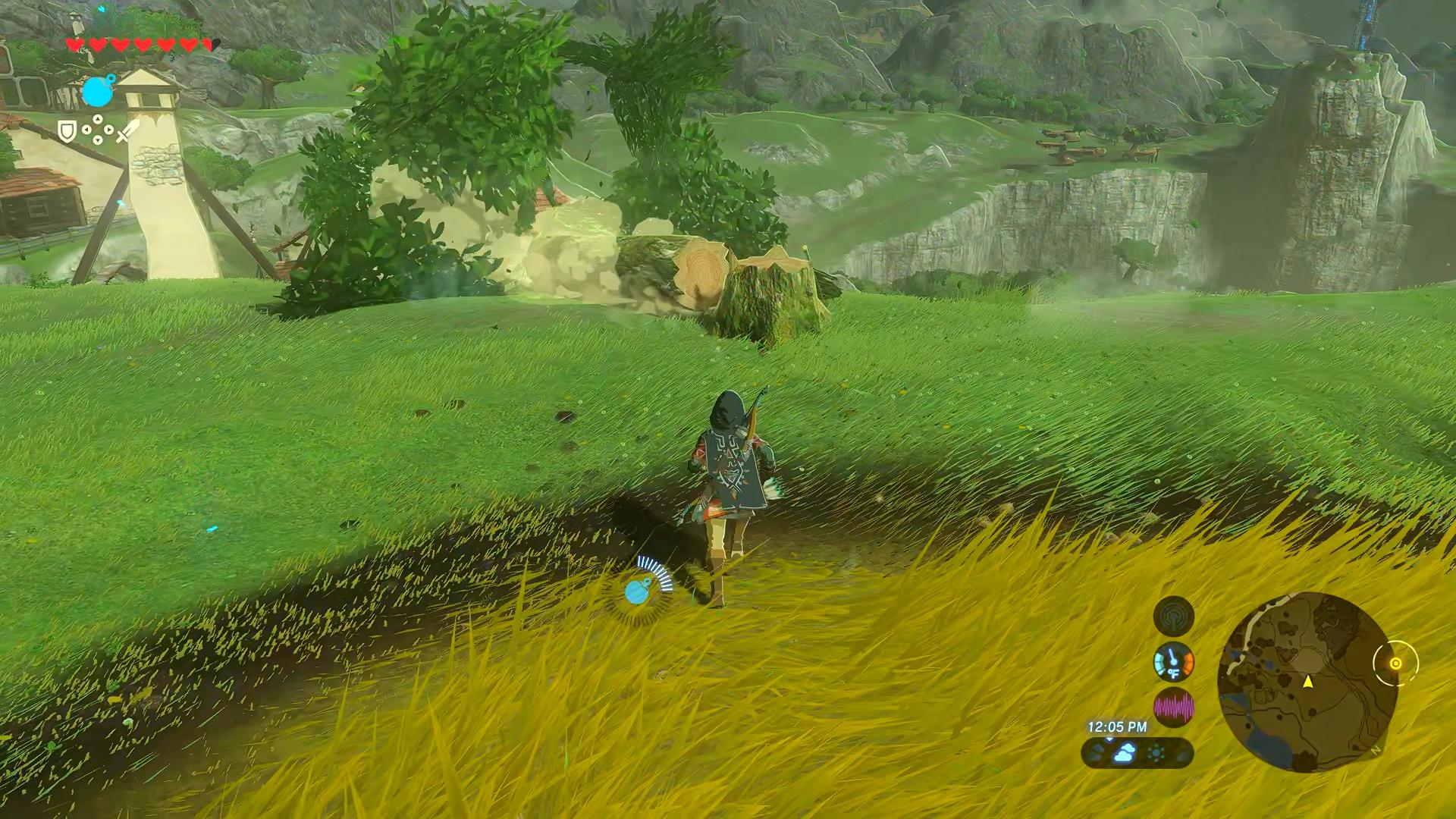
In the end, Breath of the Wild is a great open world to get lost in, to test ideas in, and to approach in a hundred different ways. And because of that, it lands confidently in the A Tier at GameTyr.