This time I am bringing you one of the most popular action RPGs to date, which is the Witcher 3. Set in a medieval fantasy like setting, this game let us you play in 3rd Person as Geralt, a Witcher, which is a super-human mutant species that hunt both monsters and humans alike for money. The cool part is these Witchers use an assortment of swords and magic to fight mythical beasts and pretty much anything that gets in your way. As the protagonist, you’ll be put in countless situations going anywhere from having to protect loved ones, to helping solve political conflicts. With its initial release in 2015 on PC and 8th gen consoles, this game still holds up against more modern games in the genre. So let’s take a look at what this game has to offer.
Side Activities
First, let’s hop on the side activities The Witcher 3 has, which the amount itself is quite impressive, especially when compared to your usual open-world fantasy RPGs.
Starting off strong, Witcher 3’s star of the show has to be its collectible card mini-game called Gwent, which allows you to go against Innkeepers and certain NPCs you’ll stumble along your journey. This unique mini-game is pretty addictive if you have a soft spot for card games, especially when the card game mechanics are good enough that they released a standalone version for it. And mind you, this is all inside of a fantasy RPG, which is already an extensive game on its own.
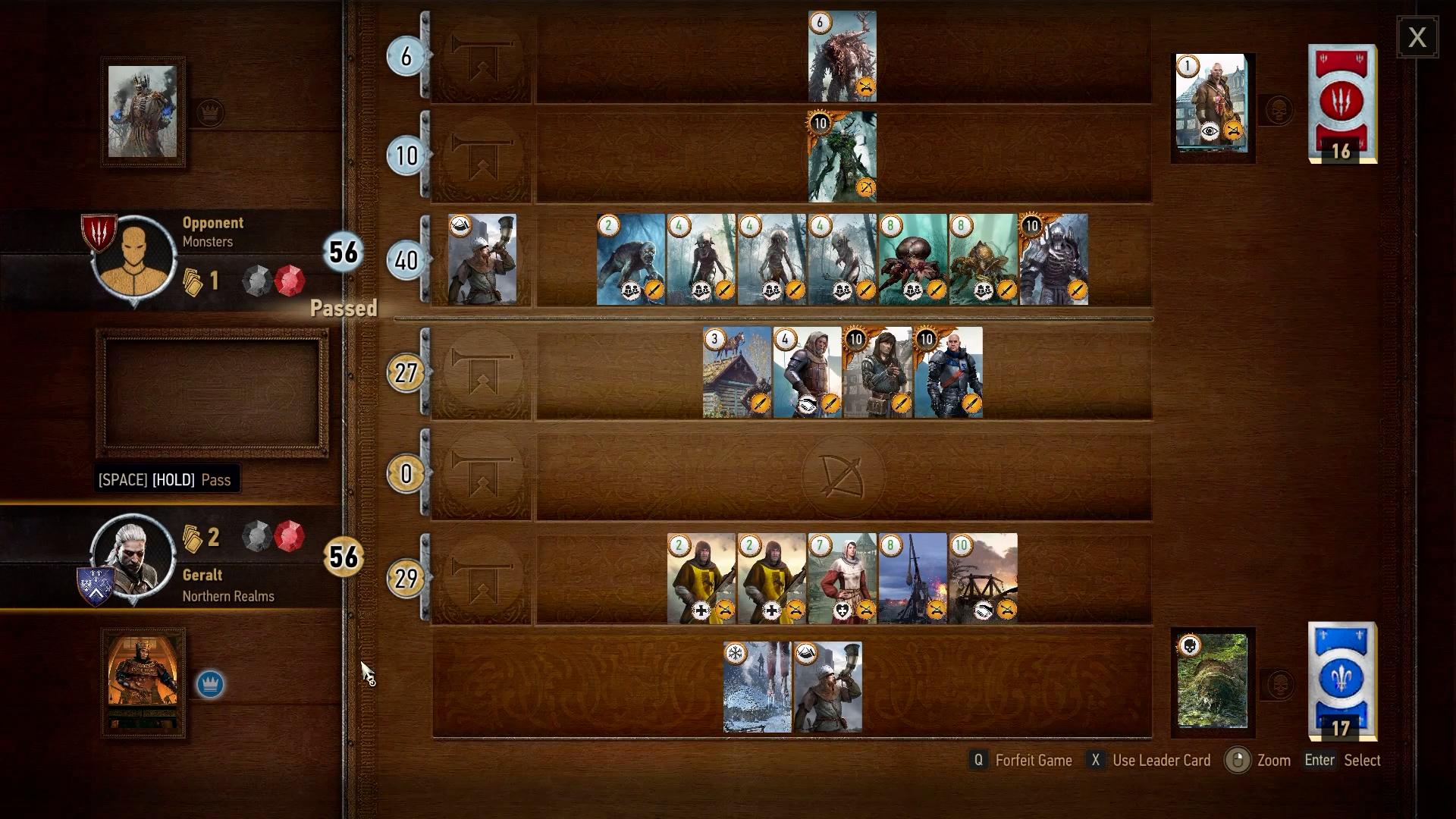
If you ever get bored of Gwent, you will have side quests that have the tournament-esque format. While Gwent does come up in these side quests, you also have other things like fist fighting, and horse Racing, which puts you in a tournament-esque setting, having to beat one opponent after another.
And then… you have the actual side quests, which pretty much is like any RPG quest. You essentially stumble upon having to help NPCs on these side quests, and the best part is… none of them feel like fetch quests telling you to get this and that. Because even when they are fetch quests, they’re still backed by unique narratives that intrigue you, making you forget that it was ever a fetch quest in the first place. Just so you have a better picture of these side quests, you get to help ghosts, investigate a human-turned-pig-filled town, and also quests that are directly connected to the main storyline. What I mean by connected is that your choices in the side quest, or whether you choose to take them, are going to determine the intricacies of the main quest.
Speaking of hunting, I know some of you are obsessed with hunting for loot. While you also have random valuable loot scattered across the world here and there, The Witcher 3 takes this up a notch by giving you numerous treasure hunts. The rewards? They’re either unique sets of armor or weapons to add to your arsenal. Either way, I assure you… It is well worth the little detour.
Or if you want a more spicy detour, you can always visit the local... brothel.
Now if you’re too lazy to go treasure hunting, you can always buy items through the vast amount of merchant NPCs or shops across the settlements. Better yet, there are even merchant NPCs that are only available after you talk to certain NPCs, and sometimes you gotta keep an eye out to find these NPCs, because they might be hiding in plain sight. But the exciting part about shopping in The Witcher 3 is that most of the shops offer unique items you can’t find in other shops, so you'd better remember where you found that one rare item you can’t afford just yet.
It doesn't stop there, you can also dive into crafting to forge weapons and armor, or use alchemy to brew potions and bombs. These creations aren’t just for show, they boost your stats and help in specific situations where a bomb can prove to be useful. Crafting involves resource gathering, which means looting, harvesting plants, and even engaging in multi-tiered crafting to create materials needed for more advanced recipes. It’s a system that adds depth to the side activities and makes you feel like there’s something useful to work toward.
To close things off, the variety and details of the side activities in the Witcher 3, without a question, are the best part of the game.
Area of Freedom
Moving on to Area of Freedom, The Witcher 3 is somewhat segmented with a total of 6 regions, 1 being from a DLC. However, the game does have good reason as you’ll mostly be spending your time in 2 main regions, Velen and Skellige. The remaining regions are more of a transitional region or somewhere you’ll spend only a specific time in. Take White Orchard, for example, you’ll only be busy there at the start of the game. So in a way, even though the world is segmented, the game’s design makes it feel less segmented by putting most of the action in 2 regions.
When it comes to moving between these regions, you can only do so by triggering a fast travel to a signpost. Then it just makes you go through a loading screen. So, in addition to having loading screens, you can’t just go to the edge of the map to go to another region. This takes away the immersive experience you usually have from the end-of-the-map transitional approach because the map doesn’t feel as connected from one border to another.
But… the area of these regions themselves, especially the main regions, are very large and open, with some limitations or invisible walls blocking your path, but these invisible walls still make sense in the world’s context. For instance, the game doesn’t allow you to walk up extreme slopes. Makes sense right? right.
Overall, Area of Freedom is a difficult aspect to measure for Witcher 3, but it’s a shy away for us to give it a green.
Liveliness
The world of Witcher is alive to say the least, and that just might be an understatement. The scenery in the game just makes you want to stop and admire how beautiful the surroundings are, especially when the game offers a variety of environments. You’ve got the muddy swamps of Velen on one end, then you’ve got the rocky shores of Skellige, just to name a few. This definitely adds another layer of life as you traverse across the map using either a horse or a boat. Not to mention, The Witcher 3 also has one of the most beautiful and immersive soundtracks accompanying you along your journey.

Now let’s talk about the settlements in The Witcher 3. The big cities, without a doubt, give you the sense of liveliness that they should. They’re filled with a LOT of NPCs minding their own business and indulging in their own activities, ranging from Merchants haggling in bustling markets, peasants going about their daily chores, to guards patrolling the medieval streets. It doesn’t stop there, people also talk as you walk past them, leading you to hear anything from a drunken rant to worries about war and monsters. All of these play a part in creating a world that is believable, one that can function without you as a protagonist.
Venturing outside of the city, you also have a decent amount of houses and small villages scattered across the map, filled with quest-giving NPCs or hostile enemies. You’ll most likely encounter these small signs of life as you travel from one place to another along the path on your trusty horse. And let’s not forget that wildlife is definitely there when you wander off the beaten path.
However, the game does sometimes lack the density of life when you’re on the road, with only a few NPCs passing by and encounters to liven up your adventure. Also, even though there are a decent amount of houses and villages here and there, we feel like it wouldn’t hurt to see a few more.
Though Witcher 3 has some empty roads here and there. It doesn’t take away the game’s liveliness and believability.
Customizations
Next, we have customizations. Just like any normal RPG, armor and weapons are the main character customizability feature in The Witcher 3. You have enough armor options and even more amount of options for weapons. Each of these items also differs in type so you have more sense of variation. And if you ever want new armor and weapons, you can always either buy, craft, or find them from random loot. To add more, you can also add Glyphs to those items to add extra effects to suit your playstyle.
On to the skill system of The Witcher 3, the game provides you with a skill system that makes you choose your character build wisely. What I mean by this is you’ll have limited slots that you can spend on the skill system, making you question yourself before committing that precious skill point. Of course, just like any skill system, you’ll have criteria or paths that you’ll have to fulfill before unlocking the later skills. Despite all that, that is actually the challenge and the beauty of it, so that you can personalize your friendly neighborhood witcher, Geralt. Thus, making it one of the customization features of the game.
While not as big a customization feature as the previous ones, you can also change your hair and beard style at the local barbershop. Though it’s cosmetic only, it adds that little spice of personalization to your character.
Ultimately, The Witcher 3 offers a good variety of customizations for the player, making it a pass from us.
Engagement
Depending on what you’re into, I’m sure some of us might lose the will to play the game after the first 20 hours of the main storyline, due to its slow pacing at the beginning. However, the game offers many side activities with each of the categories presenting their own overall purpose to them. There’s hunting all the monsters in the contracts, finding all the good old exclamation marks for different side quests and completing their stories, or simply collecting all the gwent cards. Basically, there’s always something to do in the Witcher 3. While these side activities can add more playtime, they only act as optional extras within the overall experience that can be set aside. Due to this, the game still lacks a key element that drives core engagement.
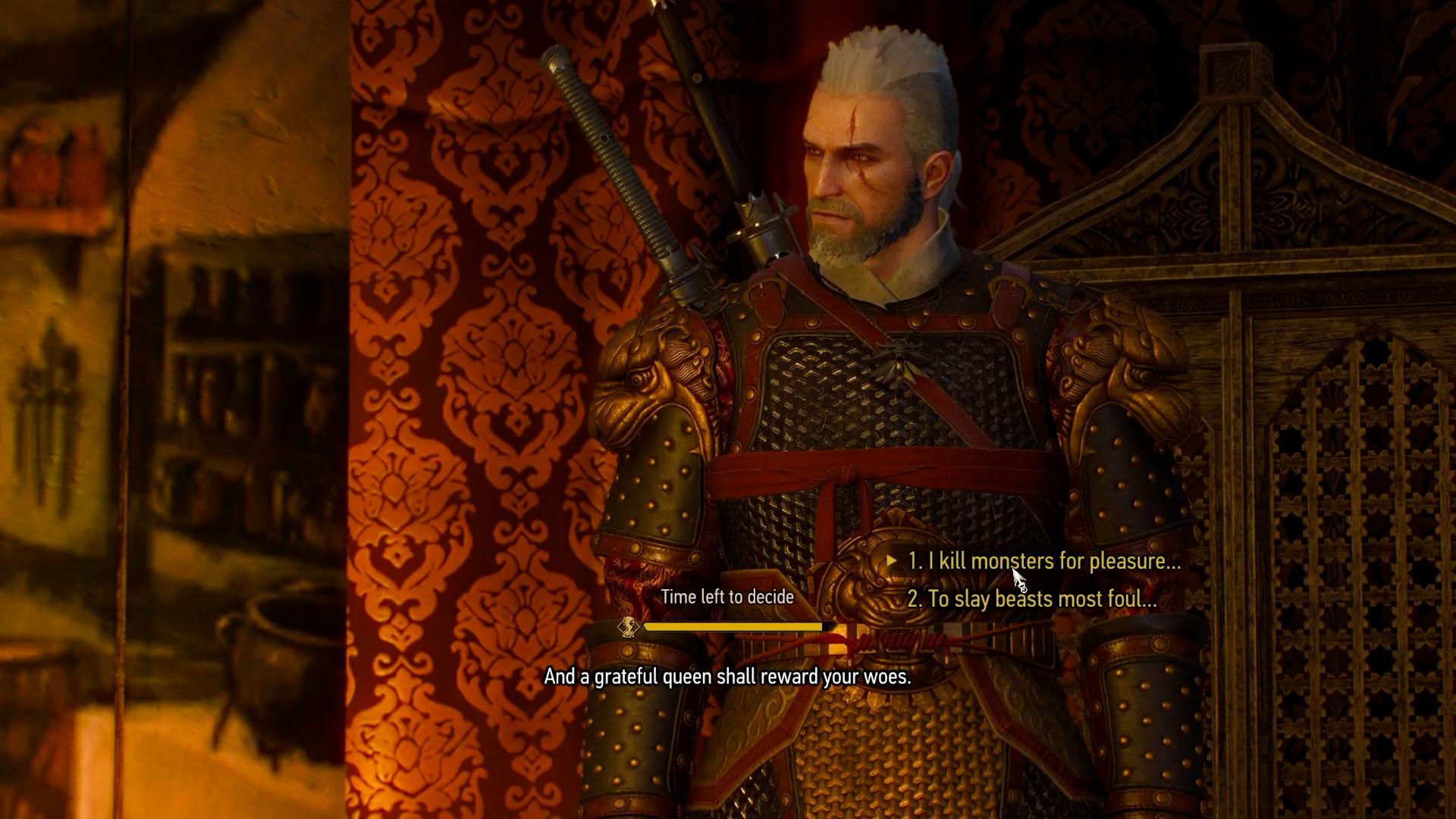
That said, The Witcher 3 might have a few small features that might personally drive engagement, but the game lacks that big WOW feature to keep you playing.
Uniqueness
As a game that is famous in the fantasy RPG genre, it’s obvious that the uniqueness of this game is in the narrative depth. Specifically, the side quests, with each of them offering a variety over other side quests. Every side quest you’ll encounter will have a background story, meaning and interesting turnouts. So you definitely won’t get bored doing one side quest after another in the Witcher 3, especially when they don’t feel like fetch quests and keep you hooked on the story of the quest. This is something that we’d love to see in every open-world RPG game, rather than having meaningless fetch quests. Not to mention, most of the side quests are also tied to the actual main storyline line which adds a surprise element when you decide to continue the main storyline. For example, there is one side questline that determines the fate of the kingdom and the life of one of the notable characters. Meaning that what you do in the side quests actually matters towards your progress in the game.
Witcher 3’s narrative depth is a level above others, easily securing its place as unique.
End Verdict
And that… brings us to the end of our deep dive journey of the Witcher 3, one that was a bit of a roller coaster. While the game lacks in some aspects like the seamlessness of the world and a core element to engage the player, it definitely overly makes up for it with its depth in side quest design, countless activities, a decent amount of customization features, and it’s lively and immersive open world filled with unique NPCs. Thus, The Witcher 3 is still, without a doubt, one of the greater open-world games on the market right now, giving it a solid A tier from us at GameTyr.